

If the gross estate exceeds the federal filing threshold, you must file Form 706 within 9 months of the date of death. If the estate earns income during administration, you'll also need Form 1041. Check these forms first: Form 706 (or Form 706-NA for a nonresident non-citizen decedent), Form 8971 (beneficiary basis reporting), Form 1041 (estate income tax), Form 4768 (extension), and Form 5495 (discharge from personal liability).
Your first three moves, in order:
- Verify the estate's value against the current filing threshold, even if you think the estate is exempt.
- Apply for an Employer Identification Number (EIN) for the estate. You'll need it for every form that follows.
- Order state-certified appraisals on real estate and other major assets before you start filling out Schedule A.
Call (908) 517-3913 if you need a USPAP-compliant date-of-death appraisal to anchor your filing.
Key Takeaways
Filing an accurate, on-time Form 706 depends on knowing your deadline, valuing assets defensibly, and completing consistent-basis reporting through Form 8971.
| Point | Details |
|---|---|
| Nine-month deadline is firm | Form 706 is due within the statutory filing period after death under IRC §6075, with Form 4768 offering an automatic filing extension. |
| Filing threshold isn't the only reason to file | File Form 706 even without owed tax if the surviving spouse needs a portability election preserved. |
| Form 8971 has its own clock | Beneficiary basis statements are due 30 days after the Form 706 due date, including any extension. |
| Appraisals anchor the whole return | Real estate and closely held business values need documented support, not informal estimates, to survive IRS review. |
| Newjerseyrealestateappraisal supports the valuation step | State-certified, USPAP-compliant date-of-death appraisals across all 21 New Jersey counties are built to map directly onto Form 706 schedules. |
Table of Contents
- What Is an Estate Tax Return, and Who Has to File It?
- What Federal Forms and Schedules Do Executors Actually Use?
- When Is the Estate Tax Return Due, and Can You Get an Extension?
- How Do You Value Estate Assets for Form 706?
- What Is Consistent Basis Reporting, and Who Has to File Form 8971?
- How Do You Pay Estate Tax, and What Are Your Options?
- What Are an Executor's Tax Responsibilities and Liability Risks?
- What's the Step-by-Step Filing Checklist for Executors?
- What Mistakes Trigger IRS Scrutiny on Estate Returns?
- When Should You Hire a State-Certified Appraiser for Form 706?
- How Newjerseyrealestateappraisal Supports Executors Through Estate Filings
- Frequently Asked Questions
- Sources
What Is an Estate Tax Return, and Who Has to File It?
A federal estate tax return reports the value of everything a decedent owned at death and calculates whether estate tax is owed on the transfer of that property. It's a different animal from the estate's income tax return and from any state-level inheritance tax your state might impose.
The IRS defines "executor" broadly. It's not limited to whoever is named in the will. If no executor or administrator has been formally appointed, the IRS treats anyone in actual or constructive possession of the decedent's property as the responsible party for filing. That means a family member holding a deed or a bank account in the decedent's name can inherit the filing duty by default, whether they wanted it or not.
Here's how the three related filings differ:
| Filing type | When it applies |
|---|---|
| Estate tax return (Form 706) | Reports the value of the gross estate at death; required when assets exceed the federal threshold or when the executor wants to elect portability. |
| Estate income tax return (Form 1041) | Reports income the estate earns during administration, such as interest, dividends, or rental income after death. |
| State inheritance/estate tax | A separate filing required by some states, based on that state's own thresholds and beneficiary relationships, independent of the federal return. |
IRS Publication 559 is the single best reference for sorting out these overlapping duties, and it's worth reading before you file anything.
What Federal Forms and Schedules Do Executors Actually Use?
Every estate is different, but most executors will touch some combination of these forms. Here's the practical rundown.
- Form 706 computes the estate and generation-skipping transfer tax. It relies on Schedules A through K to itemize everything from real estate (Schedule A) to mortgages and debts (Schedule K). The instructions for Form 706 walk through which schedule applies to which asset type. Use Form 706-NA instead if the decedent was a nonresident who wasn't a U.S. citizen.
- Form 8971 handles consistent basis reporting. It tells beneficiaries what basis to use when they eventually sell inherited property, and it has its own tight deadline separate from Form 706.
- Form 1041 reports the estate's income during administration. Pair it with the decedent's final Form 1040, which covers income earned up to the date of death.
- Form 4768 requests an automatic extension of time to file. Form 5495 requests discharge from personal liability once the executor's returns are filed and accepted. Form 709 comes into play only if the decedent made large gifts before death that need separate reporting.
One executor can sign Form 706 on behalf of the estate, but when multiple executors are named, all of them remain jointly liable for accuracy. Paid preparers have their own signature block and are required to sign returns they prepare for compensation.
When Is the Estate Tax Return Due, and Can You Get an Extension?
Form 706 is due within the statutory filing period after the date of death. That deadline comes straight from IRC §6075, and it doesn't bend for probate delays, appraisal backlogs, or family disputes over the will.
Pro Tip: File Form 4768 well before the 9-month mark, even if you're only slightly unsure you'll make the deadline. The extension is automatic once filed correctly, but a late request gets you nothing.
Filing Form 4768 by the original due date buys you an automatic 6-month extension to file, according to the Form 706 instructions. That extension applies to the paperwork, not necessarily the payment. Here's the order of operations:
- File Form 4768 before the 9-month deadline if you need more time to prepare the return.
- Pay any estimated tax due by the original 9-month deadline regardless of the extension, unless you've separately qualified for an installment election under section 6166 or a postponement under section 6163.
- File the completed Form 706 within the extended window.
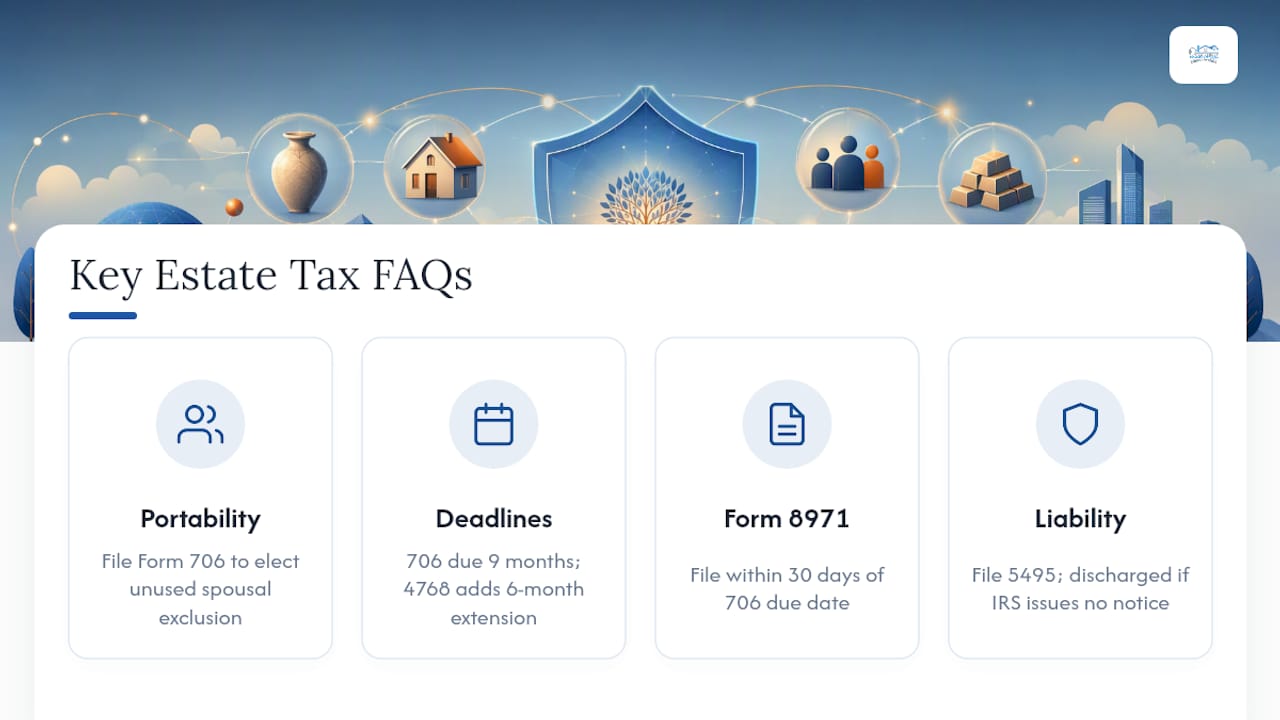
One detail trips up more executors than any other: even when no tax is owed, filing Form 706 on time is required to elect portability of the Deceased Spousal Unused Exclusion for a surviving spouse. Skip the filing, and you may permanently lose that election.
How Do You Value Estate Assets for Form 706?
Accurate valuation is the backbone of a defensible Form 706. The IRS doesn't accept guesses on real estate, closely held business interests, or unique assets. It expects documentation that would hold up if the return is ever examined.

Hire a state-certified, USPAP-compliant appraiser whenever real estate makes up a meaningful share of the gross estate, when heirs disagree about value, or when the property is unusual enough that a broker's opinion won't cut it. This is where Newjerseyrealestateappraisal does most of its estate work, producing date-of-death appraisals built specifically to withstand IRS scrutiny.
Gather this documentation before you start filling out schedules:
- Deeds and prior title records for every parcel of real property.
- Mortgage statements and payoff figures as of the date of death.
- Bank and brokerage statements covering the date of death.
- 1099s and business financials for any closely held interests.
- Any prior appraisals, especially if the property was refinanced or appraised recently for another purpose.
Executors can also elect alternate valuation, which values the entire estate 6 months after death instead of on the date of death, but only if that election reduces both the gross estate value and the estate tax owed. It's not a pick-and-choose, asset-by-asset option. If real estate values dropped sharply in that 6-month window, alternate valuation can meaningfully lower the tax bill; if they rose, it works against you.
Pro Tip: Order your appraisal with the Form 706 schedule number already in mind. Telling the appraiser upfront that the report needs to support Schedule A and feed into Form 8971's consistent-basis reporting saves a round of revisions later.
What Is Consistent Basis Reporting, and Who Has to File Form 8971?
Estates required to file Form 706 generally must also file Form 8971 and give each beneficiary a Schedule A showing the value assigned to the property they inherited. The deadline is 30 days after Form 706 is due, including any extension granted through Form 4768.
Consistent basis reporting exists to close a specific loophole: it forces beneficiaries to use the same value the estate reported to the IRS as their basis when they eventually sell inherited property, as detailed in the Form 706 instructions. Without that requirement, a beneficiary could claim a higher basis than the estate ever declared and understate capital gains at sale.
Miss the deadline, and penalties under sections 6721 and 6722 kick in for failure to file correct information returns and failure to furnish correct payee statements. Build a simple checklist to stay ahead of it:
- Match every asset on your Form 8971 asset list to its corresponding Form 706 line item.
- Prepare individual Schedule A copies for every beneficiary receiving property.
- Calendar the 30-day deadline the moment you know your Form 706 due date, extended or not.
How Do You Pay Estate Tax, and What Are Your Options?
Estate tax is generally due within the statutory period after death, separate from any extension received on the paperwork itself. The IRS accepts payment through EFTPS, same-day wire transfer, and check, per its official filing guidance.
Two elections can change the payment timeline if the estate qualifies:
- Section 6166 installment election lets estates with a substantial closely held business interest pay the tax attributable to that business over an extended period instead of all at once.
- Section 6163 postponement applies to certain reversionary or remainder interests, deferring tax until the interest actually becomes possessory.
If you're mailing a check, write the decedent's full name, Social Security number, and "Form 706" directly on the check so it posts to the correct account without delay. Electronic payment through EFTPS avoids that risk entirely and gives you an immediate confirmation number for your records.
What Are an Executor's Tax Responsibilities and Liability Risks?
Executors carry broad tax responsibilities, and Publication 559 is explicit that failing to file or pay what's owed can create personal liability for the executor, not just the estate.
Your core task list looks like this:
- Gather and inventory all estate assets.
- Obtain an EIN for the estate.
- File the decedent's final Form 1040.
- File Form 706 (and Form 1041, if the estate has income) on time.
- Pay any tax due, or properly elect an installment or postponement option.
- Notify beneficiaries as required under Form 8971.
- Preserve every supporting record in case of examination.
When multiple executors are named, one can physically sign the return, but liability doesn't stop at the signer. All named executors remain jointly responsible for what's filed. Paid preparers face their own signature and due-diligence requirements separate from the executor's.
Once your returns are filed and accepted, you can request relief through Form 5495, discharge from personal liability. Publication 559 explains that if the IRS doesn't notify you of additional tax due within the statutory notification period after you file, you're discharged from further personal liability for that tax.
What's the Step-by-Step Filing Checklist for Executors?
Work through these in roughly this order:
- Apply for the estate's EIN and open an estate bank account.
- Build a complete asset inventory and order appraisals on real estate and other high-value or contested assets.
- Prepare Form 706, attaching Schedules A through K as they apply to the estate's assets.
- File Form 4768 if you need the automatic 6-month extension, before the original due date.
- Make any required tax payment by the 9-month deadline, using EFTPS or the method that fits the estate's cash position.
- File Form 8971 and distribute Schedule A copies to beneficiaries within 30 days of the Form 706 due date.
- File Form 1041 for any estate income earned during administration.
Mailing addresses for paper Form 706 filings vary based on whether payment is included, and the IRS filing page lists current addresses along with Modernized e-File notes for eligible filers. Keep every appraisal, statement, and receipt for at least the length of the standard examination window. An organized appraisal file makes that retention job far easier if the IRS ever asks for support on Schedule A values.
What Mistakes Trigger IRS Scrutiny on Estate Returns?
Late filing, late payment, omitted assets, and skipping Form 8971 entirely are the four most common failures, and each one can trigger penalties or draw a closer IRS look. None of them require intent. Simple oversight is enough.
Watch for these red flags in your own filing:
- Large property transfers reported without a supporting appraisal.
- Basis reported to beneficiaries that doesn't match the value declared on Form 706.
- Prior gift tax returns (Form 709) that were never filed for lifetime transfers.
- Real estate valued using a broker's estimate instead of a certified appraisal.
If you catch an error after filing, an amended return or a protective claim for refund is usually the right correction path, and requesting penalty abatement is worth pursuing when the failure had a reasonable cause. If your state also imposes an estate or inheritance tax, coordinate the two filings closely. States often use the federal return as their starting point, and inconsistent numbers between the two can trigger review on both sides.
When Should You Hire a State-Certified Appraiser for Form 706?
Hire a state-certified, USPAP-compliant appraiser when real estate makes up a material share of the gross estate, when the value is disputed among heirs, or when you need a report that will hold up if the IRS examines the return. Informal broker opinions and online estimates won't survive that kind of scrutiny.
When vetting an appraiser for estate work, confirm:
- State certification and active licensing status.
- USPAP compliance on every report they produce.
- Direct experience with estate and date-of-death valuations, not just purchase-money appraisals.
- Familiarity with the specific county market where the property sits.
A solid engagement should specify the effective date (the date of death, not the appraisal order date), the intended use (supporting Form 706), and the deliverables: a signed report, comparable sales analysis, and a value reconciliation. Ask for a clear timeline upfront, since executors are often racing the 9-month clock.
The appraisal report should map directly to Form 706's asset schedules and carry the same value forward into Form 8971's beneficiary reporting, so the numbers never contradict each other across filings. Newjerseyrealestateappraisal has built estate and probate appraisal services around exactly this workflow, drawing on more than 26 years of combined experience across all 21 New Jersey counties.
A Note From the Appraisal Side of Estate Administration
We've sat across the table from enough executors to know the pattern: the paperwork is manageable, but the valuation is where people get stuck. Real estate is almost always the largest and most contested piece of the gross estate, and a soft or unsupported number invites exactly the IRS attention you're trying to avoid.
Our reports are state-certified and USPAP-compliant, built with the county-level market knowledge that a generic valuation tool can't replicate. If you're staring down a Form 706 deadline and need a defensible date-of-death value, reach out to our team or call (908) 517-3913.
How Newjerseyrealestateappraisal Supports Executors Through Estate Filings
A rushed or inconsistent appraisal costs you more than time. It can invite an IRS examination or force a costly amended return months after you thought the estate was closed. Newjerseyrealestateappraisal builds every estate report around the Form 706 schedule it needs to support, so the value you file is the value that holds up.

We produce date-of-death and court-ready reports for executors and estate attorneys across every New Jersey county, backed by more than 26 years of combined appraisal experience and full USPAP compliance. Whether you're settling an estate in Atlantic County or Union County, our reports are built to withstand beneficiary disputes, probate review, and IRS scrutiny alike. If the estate includes real property and you're working against a 9-month deadline, order your state-certified estate appraisal today or call (908) 517-3913 to discuss your timeline.
Frequently Asked Questions
Do I have to file Form 706 if the estate owes no tax? Yes, if you want to elect portability of the Deceased Spousal Unused Exclusion for a surviving spouse. Otherwise, filing is only required when the gross estate exceeds the federal threshold in effect for the year of death.
How long do I have to file the estate tax return? Nine months from the date of death, per IRC §6075. Filing Form 4768 by that deadline gets you an automatic 6-month extension to file, though payment is still generally due within the original 9 months.
What happens if I miss the Form 8971 deadline? You risk penalties under sections 6721 and 6722 for failing to file correct information returns and furnish accurate beneficiary statements. File it within 30 days of your Form 706 due date, extension included.
Can I get out of personal liability as an executor? File Form 5495 after your required returns are submitted. If the IRS doesn't notify you of additional tax within the statutory notification window, you're discharged from further personal liability for that tax.
Do I need a certified appraisal for every asset in the estate? No, but you need one for any real estate or unique asset that's material to the gross estate value or subject to dispute among beneficiaries. A state-certified, USPAP-compliant appraisal gives you documentation that holds up if the IRS examines the return.
This article is general information, not a substitute for advice from a qualified financial advisor. Consult a qualified financial professional about your own circumstances before acting on anything here.
Sources
- Instructions for Form 706 (09/2025) | Internal Revenue Service
- 26 USC 6075: Time for filing estate and gift tax returns