

Settling an estate in New Jersey often stalls when executors struggle to establish accurate property values for probate. Without a reliable appraisal, you risk inheritance tax penalties, delayed distributions, and disputes among beneficiaries. This guide walks you through the appraisal requirements, legal steps, and proven strategies to navigate New Jersey probate smoothly while protecting your interests and meeting strict filing deadlines.
Table of Contents
- Understanding probate property appraisal requirements in New Jersey
- Preparing for an accurate property appraisal in probate
- Executing the appraisal process and filing inheritance tax in New Jersey
- Verifying appraisal accuracy and common pitfalls to avoid
- Get expert property appraisal services in New Jersey
- Frequently asked questions
Key takeaways
| Point | Details |
|---|---|
| Property appraisal is essential for inheritance tax, capital gains, and legal compliance | Accurate date of death valuations determine tax obligations and protect executors from liability. |
| Filing deadlines and correct documentation prevent delays and penalties | Inheritance tax returns due within 8 months; interest accrues on unpaid taxes at 10% annually. |
| Class A beneficiaries often exempt but valuation still needed for accurate estate accounting | Even tax-exempt heirs require documented property values for fair distribution and legal records. |
| Medicaid estate recovery liens must be checked to clear title | Unchecked liens can derail property sales and force beneficiaries into unexpected repayments. |
| Professional appraisers familiar with NJ probate improve accuracy and reduce disputes | Certified local appraisers deliver court-admissible reports that satisfy Surrogate requirements. |
Understanding probate property appraisal requirements in New Jersey
New Jersey law places clear responsibilities on executors to establish property values before any estate settlement can proceed. You must understand these legal requirements to avoid costly mistakes and ensure compliance with state regulations.
The probate process begins when the executor files the original will and death certificate with the County Surrogate. This step initiates the legal authority you need to manage estate assets. Without probate authority, you cannot legally sell or transfer real estate, regardless of what the will states.
The County Surrogate reviews your submission and issues Letters Testamentary if everything is in order. These documents grant you the legal power to act on behalf of the estate. Only after receiving this authority can you proceed with property appraisals, sales, or distributions.
Real estate cannot be sold legally until probate authority is granted. This timeline impacts your planning, especially if the estate carries mortgage payments or property taxes that continue to accrue. Quick action on the appraisal helps you move forward faster.
Establishing the date of death property value serves multiple critical purposes. This valuation determines inheritance tax calculations, sets the cost basis for future capital gains, and provides a reference point for sale pricing decisions. The date of death value may differ significantly from current market conditions, so you need an estate date of death appraisal that reflects property conditions and market data from the specific date.
Key executor responsibilities include:
- Filing all required probate documents with the County Surrogate within statutory deadlines
- Obtaining certified property appraisals that meet USPAP standards for court use
- Maintaining detailed records of all estate transactions and property valuations
- Coordinating with beneficiaries, attorneys, and appraisers throughout the process
- Ensuring property insurance and maintenance continue until transfer or sale
Understanding the distinction between market value and probate valuation protects you from errors. Market value reflects what a willing buyer would pay today. Probate valuation captures what the property was worth on the date of death, which may be months or years earlier if estate settlement takes time.
Preparing for an accurate property appraisal in probate
Proper preparation streamlines the appraisal process and ensures you receive a defensible valuation that satisfies legal requirements. Taking time to organize before the appraiser arrives saves you from delays and potential reassessments.
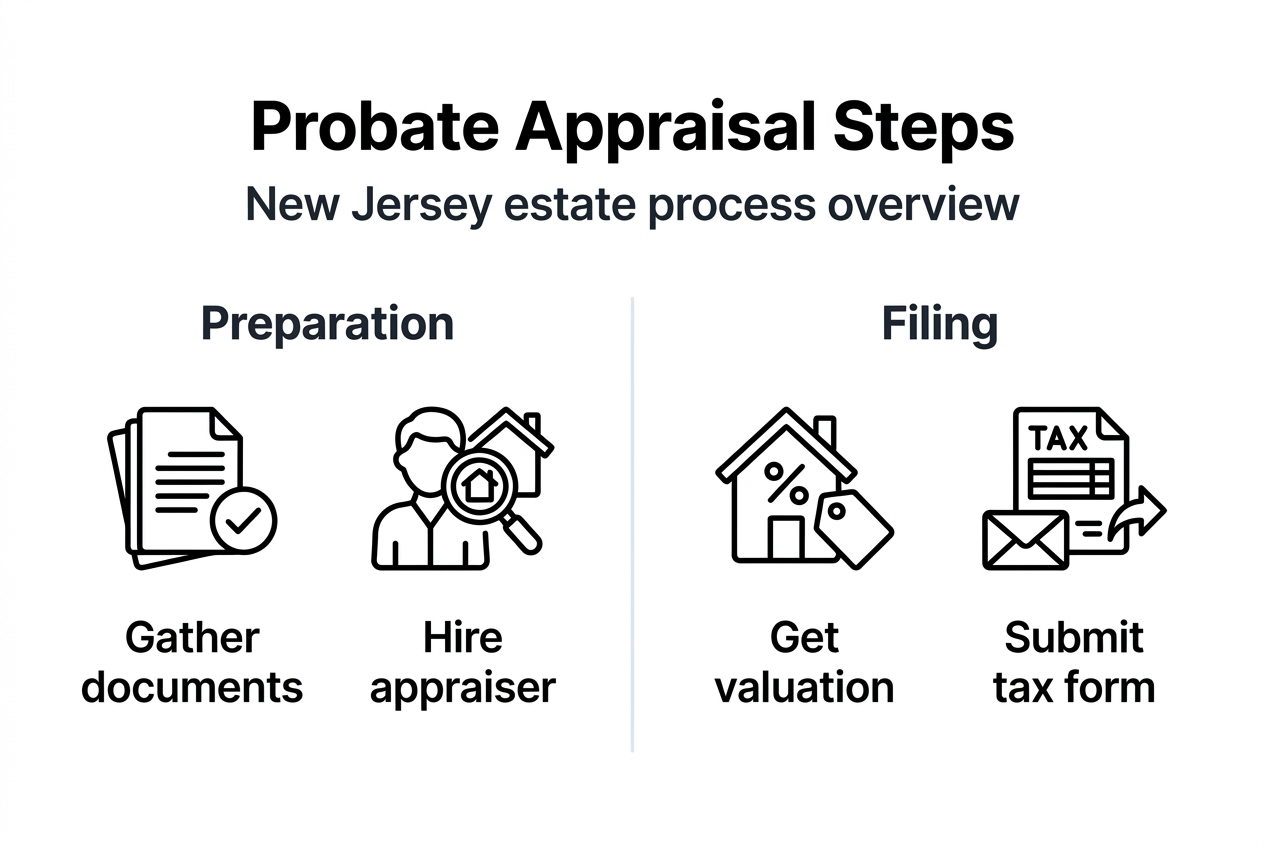
Start by gathering essential documents that support the property's history and condition. You'll need the original deed, recent property tax statements, mortgage information if applicable, home improvement records, and any prior appraisals or inspections. These documents help the appraiser understand the property's context and verify ownership details.
Selecting the right appraiser makes a significant difference in probate matters. Look for a certified professional with specific experience in estate valuations and familiarity with New Jersey probate courts. Local appraisers understand regional market nuances and have relationships with County Surrogates that can smooth the approval process.

Property value affects pricing strategy, inheritance tax reporting, and capital gains planning. An experienced appraiser helps you navigate these interconnected considerations by providing detailed analysis that serves multiple purposes beyond just meeting probate requirements.
The date of death valuation creates unique challenges. Market conditions change, properties may deteriorate without occupancy, and comparable sales shift over time. Your appraiser must reconstruct market conditions as they existed on a specific historical date, which requires specialized research and methodology.
Accurate property valuation is crucial to avoid penalties and ensure fair distribution. Executors who rely on informal estimates or outdated valuations expose themselves to beneficiary disputes and potential personal liability if tax authorities challenge the reported values.
Follow these steps to prepare your property:
- Schedule the appraisal as soon as probate authority is granted to avoid timeline delays
- Provide appraiser with complete access to all areas including attics, basements, and outbuildings
- Compile documentation of recent repairs, improvements, or damage that occurred near date of death
- Inform appraiser of any unique property features or conditions affecting value
- Coordinate with beneficiaries to ensure property is accessible and secure during inspection
- Request additional copies of the appraisal report for tax filings and potential property sales
Pro Tip: Take timestamped photos of the property's condition on the date of death if possible. These images provide valuable evidence if questions arise later about property condition or needed adjustments to the valuation.
Consider having a pre-appraisal consultation where you walk through the property with your chosen appraiser. This meeting allows you to discuss special circumstances, point out features that add value, and address any concerns about access or condition issues. Many appraisers offer this service at no extra charge and it significantly improves the final report quality.
Keep detailed records of all preparation activities. Document your communications with the appraiser, note any property changes since death, and maintain receipts for any maintenance or repairs. This paper trail protects you if beneficiaries or tax authorities question your handling of estate assets. Review best tips to prepare for your home appraisal for additional guidance.
Executing the appraisal process and filing inheritance tax in New Jersey
Once you've prepared thoroughly, executing the appraisal and tax filing becomes a systematic process. Following each step in order prevents oversights that could delay probate or trigger penalties.
Begin by formally engaging your selected appraiser with a written agreement that specifies the valuation date, intended use for probate purposes, and expected delivery timeline. Confirm that the appraisal will be USPAP compliant and acceptable to New Jersey courts and tax authorities. Request an estimated completion date that allows time for tax filing before the deadline.
The appraiser conducts a thorough property inspection, measuring rooms, documenting condition, noting improvements and defects, and photographing key features. They research comparable sales that occurred around the date of death, adjust for differences, and apply appropriate valuation methodologies. The final report includes detailed analysis supporting the concluded value.
After receiving the certified appraisal, you must incorporate the property value into Form IT-R, New Jersey's Inheritance Tax Return. New Jersey Inheritance Tax requires accurate property valuation for estate tax purposes, directly impacting what beneficiaries ultimately receive.
New Jersey classifies beneficiaries into different tax classes that determine rates and exemptions:
| Tax Class | Relationship | Exemption | Tax Rates |
|---|---|---|---|
| Class A | Spouse, parent, child, grandchild | Fully exempt | 0% |
| Class C | Sibling, son-in-law, daughter-in-law | $25,000 | 11% to 16% |
| Class D | All other beneficiaries | $500 | 15% to 16% |
| Class E | Charitable organizations | Fully exempt | 0% |
Even when beneficiaries fall under Class A and pay no tax, you still must report accurate property values for estate accounting purposes. This documentation creates the official record that supports distributions and protects you from later claims of mismanagement.
Timing matters significantly in New Jersey probate. The return is due 8 months after death, and interest accrues on unpaid tax after that date. Missing this deadline costs the estate 10% annual interest on any tax due, quickly eroding the inheritance beneficiaries expect to receive.
Before finalizing any property transfers or sales, check for Medicaid Estate Recovery Program liens. New Jersey can place liens on properties when the deceased received Medicaid benefits, and these must be satisfied before clear title can pass to beneficiaries. Discovering a lien late in the process forces renegotiation of sales and distribution plans.
Follow this execution sequence:
- Receive and review the certified appraisal report for completeness and accuracy
- Verify the appraisal reflects date of death conditions and includes all required property details
- Calculate inheritance tax obligations for each beneficiary class using the appraised value
- Complete Form IT-R with accurate property descriptions and valuations from the appraisal
- Submit the tax return to the New Jersey Division of Taxation before the 8 month deadline
- Obtain tax waivers or clearances before distributing assets or closing estate accounts
- Record all filings and maintain copies for potential audits or beneficiary questions
Pro Tip: Request an estate tax closing letter from the Division of Taxation after filing. This document confirms that all taxes have been paid or properly reported, providing legal protection when you make final distributions to beneficiaries.
If the estate includes multiple properties, you need separate appraisals for each. Aggregate the values on Form IT-R and allocate tax burdens appropriately. Some executors mistakenly average values or use informal estimates, creating significant problems if the Division of Taxation audits the return.
Consider engaging a tax professional or estate attorney to review your filings before submission. Complex estates benefit from expert guidance on deductions, exemptions, and proper reporting formats. This investment often saves more than it costs by avoiding penalties and optimizing tax positions. For properties held in trust structures, specialized financial planning trust appraisals ensure compliance with additional regulatory requirements.
Verifying appraisal accuracy and common pitfalls to avoid
Receiving the appraisal report is just the beginning. You must verify its accuracy and watch for common errors that undermine its credibility in probate proceedings.
Start by reviewing the appraisal for completeness. Confirm it includes the property address, legal description, date of death as the valuation date, detailed property description, photographs, comparable sales analysis, and the appraiser's certification. Missing elements can cause the County Surrogate or Division of Taxation to reject the report.
Examine the comparable sales carefully. The appraiser should use properties similar in size, age, condition, and location that sold within a reasonable timeframe around the date of death. Sales that occurred years earlier or properties in different neighborhoods raise questions about valuation reliability. If you spot concerning comparables, discuss them with your appraiser before submitting the report to authorities.
Common mistakes that delay probate include:
- Using current market value instead of date of death valuation for the appraisal
- Failing to disclose property liens, easements, or encumbrances affecting value
- Relying on outdated comparable sales that don't reflect actual market conditions
- Accepting appraisals from unqualified or inexperienced valuators lacking proper credentials
- Ignoring property damage or deterioration that occurred between death and appraisal
- Overlooking Medicaid liens that must be satisfied before property transfer
Verify your appraiser holds current certification from the State of New Jersey and carries errors and omissions insurance. Check their experience specifically with probate and estate valuations. An appraiser who primarily works with mortgage refinances may not understand the unique requirements of estate work.
Be alert to potential undue influence issues that can invalidate property transfers. Undue influence can invalidate wills or property transfers, requiring careful scrutiny when a testator is vulnerable. If the deceased made unusual property transfers shortly before death, especially to caregivers or those in positions of trust, consult an estate attorney before proceeding with distributions.
When reviewing appraisals, look beyond the final number to understand the methodology. A well-supported valuation should tell a clear story about how the appraiser reached their conclusion based on objective market data and property-specific factors.
Pro Tip: If beneficiaries dispute the appraisal value, consider obtaining a second independent appraisal before moving forward. Resolving valuation disagreements early prevents litigation that can tie up the estate for years and consume assets in legal fees.
Watch for red flags in the appraisal report. Vague descriptions, missing photographs, unexplained value adjustments, or conclusions that seem inconsistent with recent area sales all signal potential problems. Don't hesitate to ask your appraiser to clarify any aspect of their report that seems questionable.
Document your review process. Note what you verified, questions you asked, and responses received. This record demonstrates your diligence as executor if anyone later challenges your acceptance of the appraisal. Courts generally protect executors who exercise reasonable care in selecting professionals and reviewing their work.
If you discover errors after submission, address them immediately. Contact the Division of Taxation to file an amended return if necessary. Proactive correction of mistakes typically results in far better outcomes than waiting for authorities to discover problems during an audit. Learn more about avoiding common pitfalls in home appraisals to protect your estate settlement.
Get expert property appraisal services in New Jersey
Navigating probate appraisals requires specialized expertise that protects you from costly errors and unnecessary delays. Professional appraisers who understand New Jersey probate requirements deliver the accurate, defensible valuations you need for smooth estate settlement.

Whether you're settling an estate in Atlantic County or Union County, working with certified local appraisers ensures compliance with regional practices and court expectations. These professionals provide USPAP-compliant reports that satisfy Surrogate requirements and withstand Division of Taxation scrutiny.
Specialized estate and date of death appraisals address the unique challenges executors face, from reconstructing historical market conditions to documenting property conditions at specific dates. This expertise streamlines your probate process and gives beneficiaries confidence in fair, accurate valuations.
Frequently asked questions
What is a probate property appraisal and why is it important?
A probate property appraisal is a certified valuation prepared by a licensed appraiser specifically for estate settlement purposes. It establishes the fair market value of real estate as of the date of death, which determines inheritance tax calculations, sets the cost basis for future capital gains taxes, and provides the legal foundation for property sales or distributions. Without an accurate appraisal, executors risk penalties from tax authorities, disputes among beneficiaries, and potential personal liability for improper estate management.
How do executors initiate the appraisal and probate process in New Jersey?
Executors begin by filing the original will and death certificate with the County Surrogate in the county where the deceased resided. Once the Surrogate validates the will, they issue Letters Testamentary granting legal authority to manage estate assets. Only after obtaining this authority can executors legally engage appraisers, access property, or make decisions about sales or transfers.
What are the key deadlines for inheritance tax filing after appraisal?
New Jersey requires executors to file the Inheritance Tax Return within 8 months of the date of death. After this deadline passes, interest accrues on any unpaid taxes at a rate of 10% annually. This interest burden directly reduces the assets available for distribution to beneficiaries, making timely filing essential to preserve estate value.
Can professional appraisers help avoid probate delays or disputes?
Experienced appraisers provide credible, court-admissible valuations that satisfy legal requirements and reduce challenges from beneficiaries or tax authorities. Their detailed reports document methodology, support conclusions with market data, and meet USPAP standards that courts recognize. Working with qualified professionals who understand New Jersey probate procedures significantly reduces the risk of rejected appraisals, amended filings, or litigation that delays estate settlement. Access court-ready estate and date of death appraisals to ensure your probate process moves forward efficiently.