
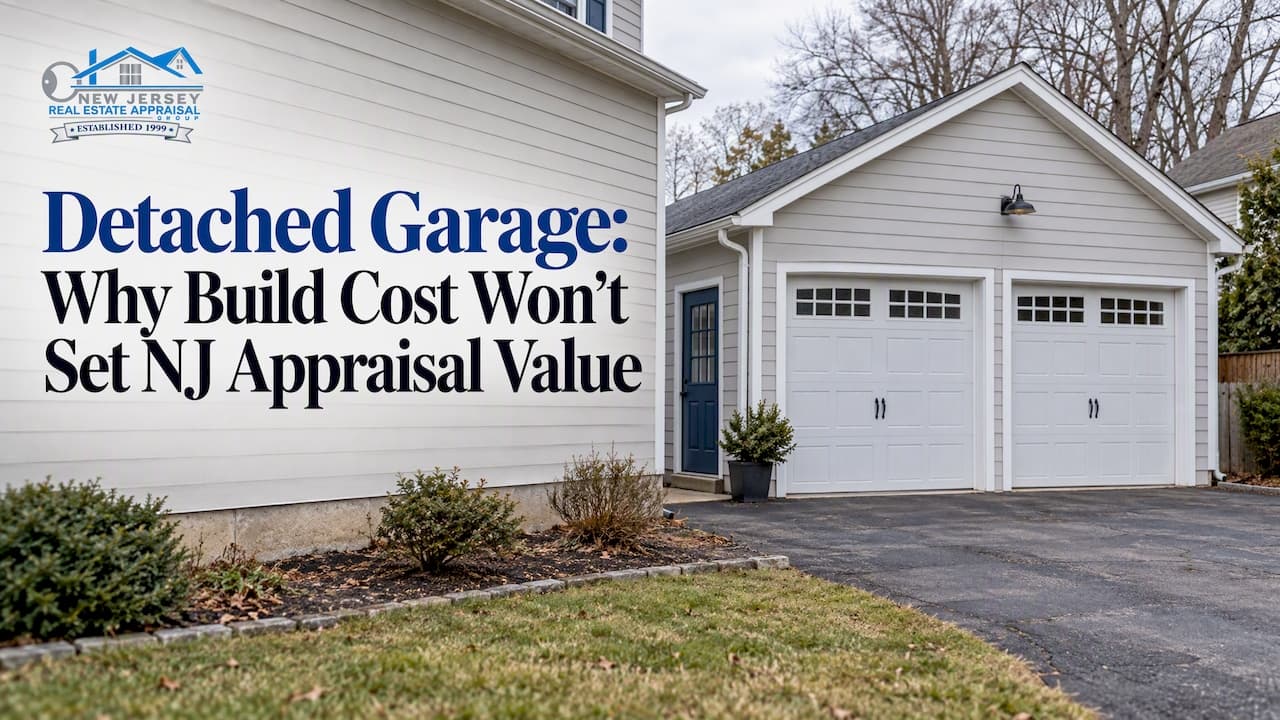
A permitted, functional detached garage can add measurable appraisal value, but appraisers base the adjustment on market evidence, not build cost. NAHB research points to roughly 10% for garages in general, and detached ones often land below that. Fannie Mae requires market-supported adjustments. We can document it in a certified report.
TL;DR:
- Appraisers give the strongest support to a garage adjustment when paired sales compare otherwise similar homes, one with a garage and one without.
- Older garages with poor maintenance may contribute less than newer structures, while construction invoices show replacement cost rather than what local buyers will pay.
- Permits, dated photos, contractor invoices, and utility records help verify condition and improvements; share rent figures only when a converted unit is legal and rentable.
- A detached accessory dwelling unit is valued as living space, so zoning, utilities, legal rental status, and comparable sales must support that separate use.
Table of Contents
- How do appraisers measure the value of a detached garage?
- What dollar and percentage numbers should you expect?
- Which factors raise or lower a detached garage's value?
- What should you document before an appraisal or sale?
- When do you need a formal appraisal, and what does it include?
- Why evidence beats rules of thumb for garage valuation
- Order a state-certified home appraisal from us
- FAQ
- Sources
How do appraisers measure the value of a detached garage?
Most appraisers start with the sales-comparison approach: they look at recent sales of similar homes, then adjust for differences. When a garage is the difference, the strongest support is paired-data analysis. That means comparing two otherwise similar sales, one with the garage and one without, and reading the price gap. Appraisal Institute adjustment guidance treats this as the best support when pairs exist.

Appraisers do not multiply construction cost by a fixed percentage. They estimate contributory value, which is what the market pays for the feature after depreciation. An older garage with a sagging roof may contribute less than a newer, well-maintained structure. Practitioner guidance on depreciated contributory value says depreciation can be substantial for older or less functional structures.
When direct comps are scarce, the work does not stop. An appraiser can:
- Widen the search to nearby neighborhoods with similar buyers
- Use older sales, with a clear explanation of why they still apply
- Review active listings and pending sales for market signals
- Document the reasoning behind any conclusion, including a conclusion of no contributory value
Reporting forms record garage type and size, so the adjustment is visible and checkable. HUD's appraisal protocol appendix notes that forms record whether a garage is attached or detached. Our guide to appraisal adjustments walks through the mechanics.
What dollar and percentage numbers should you expect?
NAHB reports that garages, attached and detached combined, can add about 10% to a home's value. Treat that as a broad reference, not a promise for your property. The value of a detached garage depends on local market evidence and the property’s features.
About 10% added value for garages in general, according to NAHB's 2025 analysis. Your detached garage may fall below that figure, depending on local demand and condition.
Build cost and appraised value are different numbers. NAHB's construction cost study shows how labor, materials, and site work drive what you pay a builder. A buyer, though, pays for what the garage is worth today in your market. Value is what a willing buyer pays, and that is often less than what you spent.
A few ways to read the numbers you see online:
- Online percentages are averages, and your market may sit well above or below them
- A contractor invoice shows cost, not contributory value
- The market response can vary with local demand, including the availability of parking.
- Comparable sales from your own area beat any national estimate
Investor-focused references such as this after-repair value glossary show how buyers think about improvements and what they expect to recover.
Which factors raise or lower a detached garage's value?
Condition comes first. A sound roof, a door that opens smoothly, a solid slab, and working lighting tell an appraiser the structure will serve the next owner. Deferred maintenance pushes the other way. Our piece on property condition in valuations explains how condition ratings flow into value.
- Finish level: Insulation, electrical service, heat, and a sealed floor turn storage into usable hobby or workshop space, which buyers tend to reward.
- Size and design: A garage that fits two vehicles and matches the main home's style reads as part of the property. An undersized or mismatched one reads as an afterthought.
- Site and parking context: Driveway access, lot layout, and neighborhood parking scarcity all raise demand. Where street parking is tight, covered parking carries real weight.
- Permits and legality: Permits and documentation can help an appraiser assess the work. Discuss any unpermitted conversion with the appraiser.
- Zoning: Local zoning and accessory-structure rules may affect how a garage or conversion is treated in the valuation.
An accessory dwelling unit (ADU) conversion changes the analysis. Freddie Mac's ADU guidance says a detached ADU must be assessed as living space, with zoning, utility, and comparable-sales support. HUD's ADU policy revisions add that rental-legal status matters. When a legal ADU is rentable, our market rent analysis may help support the numbers.
Submarkets matter too. A garage in a dense shore town with scarce parking is read differently than one in a rural township with large lots.
Pro Tip: Permits and other documentation can help the appraiser assess a finished garage. Market evidence is still needed to support its contributory value.
What should you document before an appraisal or sale?
Appraisers can only support what they can verify. Hand over the evidence up front.
- Gather permits, certificates, contractor invoices, and dated photos that show condition and workmanship.
- If the garage is finished or converted, add utility records and any certificate of occupancy. Share rent data only when the unit is legal and rentable.
- Pull recent sales of similar homes with comparable garages, and note any sales that resemble a paired comparison. Our guide to evaluating comparable properties shows what makes a comp useful, and our comparable sales analysis article explains how pairs are read.
- Fix quick issues such as roof leaks and damaged doors, and clear the driveway so the structure is easy to inspect.
- Consider a pre-listing appraisal to set price expectations and expose documentation gaps before buyers do. Our page on pre-listing appraisals explains the benefits, and our tips on common appraisal mistakes help you prepare for the visit.
Pro Tip: Finish upgrades should look intentional. Clean, consistent trim and doors signal quality, a point this partner article on interior doors makes about perceived value.
When do you need a formal appraisal, and what does it include?
A formal appraisal makes sense when the value has to hold up to scrutiny:
- Pre-listing pricing decisions
- Divorce and equitable distribution
- Estate, probate, and date-of-death matters
- Property tax appeals
- Retrospective valuations
- Financing disputes
A report can include a sales-comparison analysis, market-supported adjustments, condition commentary, and an opinion of value. Ask us about the report’s intended use and applicable standards.
Why evidence beats rules of thumb for garage valuation
In appraisal and renovation work, I have seen garages valued by assumption rather than market evidence. In one case, permits and comparable sales supported a garage adjustment above the owner's initial estimate. If the stakes are high, bring us the evidence and we will test it against the market.
— Alek Petreski
Order a state-certified home appraisal from us
Whether you are listing, settling an estate, or disputing a tax bill, we deliver state-certified, USPAP-compliant appraisals that document garage contributory value when the market supports it.
- Comparable-driven analysis with market-supported adjustments
- Condition assessment of the home and outbuildings
- A report you can use for legal, tax, or listing decisions
Request a Home Appraisal in New Jersey and tell us about your garage.

FAQ
How much is a detached garage worth in an appraisal?
It depends on your market, the garage's condition, and local comparable sales. NAHB's research shows garages in general can add about 10%, and detached ones often fall below that anchor.
What is the ROI on a detached garage?
Return varies because appraisers value what buyers will pay, not what you spent. Build cost is usually higher than contributory value once depreciation and local demand are applied.
How much does not having a garage devalue your house?
There is no fixed penalty. Appraisers compare your home with similar sales in your area, and the gap depends on how much local buyers expect covered parking.
How do you value a garage?
Appraisers use comparable sales, ideally paired sales with and without a garage, then adjust for age and condition. Fannie Mae requires that adjustments rest on market evidence.
Sources
- Which Home Features Add the Most Value? | NAHB
- Adjustments to Comparable Sales | Fannie Mae
- A Practical Guide to Appraising Accessory Dwelling Units (ADUs) - Freddie Mac Single-Family
- Market Conditions: GLA: Garage/Carport: Amenities:
Recommended
- NJ property appraisal fees: Full breakdown and costs
- Home Appraisal Cost NJ: What You'll Pay in 2026
- How appraisers determine value: A guide for NJ attorneys
This article is provided for general informational purposes only and does not constitute legal, tax, or financial advice. Real estate appraisal requirements can vary by assignment and intended use. For advice specific to your situation, consult the appropriate legal, tax, or financial professional.