
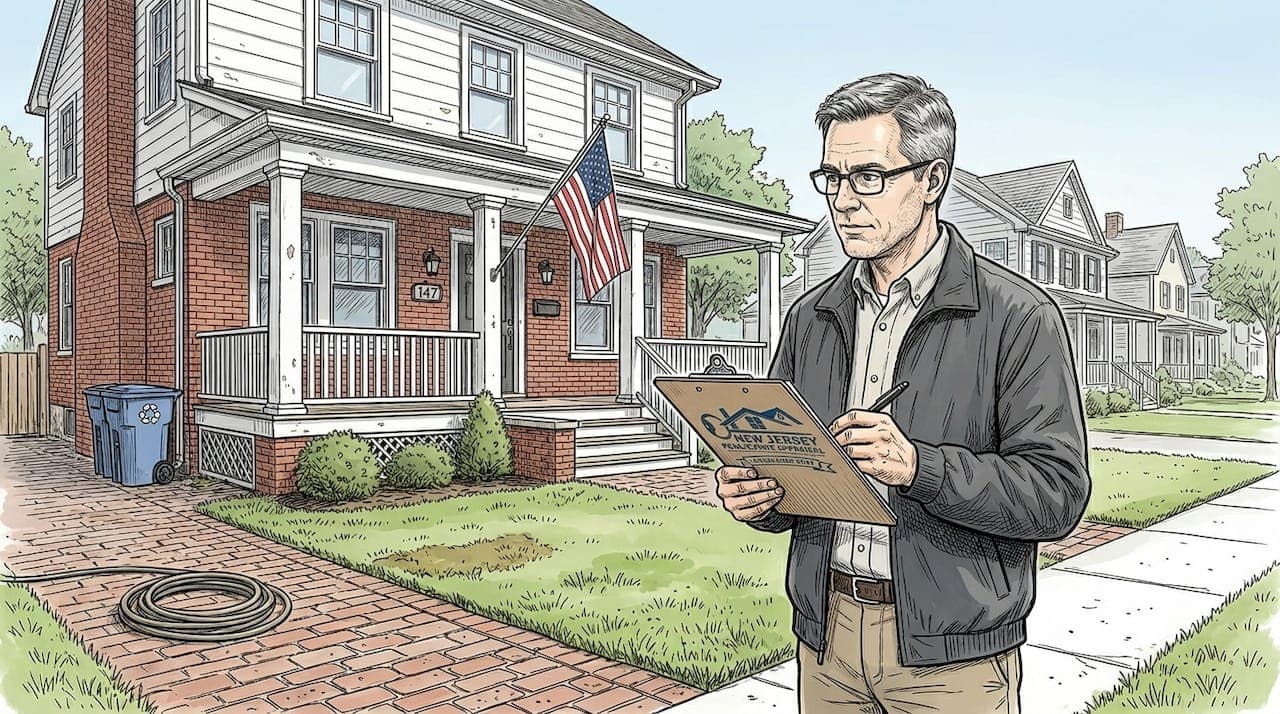
Many New Jersey homeowners think a residential appraisal is simply someone's opinion about what their house might sell for. That's a costly misunderstanding. A residential appraisal is actually a rigorous, regulated professional process that delivers an unbiased market value estimate following strict industry standards. Whether you're refinancing your mortgage, settling an estate, or navigating a divorce, understanding how appraisals really work protects your financial interests and helps you make smarter decisions. This guide walks you through the definition, methodology, challenges, and practical applications of residential appraisals in New Jersey.
Table of Contents
- Understanding residential appraisal: Definition and purpose
- How residential appraisals work: Methodology and process in New Jersey
- Special considerations and challenges in New Jersey residential appraisals
- Applying residential appraisals in New Jersey: Practical uses for homeowners
- Find certified residential appraisal services in New Jersey
- Frequently asked questions
Key takeaways
| Point | Details |
|---|---|
| Professional standard | Licensed appraisers follow USPAP guidelines to deliver unbiased market value estimates for residential properties. |
| Sales comparison focus | Most NJ home appraisals rely on analyzing recent comparable sales adjusted for property differences. |
| Detailed inspection | Appraisers measure, photograph, and assess interior and exterior conditions to support accurate valuation. |
| Special circumstances | Divorce, estate settlements, and low comparable sales require adjusted approaches and neutral expertise. |
| Practical preparation | Homeowners can improve appraisal outcomes by addressing repairs, organizing documentation, and timing strategically. |
Understanding residential appraisal: Definition and purpose
A residential appraisal is an unbiased professional opinion of a property's market value, performed by a licensed appraiser following USPAP standards, primarily using the sales comparison approach for 1-4 unit homes. Unlike a casual estimate from a real estate agent or an automated online tool, a formal appraisal carries legal weight and meets lender, court, and regulatory requirements. Licensed appraisers in New Jersey must adhere to the Uniform Standards of Professional Appraisal Practice, which mandates objectivity, competence, and thorough documentation.
Residential appraisals focus on properties designed for personal occupancy, typically single-family homes, condos, townhouses, and small multi-family units up to four dwelling units. These properties dominate New Jersey's housing stock, from suburban neighborhoods in Bergen County to shore communities in Atlantic County. The appraiser's job is to determine what a willing buyer would pay a willing seller in an open market transaction, assuming neither party is under duress and both have reasonable knowledge of relevant facts.
Homeowners need appraisals for several critical situations. Refinancing your mortgage requires lenders to verify your home's current value before approving new loan terms. Estate settlements demand accurate valuations to divide assets fairly among heirs or satisfy tax obligations. Divorce proceedings rely on neutral appraisals to ensure equitable property division. Pre-listing appraisals help sellers set realistic asking prices and avoid costly pricing mistakes. Each scenario demands the same rigorous methodology and adherence to professional standards.
The sales comparison approach dominates residential appraisals because it reflects how most buyers actually make purchasing decisions. Appraisers identify recently sold homes similar to yours in location, size, condition, and features, then adjust those sale prices to account for differences. This method produces reliable valuations in active markets with sufficient comparable sales data. Understanding this foundation helps you appreciate why appraisers ask detailed questions about your home's characteristics and neighborhood dynamics during the inspection process. For comprehensive residential appraisal services, working with experienced professionals ensures compliance and accuracy.
How residential appraisals work: Methodology and process in New Jersey
Appraisers rely on three standard valuation approaches, though not all apply equally to every residential property. The sales comparison approach adjusts recent comparable sales for differences in size, condition, and location. The cost approach estimates what it would cost to rebuild your home from scratch, minus depreciation, plus land value. This method works best for new construction or unique properties with few comparables. The income approach calculates value based on rental income potential, rarely used for owner-occupied single-family homes but relevant for investment properties. USPAP requires appraisers to consider all three approaches and explain why they emphasized or excluded any particular method in their analysis.
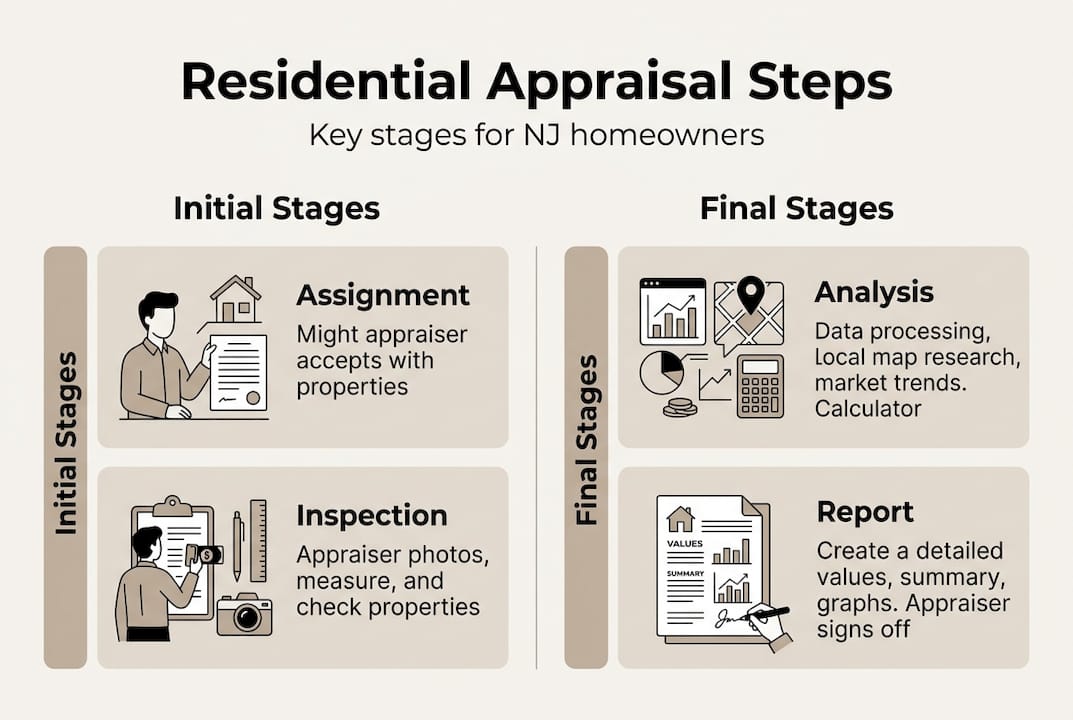
The appraisal process unfolds in five distinct stages. First, the client assigns the appraiser and provides property details and the appraisal's intended use. Second, the appraiser schedules and conducts a thorough property inspection, measuring rooms, photographing interior and exterior features, noting condition and quality, and documenting any upgrades or defects. Third, the appraiser collects data on recent comparable sales, current market trends, neighborhood characteristics, and relevant economic factors. Fourth, the appraiser analyzes this information, adjusts comparable sales for differences, reconciles various value indications, and forms a final opinion of market value. Fifth, the appraiser prepares the Uniform Residential Appraisal Report (URAR), a standardized form that lenders and courts recognize nationwide.
During the inspection, expect the appraiser to spend 30 to 60 minutes at your property, depending on size and complexity. They will measure the exterior to calculate gross living area, photograph all rooms and significant features, test appliances and systems for functionality, note the condition of flooring, walls, and fixtures, and assess curb appeal and landscaping. Appraisers also evaluate location factors like proximity to schools, shopping, transportation, and any negative influences such as busy roads or commercial properties. This detailed inspection forms the factual foundation for the entire valuation.

The data collection phase separates professional appraisals from casual estimates. Appraisers search Multiple Listing Service databases, public records, and proprietary data sources to identify comparable sales from the past three to six months within a half-mile to one-mile radius. They verify sale details, confirm arm's length transactions, and exclude distressed sales that don't reflect typical market conditions. In analyzing trends, appraisers consider whether your local market is appreciating, stable, or declining, which influences how they weight older versus newer comparables. For guidance on what happens during a home appraisal, reviewing the process beforehand reduces anxiety and helps you prepare effectively.
Pro Tip: Clean and declutter your home before the appraisal inspection. While appraisers focus on structural elements and comparable sales data, a well-maintained appearance signals pride of ownership and can subtly influence condition ratings. Address obvious repairs like leaky faucets, broken fixtures, or peeling paint to avoid negative adjustments.
| Appraisal Stage | Typical Timeline | Key Activities |
|---|---|---|
| Assignment | Day 1 | Client orders appraisal, provides property info |
| Inspection | Days 2-5 | Appraiser visits property, measures, photographs |
| Data Collection | Days 3-7 | Research comparables, verify sales, analyze trends |
| Analysis | Days 7-10 | Adjust comps, reconcile approaches, form opinion |
| Report Delivery | Days 10-14 | Complete URAR, submit to client |
For detailed strategies on preparing for a home appraisal, taking proactive steps before the inspection can maximize your property's appraised value and streamline the lending or legal process.
Special considerations and challenges in New Jersey residential appraisals
New Jersey's competitive housing markets sometimes create appraisal gaps where purchase prices exceed appraised values. When bidding wars push sale prices above market fundamentals, appraisers must rely on objective data rather than emotional buyer behavior. If your offer exceeds the appraisal, you face three options: negotiate a lower purchase price with the seller, bring additional cash to cover the difference, or walk away if your contract includes an appraisal contingency. Lenders base loan amounts on the lower of the purchase price or appraised value, protecting themselves from overleveraged borrowers.
Unique home features present valuation challenges because they lack direct comparables. That custom three-season porch, professionally finished basement, or high-end kitchen renovation may add value, but quantifying the exact amount requires appraiser judgment and market analysis. Appraisers look for similar upgrades in comparable sales and adjust accordingly, but unusual features sometimes receive less credit than homeowners expect. Keeping receipts, permits, and contractor invoices helps appraisers understand the quality and cost of improvements, though market acceptance ultimately determines value, not your investment.
Divorce settlements demand neutral appraisers with no ties to either party. Courts require retrospective valuations as of the separation date, not current market conditions, which means appraisers must research historical comparable sales and market trends. This backward-looking analysis ensures fair property division based on the value when the marriage dissolved, not months or years later when the legal process concludes. Estate settlements face similar timing challenges, requiring valuations as of the date of death for tax and probate purposes. For specialized divorce settlement appraisals in NJ, experienced appraisers understand the legal nuances and documentation requirements these situations demand.
Low comparable sales inventory forces appraisers to expand search parameters or rely on older data. In slow markets or unique neighborhoods, finding three to five truly comparable sales within six months and one mile becomes impossible. Appraisers then use older sales with time adjustments to account for market appreciation or depreciation, expand the geographic search radius, or include pending sales and active listings as supporting evidence. These adjustments introduce more subjectivity and potential for disagreement, making appraiser experience and local market knowledge especially valuable.
Pro Tip: If you're in a divorce or estate situation requiring a retrospective appraisal, gather historical listing information, tax records, and photos from the relevant date. This documentation helps appraisers reconstruct market conditions and property condition at the valuation date, reducing disputes and supporting defensible opinions.
- Appraisal gaps require buyers to cover cash differences in hot markets
- Unique features like custom additions lack direct comparables for precise valuation
- Divorce appraisals need neutral professionals and retrospective date-of-separation values
- Low comparable sales force expanded search areas and time-adjusted older data
- Market volatility increases subjectivity and potential for valuation disputes
| Scenario | Standard Appraisal | Challenging Appraisal |
|---|---|---|
| Comparable Sales | 5+ recent sales within 0.5 miles | Fewer than 3 sales, require expanded radius |
| Property Features | Standard finishes, typical layout | Custom upgrades, unique architectural elements |
| Market Conditions | Stable appreciation, active listings | Rapid price changes, limited inventory |
| Valuation Date | Current as-is condition | Retrospective historical condition |
| Stakeholder Neutrality | Single client, clear purpose | Multiple parties, potential conflicts |
To navigate common home appraisal pitfalls, understanding these challenges before ordering an appraisal helps you set realistic expectations and prepare appropriate documentation.
Applying residential appraisals in New Jersey: Practical uses for homeowners
Refinancing represents the most common reason New Jersey homeowners order appraisals. Lenders require current valuations to calculate loan-to-value ratios and determine whether you qualify for better interest rates or can eliminate private mortgage insurance. Rising home values since your original purchase may provide equity for cash-out refinancing to fund renovations, debt consolidation, or other financial goals. The appraisal protects both you and the lender by ensuring the new loan amount aligns with actual market value, preventing overleveraging that could lead to financial distress.
Estate settlements require appraisals to establish fair market value for probate, tax reporting, and asset distribution among heirs. Executors need defensible valuations that satisfy IRS requirements and prevent disputes among beneficiaries. An independent appraisal provides the objective evidence courts and tax authorities demand, reducing the risk of challenges or penalties. The valuation date matters critically, as estate tax calculations depend on the property's value on the date of death, not when the estate finally closes months or years later.
Divorce proceedings rely on appraisals to divide marital assets equitably. Both parties need confidence that the valuation is fair and unbiased, which requires selecting an appraiser with no prior relationship to either spouse. The appraisal typically establishes the home's value as of the separation date, forming the basis for buyout negotiations or sale proceeds division. Accurate appraisals prevent one party from being shortchanged and reduce contentious disputes that prolong legal proceedings. For comprehensive divorce settlement appraisals, working with appraisers experienced in family law matters ensures compliance with court requirements.
Pre-listing appraisals help sellers set realistic asking prices based on objective market analysis rather than emotional attachment or wishful thinking. Overpricing leads to extended market time, price reductions, and buyer skepticism. An appraisal provides data-driven pricing guidance that attracts serious buyers and supports your negotiating position when offers arrive. This proactive approach demonstrates transparency and can accelerate sales by reducing appraisal-related surprises during the buyer's financing process. Explore pre-listing home appraisals in NJ to understand how this strategy benefits sellers in competitive markets.
Pro Tip: Schedule your appraisal during your home's best season when landscaping looks attractive and weather allows full property access. Spring and early summer typically showcase properties most favorably, though this matters less for interior-focused valuations. More importantly, time your appraisal to capture recent comparable sales that support your desired value, avoiding periods when market activity slows or prices soften.
- Order appraisals for refinancing to verify equity and qualify for better loan terms
- Use estate appraisals to satisfy probate requirements and prevent heir disputes
- Obtain neutral divorce appraisals to ensure fair property division and reduce conflict
- Get pre-listing appraisals to set data-driven asking prices and attract serious buyers
- Prepare documentation like receipts, permits, and comparable listings to support your appraiser's analysis
Working with certified appraisers familiar with New Jersey's diverse housing markets ensures your valuation reflects local nuances. Shore properties in Atlantic County have different value drivers than suburban homes in Morris County or urban properties in Hudson County. Appraisers with regional expertise understand these distinctions and select appropriate comparables that reflect your specific market segment. For localized service, consider Atlantic County appraisal services that combine state certification with deep knowledge of coastal property valuations.
Find certified residential appraisal services in New Jersey
Navigating refinancing, estate settlements, or divorce requires appraisers who combine technical expertise with local market knowledge. New Jersey Real Estate Appraisal Group delivers USPAP-compliant valuations backed by over 26 years of experience serving homeowners, attorneys, and lenders across the state. Whether you need a straightforward refinance appraisal or a complex retrospective valuation for legal proceedings, certified professionals ensure accuracy and defensibility.

Specialized services address unique property situations and geographic markets. Atlantic County appraisal services handle shore properties with expertise in seasonal market fluctuations and flood zone considerations. Divorce settlement appraisals provide neutral valuations that courts accept and both parties trust. Pre-listing appraisal services help sellers price strategically and close transactions faster. Choosing a reliable provider ensures your appraisal meets lender requirements, satisfies legal standards, and delivers the confidence you need for major financial decisions.
Frequently asked questions
What is the difference between an appraisal and a home inspection?
An appraisal assesses market value while a home inspection evaluates condition and safety. Appraisers focus on what your home is worth by comparing it to recent sales and analyzing market trends. Home inspectors examine structural integrity, mechanical systems, and potential defects to inform buyers about repair needs and safety hazards. Lenders require appraisals to justify loan amounts, while buyers order inspections to avoid purchasing properties with hidden problems.
How long does a residential appraisal typically take in New Jersey?
Most appraisals take one to two weeks from order to delivery of the final report. The appraiser usually schedules the property inspection within a few days of assignment, spending 30 to 60 minutes on site. Data collection, comparable sales analysis, and report preparation follow over the next week. Rush services may be available for time-sensitive transactions, though thorough analysis shouldn't be sacrificed for speed. Complex properties or challenging market conditions can extend timelines beyond two weeks.
Can I challenge or appeal an appraisal value in NJ?
You can request a reconsideration of value by providing additional comparables or information the appraiser may have missed. Submit recent sales data, documentation of upgrades, or corrections to factual errors in the original report. Working with your lender and appraiser collaboratively often resolves low appraisals without formal appeals. Professional advice helps you avoid common appeal mistakes and strengthens your case with relevant evidence. However, appraisers aren't obligated to change their opinion unless you demonstrate genuine errors or omissions in their analysis.
Do appraisers consider pending home improvements in their valuations?
Appraisers value properties in their current as-is condition, not based on planned future improvements. If renovations are in progress, the appraiser notes the incomplete work and may reduce value compared to finished condition. To capture improvement value, complete projects before the appraisal inspection and provide receipts, permits, and photos documenting the work quality. Some lenders offer renovation loans with appraisals based on after-improved value, but these require detailed contractor bids and construction timelines rather than casual homeowner plans.