

A triplex appraisal has to include the income approach, and for lender assignments, that means a Form 1025 operating income analysis that typically drives the final value opinion. The appraiser also runs a sales-comparison approach and, less often, a cost approach, then reconciles all three into one supportable number. If you're selling, refinancing, settling an estate, or fighting a tax assessment, you need a state-certified, USPAP-compliant report, not a back-of-envelope estimate from a listing agent.
TL;DR:
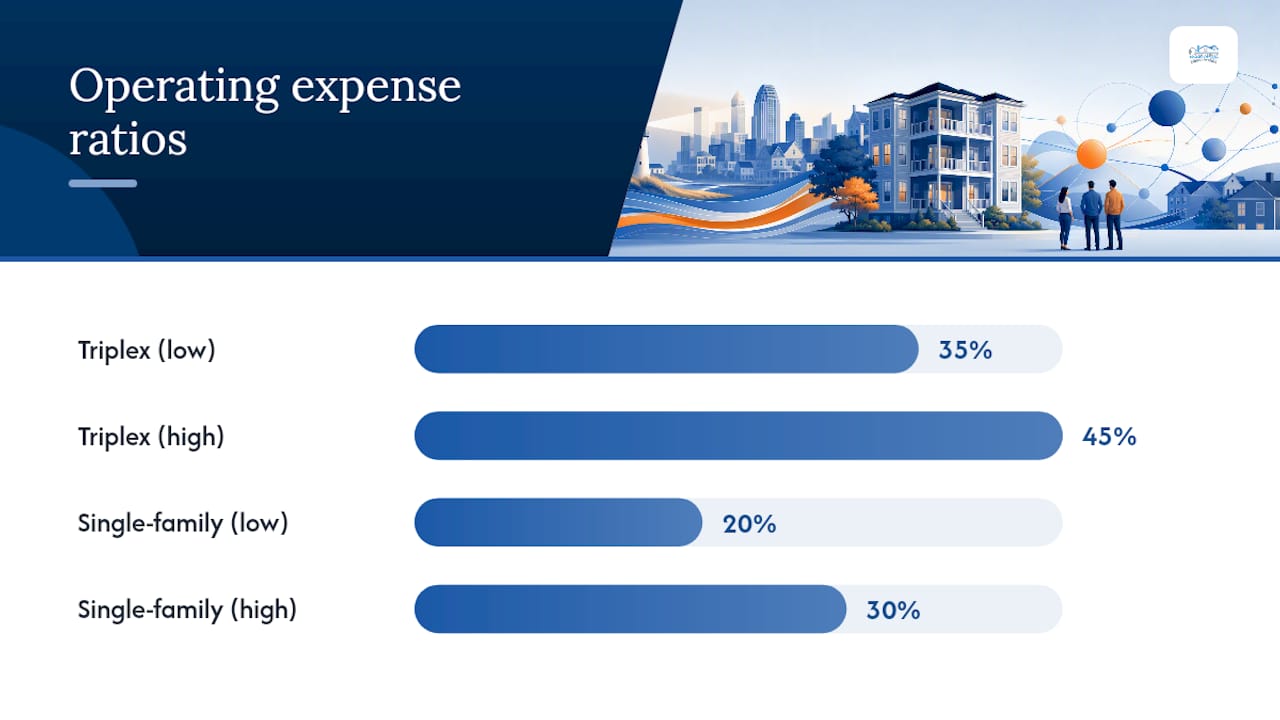
- Income analysis is mandatory for lender appraisals, with operating expenses normally ranging from 35 to 45 percent of effective gross income, which is higher than single-family ratios.
- Appraisers prioritize recent sales of similar small multifamily properties within a broader search radius and adjust comps for unit mix, condition, permits, and utilities.
- The cost approach is typically secondary for existing triplexes but becomes relevant in new construction or when sales and income data are unreliable.
- Providing a detailed rent roll, leases, operating statement, and utility bills can help lower conservative adjustments and improve final valuation accuracy.
- Appraisal fees usually range between $495 and $750, with report complexity and scope driving the cost rather than property size alone.
Table of Contents
- What Approaches Go Into a Triplex Appraisal?
- How Do You Calculate NOI and Cap Rate for a Triplex?
- How Do You Find and Adjust Triplex Comps?
- When Does the Cost Approach Matter for a Triplex?
- What Documents Does an Appraiser Need for a Triplex?
- What Red Flags Lower a Triplex's Appraised Value?
- When Should You Order a Triplex Appraisal?
- How Do You Review a Triplex Appraisal Report?
- Local Expertise Still Decides the Details
- Get a Triplex Appraisal You Can Actually Use
- Sources
- FAQ
What Approaches Go Into a Triplex Appraisal?
Three methods feed into every triplex valuation, but they don't carry equal weight.
The sales-comparison approach looks at recent sales of similar 2 to 4 unit properties and adjusts for differences in size, condition, unit count, and location. The income approach treats the triplex like the income-producing asset it is, converting rent into a value estimate through net operating income and a market cap rate. The cost approach estimates what it would cost to rebuild the structure today, minus depreciation, plus land value. It rarely drives the final number on an existing triplex.
Here's how appraisers typically weigh them:
- Lenders want to see both sales-comparison and income data on 2 to 4 unit reports, but income analysis is required, not optional, under Fannie Mae guidelines for cost and income approaches to value.
- Investors usually care more about what the property earns than what it might sell for on paper, so income-derived value often gets the final say in an investment context.
- Reconciliation isn't averaging the three numbers. The appraiser explains, in writing, why one approach got more weight, based on data quality and the assignment's purpose, a point practitioners debate constantly in forums like Appraisersforum.
Our breakdown of NJ valuation methods covers how this plays out property type by property type if you want the fuller picture.
How Do You Calculate NOI and Cap Rate for a Triplex?
Building a defensible income approach starts with an operating statement, not a guess. You work from gross potential rent down to net operating income in five steps.
- Gross Potential Rent (GPR). Add up market rent for all three units, even if one is currently vacant or under market.
- Vacancy and collection loss. Subtract a realistic vacancy factor, usually pulled from local rent comparable data.
- Effective Gross Income (EGI). GPR minus vacancy loss, plus any other income like parking or laundry.
- Operating expenses. Taxes, insurance, maintenance, management, and reserves, but never mortgage payments or income taxes.
- Net Operating Income (NOI). EGI minus operating expenses. This is the number the cap rate gets applied to.
Statistic Callout: Investors and appraisers who apply single-family expense ratios to a triplex almost always undervalue the expense line. Practitioner guidance suggests triplex operating expenses commonly run 35 to 45 percent of effective gross income, well above the 20 to 30 percent range typical of a single-family rental.
Once NOI is set, the appraiser picks a cap rate pulled from recent comparable small multifamily sales, not a generic market average. Gross Rent Multiplier (GRM), sale price divided by gross rent, works as a quick sanity check but shouldn't replace a properly derived cap rate. For 2 to 4 unit residential income properties, Fannie Mae requires the appraiser to complete Form 1025, which documents the full operating income statement and unit-level rent analysis. Our income approach guide for NJ investors walks through the math with real numbers if you want to build your own model before the appraiser shows up.
How Do You Find and Adjust Triplex Comps?
Small multifamily comps are harder to find than single-family comps, and appraisers often have to work for them.
Widen the search radius and timeframe before assuming there's no data. Six months and a two-mile radius might not cut it in a lower-density county, so a good appraiser will push further before settling for a weak match. Prioritize other 2 to 4 unit sales over single-family comps, and use price per unit alongside price per square foot since neither number alone tells the full story on a triplex.
Every comp gets adjusted for the differences that matter:
- Unit count and mix. A three-bed/two-bath unit mix rents differently than three studios.
- Condition and updates. Recent kitchen or roof work changes both rent potential and buyer appeal.
- Permitted status. An unpermitted third unit can knock a comp out of consideration entirely.
- Lot size and parking. Off-street parking for three units matters in dense NJ towns more than almost anywhere else.
- Income differential. If actual rents run well below or above market, that gap needs explaining, not ignoring.
When comps run thin, which happens often with 2 to 4 unit properties, the income approach becomes the decisive check on value rather than a supporting data point. Our guide to comparable sales analysis has more on adjustment grids if you want to see how NJ appraisers structure them.
When Does the Cost Approach Matter for a Triplex?
The cost approach estimates land value plus reproduction cost, minus depreciation. For an existing triplex, that's usually the least reliable of the three methods, and most appraisers treat it as a secondary check rather than a driver of value.
It earns real weight in narrower situations: new construction where actual build costs are known, a property with unusual improvements that don't have good market comps, or an assignment where both sales and income data are too thin to trust on their own.
What Documents Does an Appraiser Need for a Triplex?
The paperwork you hand over directly shapes how conservative the appraiser has to be. Gather these before the inspection:
- Rent roll showing current tenants, unit numbers, lease start dates, and rent amounts.
- Signed leases for every unit, not verbal agreements or "what the last owner told me."
- Trailing 12-month operating statement covering taxes, insurance, utilities, repairs, and management.
- Utility bills showing whether meters are separate or shared across units.
- Certificate of Occupancy confirming the unit count matches what the township has on file.
- Recent repair receipts and photos of major systems like the roof, furnace, and water heater.
Unit-level facts matter too: square footage, bedroom and bathroom count per unit, HVAC capacity, and whether each unit has its own electric and gas meter.
Pro Tip: An organized document package doesn't just speed up turnaround. Verified rents and a clean operating statement reduce the conservative adjustments an appraiser has to make when data is thin, which can directly protect your final value opinion.
What Red Flags Lower a Triplex's Appraised Value?
A handful of issues show up again and again on triplex assignments, and each one tends to shrink the number an appraiser can support.
- Unpermitted units. If the certificate of occupancy shows two units and you're renting three, lenders will typically exclude that third unit's income entirely.
- Shared utilities and undersized systems. One water heater or furnace serving three units raises functional obsolescence concerns.
- Parking shortfalls. Zero off-street parking for three units is a real drag on marketability in most NJ towns.
- Rents without leases. Verbal arrangements or rents that look too high for the market get discounted or thrown out.
- Missing expense data. No operating statement means the appraiser has to estimate expenses conservatively, which usually pulls NOI down.
When Should You Order a Triplex Appraisal?
The reason you need the appraisal should dictate the report type. A purchase or refinance typically calls for a Form 1025 report built around current market value and income analysis. An estate or date-of-death assignment needs a retrospective appraisal valuing the property as of a past date. Divorce, litigation, or a contested tax appeal calls for a court-ready report built to hold up under cross-examination, since assignments like these often carry documentation requirements beyond a standard lender report.
Fees and turnaround vary by scope and complexity, so get a written estimate before you commit. If you plan to finance the property with an FHA or portfolio loan, tell the appraiser up front. Owner-occupancy on one unit changes how the income analysis gets built.
How Do You Review a Triplex Appraisal Report?
A USPAP-compliant, state-certified appraisal carries weight with lenders, courts, and tax boards because the appraiser is bound by professional standards, not just a client's preferred number. When you get the report back, ask a few pointed questions before you rely on it.
- Why was this cap rate chosen, and what sales support it?
- How were the comparables selected, and were adjustments explained?
- Are the operating expenses documented or estimated?
- How was any unpermitted unit treated in the analysis?
Use the answers to negotiate a purchase price, support a refinance, plan repairs, or back up a legal or tax position with a number that can survive scrutiny.
Local Expertise Still Decides the Details
Newjerseyrealestateappraisal brings state-certified, USPAP-compliant appraisal services and 26+ years of combined experience across all 21 New Jersey counties. On triplexes, we routinely confirm zoning compliance, occupancy status, and utility metering before the numbers ever go into a report. That local read on what a township will and won't allow is often what separates a defensible valuation from one that falls apart under review.
— Alek
Get a Triplex Appraisal You Can Actually Use
Newjerseyrealestateappraisal is the direct alternative to guessing at your triplex's value from a rent roll and a hunch. We deliver state-certified, USPAP-compliant reports built around the same Form 1025 income analysis lenders and courts expect, whether you're financing a purchase, settling an estate, or fighting a tax assessment.

If you're selling or refinancing, our home appraisal services cover residential and small multifamily properties, including triplexes, with reports priced between $495 and $750. Facing a divorce settlement instead? Our court-ready divorce appraisals run $550 to $800 and hold up under legal scrutiny. Upload your rent roll and leases when you request a quote, and call us at (908) 517-3913 to talk through your timeline before you commit to a report type.
Sources
This article draws on Fannie Mae's Form 1025 income approach guidance and the investor-focused triplex valuation guide from Real Estate Financial Planner.
- Homebuyer
- Ultimate Guide to Triplexes for Real Estate Investors - Real Estate Financial Planner™
- Appraisersforum
FAQ
How Do You Determine the Value of a Multifamily Property?
Appraisers typically build value from net operating income and a market-derived cap rate, then check that number against comparable sales of similar unit counts. For 2 to 4 unit properties, Fannie Mae requires the income approach and Form 1025 analysis as part of the report, not as an optional extra.
What Is the Average Cost of a Triplex Appraisal?
Pricing depends on location, complexity, and report type rather than a single flat number. Newjerseyrealestateappraisal's home appraisal services, which cover residential and small multifamily properties including triplexes, run between $495 and $750.
What Is a Normal Appraisal Fee for a Small Income Property?
Fees for 2 to 4 unit income properties tend to run higher than a standard single-family appraisal because the report requires a full operating income analysis and unit-level rent review. Expect the fee to reflect that added documentation, and always get a written estimate before ordering.
What Are the Three Types of Appraisal Approaches?
The three approaches are sales-comparison, income, and cost. On a triplex, income and sales-comparison typically carry the most weight in the final reconciliation, while the cost approach usually plays a secondary role unless the property is new construction or comps are scarce.