
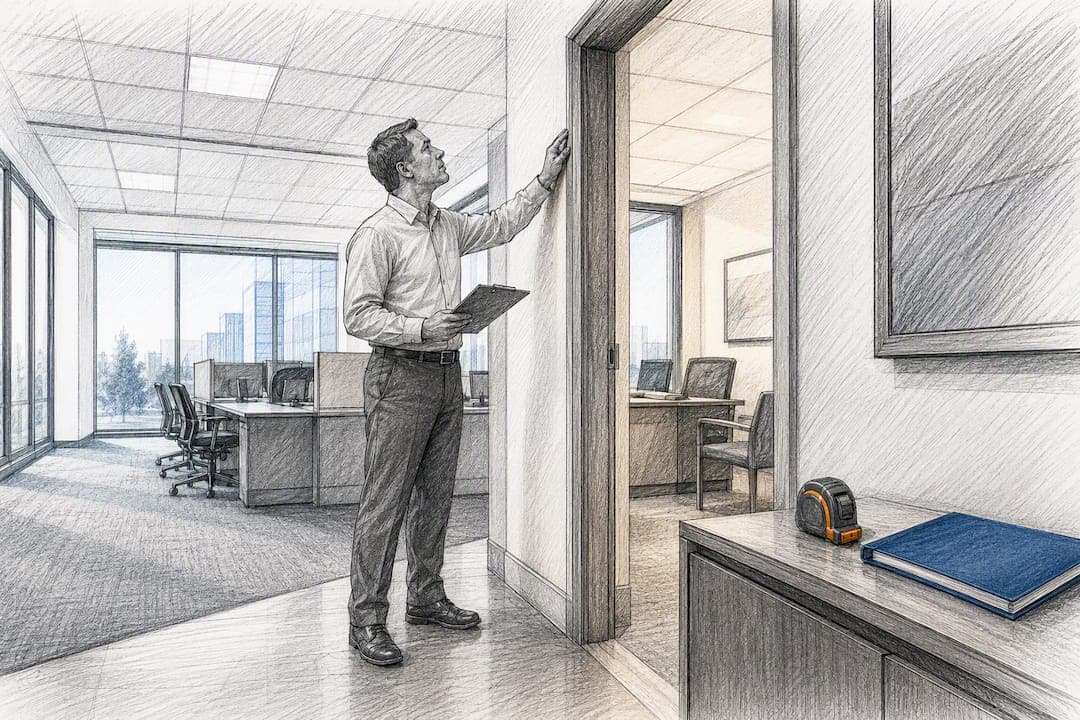
Appraisal costs for office buildings in NJ vary widely based on square footage, tenant complexity, and the report's intended use. Size and lease structure drive most of that spread, followed by whether the assignment requires a lender-grade income model or court-ready exhibits. Tax-appeal deadlines and lender effective-date rules can also push costs up if you're ordering under time pressure.
TL;DR:
- Appraisal costs in New Jersey vary based on building size, tenant complexity, scope depth, and urgent timelines, often exceeding national averages in dense markets.
- Fees increase significantly with detailed income approaches, lease analysis, court requirements, or rush turnaround, and are higher in urban counties with complex zoning or more comparable sales.
- Lender appraisals typically cost around $3,400 on average, but tax appeals and litigation assessments demand heavier documentation and may require extended analysis and testimony.
- Proper planning involves securing written quotes with clearly defined scope, effective dates, and intended use, ideally obtained six to eight weeks before filing deadlines.
- Using a state-certified appraiser helps ensure report credibility and court readiness, especially for appeals or major transactions, reducing the risk of rejection or delay.
Table of Contents
- Office Building Appraisal Cost in NJ by Size and Complexity
- What Drives the Price Up: Scope, Data, and Timeline
- Lenders vs. Courts: Different Rules, Different Costs
- New Jersey Deadlines and Market Context You Need to Know
- Your Pre-Quote Checklist Before You Call an Appraiser
- Who Pays and How to Request a Reliable Quote
- Do Costs Vary by New Jersey County or Municipality?
- What Actually Happens During the Appraisal Process
- Fees to Watch for Beyond the Base Quote
- How to Verify a New Jersey Appraiser's Credentials
- Why the Extra Cost of a State-Certified Report Is Usually Worth It
- Get a Scoped Commercial Appraisal Quote From NJREAG
- Sources
- FAQ
Office Building Appraisal Cost in NJ by Size and Complexity
Fee ranges scale with building complexity, not just square footage. A single-tenant office condo in Cherry Hill takes far less analytical work than a multi-tenant Class A tower in Newark with staggered lease rollovers.
Here's how it typically breaks down for New Jersey commercial building valuation cost:
Fee ranges for office building appraisals increase with building complexity and size, from simpler single-tenant offices to complex, large-scale or contested valuations requiring extensive analysis and possibly testimony.
LightBox reported that the average lender-driven commercial appraisal fee was approximately $3,400 per project in early 2025, with office assignments representing a significant portion of that volume. New Jersey's Northern and suburban Class A submarkets tend to land above that national average because of denser lease documentation and higher land values. Treat national numbers as a floor, not a ceiling, when budgeting for a New Jersey property.
What Drives the Price Up: Scope, Data, and Timeline
Appraisal fees aren't arbitrary. USPAP requires every appraiser to define and disclose a scope of work sufficient to produce credible results, and that scope is exactly what determines your invoice.
Four factors push cost higher on almost every commercial building valuation cost quote:
- Income approach depth. A simple direct-cap model costs far less than a full lease-by-lease discounted cash flow analysis with rent-roll modeling.
- Lease and tenant analysis. Buildings with concessions, staggered expirations, or renewal options require more hours than a single-tenant net lease.
- Report format and add-ons. Lender addenda, court-ready exhibits, or deposition and testimony availability all add line-item fees.
- Turnaround and access. Rush timelines and properties with limited inspection access (occupied multi-tenant floors, security-restricted suites) add cost too.
Pro Tip: Ask upfront whether your quote includes one effective date or multiple. Retrospective valuations for estate or litigation matters often require a second, separate analysis date, and that's rarely included in a base quote unless you ask.
Lenders vs. Courts: Different Rules, Different Costs
Who's going to read the report changes what the report has to contain, and that changes the price. Lenders, tax courts, and private buyers each set different expectations.
- Lender-ordered appraisals typically require a narrow effective-date window, an as-is value opinion, and specific approaches dictated by the loan program. Regulatory guidelines behind these rules exist to protect loan collateral decisions.
- Tax-appeal and litigation assignments demand heavier documentation. The NJ Division of Taxation's own petition instructions call for comparable sales data, income and expense statements, and sometimes appraiser presence at the hearing.
- Intended use governs everything. A refinance appraisal and a date-of-death retrospective valuation on the same building can require entirely separate engagements, each priced on its own scope.
New Jersey Deadlines and Market Context You Need to Know
If you're appealing a commercial assessment, timing isn't flexible. New Jersey generally requires appeals to be filed by April 1 or 45 days after your taxing district mails assessment notices, whichever is later. Some counties, including Burlington, Monmouth, and Gloucester, use an alternate schedule starting January 15 or 45 days. Confirm your county's deadline before assuming your filing window.
Order your appraisal at least six to eight weeks before your filing deadline. That window covers scheduling the inspection, allowing attorney review, and keeping room for appraiser testimony if the case goes to hearing.
New Jersey's office market isn't uniform either. Cushman & Wakefield's Q4 2025 data shows Class A rents and vacancy rates diverging sharply between Northern NJ submarkets and the rest of the state, which directly shapes the assumptions your appraiser has to defend.
Your Pre-Quote Checklist Before You Call an Appraiser
Get organized before you request quotes and you'll get faster, more comparable numbers back. Gather your rent roll, current leases and amendments, two to three years of operating statements, recent tax bills, and any capex history.
Confirm these items in writing before work starts:
- Intended use and intended users (refinance, tax appeal, estate, litigation)
- The effective date, or dates, you need valued
- Whether the deliverable is a full narrative report or a restricted-use summary
- Whether revisions, lender addenda, or courtroom testimony are included
USPAP requires appraisers to disclose their scope of work up front, so a vendor who won't commit these details to writing is a warning sign, not a shortcut.
Pro Tip: A five-minute scoping call that pins down your effective date and intended use almost always saves money. Post-engagement scope changes, like adding a second valuation date, typically cost more than including them from the start.
Who Pays and How to Request a Reliable Quote
Payment norms follow the transaction. Borrowers usually pay for refinance appraisals, buyers commission private pre-purchase reports, and property owners pay for tax-appeal appraisals. Lenders sometimes order and pay directly, then bill the borrower through closing costs.
To get a quote you can actually compare:
- Assemble your rent roll, leases, and operating statements first.
- Call for a short scoping conversation covering intended use and effective date.
- Request a written engagement letter with line-item pricing, not a flat verbal number.
- Get two quotes from state-certified appraisers before you commit.
Walk away from any quote missing a written scope statement, a USPAP compliance reference, or a clear effective date. Those gaps almost always turn into change orders later.
Do Costs Vary by New Jersey County or Municipality?
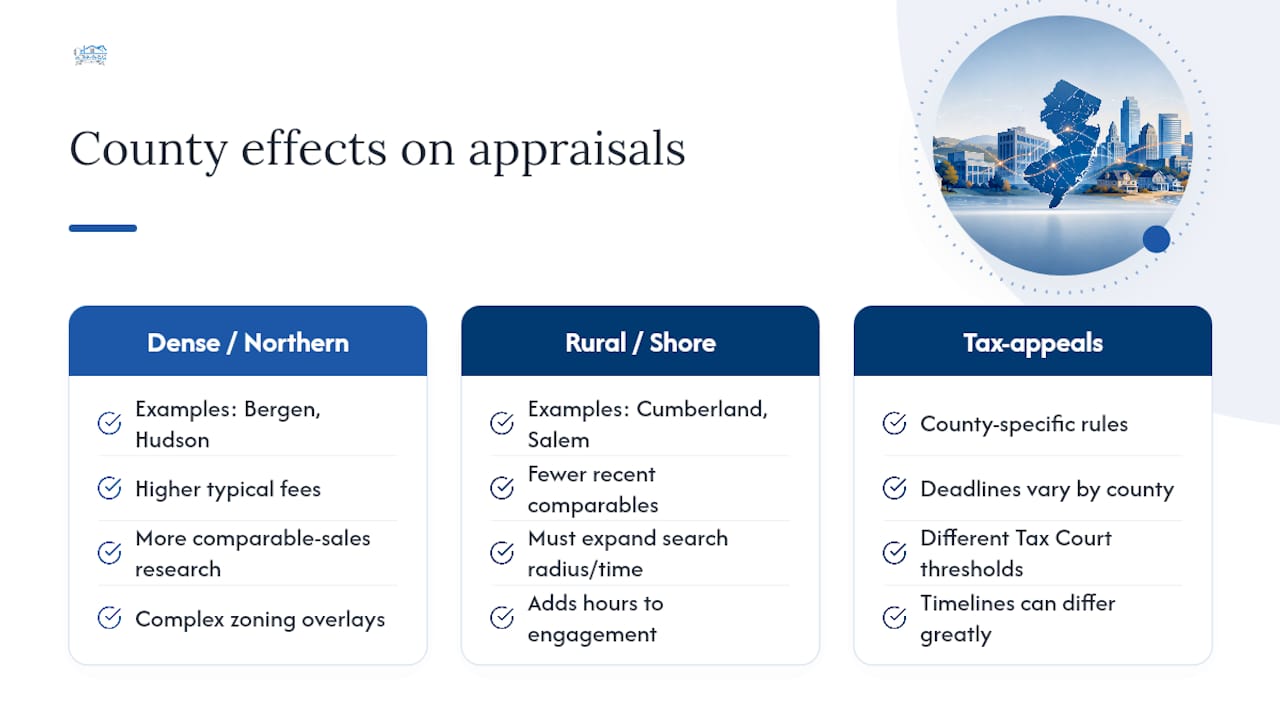
Yes, and the gap can be significant. An office appraisal in Bergen or Hudson County typically costs more than the same square footage in Cumberland or Salem County, mainly because dense Northern NJ submarkets carry more comparable-sales research, more competing land uses, and more complex zoning overlays to analyze.
Municipalities inside major business corridors, think Route 1 in Mercer County, the Route 78 corridor in Union and Essex, or the Hudson waterfront, also tend to have more actively traded comparables. That's a double-edged sword: more data can speed up research, but it also means more properties to reconcile against your subject building.
Shore counties and rural municipalities sometimes see the opposite problem. Fewer comparable office sales mean the appraiser has to expand the search radius or reach further back in time, which adds hours even though the property itself might be simple. If you own an office building in a county with thin transaction volume, mention that to your appraiser during the scoping call. It affects both the timeline and the fee.
Tax-appeal work adds another county-specific wrinkle: filing deadlines and Tax Court thresholds vary by county, so a Monmouth County appeal and an Essex County appeal can run on entirely different clocks even for a similarly valued building.
What Actually Happens During the Appraisal Process
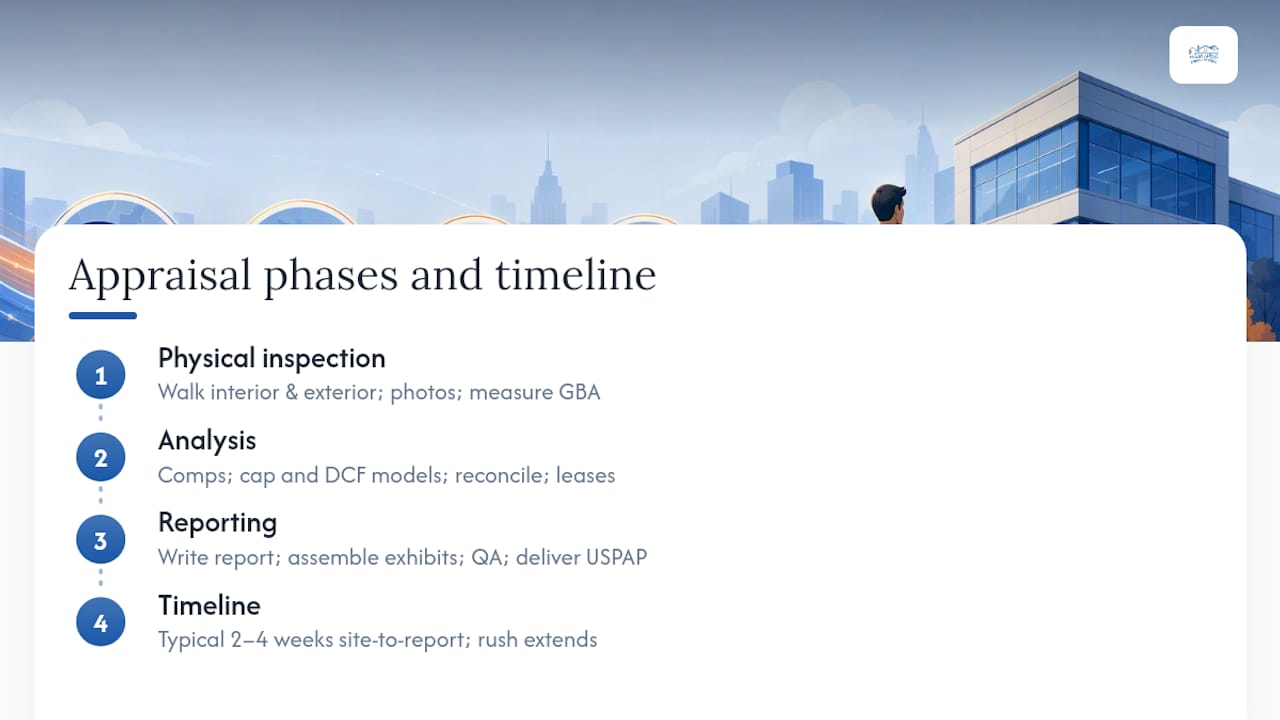
Your fee covers three distinct phases, and knowing what each one involves helps you understand where the money goes. The first is the physical inspection: the appraiser walks the interior and exterior, photographs conditions, measures gross building area, and notes deferred maintenance or functional obsolescence.
The second phase is analysis, and this is where most of the fee lives. The appraiser researches comparable sales and leases, builds an income model (direct capitalization, discounted cash flow, or both), reconciles the sales comparison and cost approaches where applicable, and determines highest and best use. For multi-tenant buildings, this means reviewing every lease, tracking expirations, and modeling market rent versus contract rent.
The third phase is reporting: writing the narrative, assembling exhibits, running the file through quality review, and delivering a signed, USPAP-compliant document. For lender or tax-appeal assignments, this stage also includes formatting to match required addenda or exhibit standards. A typical office building appraisal takes two to four weeks from initial site visit to final report delivery in New Jersey, though rush requests or litigation assignments can extend that timeline if testimony prep is involved.
Fees to Watch for Beyond the Base Quote
A base quote rarely covers everything you'll eventually need. Ask specifically whether these items are included or billed separately before you sign an engagement letter.
- Additional effective dates. Need a current value and a retrospective date-of-death value in the same report? That's usually two analyses billed separately.
- Revision requests. Lenders sometimes kick a report back for formatting or clarification. Confirm how many revision rounds are included.
- Testimony and deposition fees. Court appearances are billed hourly, often at a premium rate, and are almost never bundled into the base fee.
- Rush fees. Compressing a three-week turnaround into five business days can add 20 to 30 percent to the quote.
- Travel fees. Appraisers covering distant counties or multiple building sites within a portfolio may add mileage or per-site charges.
None of these are hidden in a bad-faith sense. They're standard industry practice. The problem is that vague engagement letters let vendors add them after the fact, which is exactly why a written scope statement matters before work begins.
How to Verify a New Jersey Appraiser's Credentials
New Jersey commercial appraisals require a state-certified general appraiser license, the highest tier the state issues, because it's the only license class authorized to appraise non-residential property regardless of transaction value. You can verify any appraiser's license status, expiration date, and disciplinary history through the New Jersey Department of Banking and Insurance's licensing lookup.
Ask directly whether the appraiser is state-certified, how many years they've worked NJ commercial assignments, and whether they've testified in NJ Tax Court before. A qualified appraiser will also cite USPAP compliance without you having to ask, since it's a professional requirement, not an optional add-on. If a "quote" comes from someone who can't produce a license number on request, that's not a discount. That's a liability.
Why the Extra Cost of a State-Certified Report Is Usually Worth It
We've seen too many owners choose the cheapest quote for a tax appeal, only to have the report rejected because it lacked proper scope disclosure or the appraiser wasn't available to testify. That's not a hypothetical risk. It's the most common reason appeals stall.
We're state-certified with 26+ years of combined experience across all 21 NJ counties, and every report we deliver is USPAP-compliant. For a straightforward refinance, a lean scope makes sense. For a tax appeal, litigation, or major refinancing decision, the higher-scope report is what actually holds up when someone challenges it. If you're not sure which category your assignment falls into, call us and we'll scope it honestly.
Get a Scoped Commercial Appraisal Quote From NJREAG
Most of the appraisal cost confusion we hear about comes from vendors who quote a number before they know your building's tenant mix, effective date, or intended use. We don't do that. Our commercial real estate appraisals in New Jersey start with a scoping conversation, not a guess.

A scoped quote from us includes a written engagement letter with line-item pricing, a defined effective date, and a clear statement of whether the deliverable is a full narrative report or a restricted-use summary. We're state-certified, USPAP-compliant, and experienced across every one of New Jersey's 21 counties, from Bergen to Cape May. Most office appraisal assignments take two to four weeks from inspection to delivery, though tax-appeal filings get priority scheduling when deadlines are close.
If you need a court-ready report for a tax appeal, refinance, or litigation matter, call us at (908) 517-3913 or request your quote directly through our commercial appraisal services page. Tell us your county, your building size, and your deadline, and we'll tell you exactly what it'll cost.
Sources
This article draws on The Appraisal Foundation's USPAP scope-of-work standards, the NJ Division of Taxation's local property tax appeal guidance, and fee benchmarking from LightBox's appraisal index. New Jersey market conditions referenced here come from Cushman & Wakefield's Q4 2025 office marketbeat report. Confirm county-specific appeal deadlines directly with your local tax assessor before filing.
- The Appraisal Foundation — Standards and Scope guidance
- LightBox — Appraisal index Q1 2025
- Cushman & Wakefield — New Jersey office marketbeat Q4 2025
FAQ
How much does an office building appraisal cost in NJ?
Office building appraisal cost in NJ varies widely depending on square footage, tenant complexity, and additional report requirements like lender addenda or court-ready exhibits. Commercial real estate appraisals from NJREAG are priced after a scoping call, so the price is available on request.
What does a commercial building appraisal cost cover?
A commercial building valuation cost covers three phases: the physical inspection, market and income analysis (including lease review and cash flow modeling), and the written USPAP-compliant report. Add-ons like lender addenda, revisions, or testimony are typically billed separately.
Who pays for an appraisal on commercial property?
Payment norms follow the transaction: borrowers usually pay for refinance appraisals, buyers commission private pre-purchase reports, and property owners pay for tax-appeal appraisals. Lenders sometimes order the report directly and bill the cost through closing.
How are commercial office buildings appraised?
Appraisers use the income approach (direct capitalization or discounted cash flow), the sales comparison approach, and sometimes the cost approach, reconciling all applicable methods into one opinion of value. USPAP requires the appraiser to disclose which approaches were used and why.
When should I order an appraisal for a NJ tax appeal?
Order it at least six to eight weeks before your filing deadline, which is generally April 1 or 45 days after your assessment-notice mailing, with some counties running on a January 15 alternate schedule. That timeline leaves room for the inspection, attorney review, and appraiser testimony if your case goes to hearing.