
Expect to pay roughly $300 to $1,500 or more for a typical New Jersey land appraisal, depending on parcel size and how you plan to use the report. Court-ready narrative appraisals for divorce, estate, or tax appeal cases commonly start around $600 to $900. Anything tied to a legal proceeding or lending decision requires a state-certified, USPAP-compliant appraiser. No shortcut around that requirement exists.
TL;DR:
- Land appraisal costs vary from $300 for small suburban lots to over $1,500 for large or complex parcels, with legal cases typically costing between $600 and $900.
- Appraisal fees are influenced primarily by parcel complexity, availability of comparable sales, scope of the assignment, and logistical factors like travel and timing.
- Certification by a state-licensed appraiser is mandatory for legal, tax, or mortgage-related valuations to ensure compliance with USPAP standards; informal estimates are not acceptable.
- The primary valuation approach for land in New Jersey is the sales comparison method, supplemented by extraction, income, or cost approaches depending on land type and use.
- Preparing documentation such as deeds, surveys, and prior appraisals before engaging an appraiser can help reduce research time and potentially lower fees.
Table of Contents
- Land Appraisal Cost NJ: Typical Price Ranges By Parcel And Purpose
- What Actually Drives The Price Of A Land Appraisal?
- Do You Need A State-Certified, USPAP-Compliant Appraisal?
- How Appraisers Actually Value Land In New Jersey
- How Long Does A Land Appraisal Take, And What Costs Extra?
- Can You Lower The Cost Without Cutting Corners?
- Understanding Regulatory And Licensing Requirements For NJ Land Appraisers
- What You're Actually Paying For: Inspection, Research, And Report Writing
- How Land Appraisal Costs Vary By NJ County
- Common Pitfalls That Drive Up Cost Or Undermine Accuracy
- NJREAG's Perspective: What Goes Into A Land Appraisal Quote
- Get A Land Appraisal Quote From NJREAG
- Sources
- FAQ
Land Appraisal Cost NJ: Typical Price Ranges By Parcel And Purpose
The cost of land appraisal in NJ tracks two things: how complicated the parcel is, and what the report needs to hold up against. A one-acre suburban lot with clean records costs far less to appraise than 40 wooded acres with wetlands questions or a parcel headed into a divorce settlement.
Here's what NJ property owners typically see:
- Small residential lots (under 1 acre, suburban): Usually priced in the lower range due to plentiful comparable sales, easy access, and quick inspections.
- Rural parcels (1 to 50 acres): Generally $600 to $1,500. Fewer comparable sales force the appraiser to search a wider radius or apply extraction techniques, which adds research time.
- Large or complex acreage: Costs are higher due to zoning complexities, environmental factors like wetlands, or parcels spanning multiple tax lots.
- Court-ready assignments (divorce, estate, tax appeal): Typically $600 to $900 or more, because these reports require a full narrative format, documented reasoning for every valuation approach used, and sometimes appraiser testimony down the line.
Costs climb past the typical bands when a parcel carries environmental red flags, unusual zoning overlays, or landlocked access. A property near wetlands or a former industrial site, for instance, may need extra research into environmental restrictions before the appraiser can even select comparables. NJREAG's own breakdown of NJ property appraisal fees shows legal-grade assignments frequently landing in the $600 to $900-plus range once documentation and narrative requirements are factored in.
What Actually Drives The Price Of A Land Appraisal?
Four variables explain almost every fee difference you'll see quoted:
- Parcel complexity. Size, topography, access roads, available utilities, and soil or environmental concerns all add inspection and research time.
- Comparable sales availability. Dense suburban markets have plenty of recent land sales to pull from. Rural counties often don't, which forces the appraiser to widen the search radius or use extraction methods pulled from improved property sales.
- Assignment scope. A basic form report for a lender costs less than a full narrative report built for a courtroom or tax appeal board, where every method and conclusion needs to be spelled out and defensible.
- Logistics. Travel time to remote parcels, acreage size, and rush timelines all factor into the final number.
Pro Tip: Have your deed, survey, and any prior appraisal or tax assessment ready before you call. Handing an appraiser existing documentation up front can shave real time off the research phase, and time is exactly what you're paying for.
Do You Need A State-Certified, USPAP-Compliant Appraisal?
If money, a lawsuit, or a tax bill depends on the outcome, the answer is yes. A state-certified appraisal, built to USPAP standards, is required for:
- Lending and mortgage decisions, including VA and FHA transactions, where lenders need a benchmarked, independent value.
- Divorce equitable distribution, where the report has to survive cross-examination and hold up in front of a judge.
- Estate and date-of-death valuations, used for probate and IRS purposes.
- Property tax appeals, where the county tax board expects documented methodology, not a guess.
Skip certification on any of these and you risk a rejected report, a stalled loan, or a tax appeal that gets dismissed for lack of credible evidence. A friend's opinion or a real estate agent's informal estimate carries no weight in front of a judge or a county board.
How Appraisers Actually Value Land In New Jersey
NJ appraisers lean on four recognized approaches, and which one carries the most weight depends on the parcel and its purpose. The New Jersey Real Property Appraisal Manual published by the Division of Taxation lays out the accepted methods county assessors and appraisers rely on.
- Sales comparison approach. The primary method for vacant land. The appraiser pulls recent sales of similar parcels and adjusts for differences in size, access, zoning, and location.
- Extraction method. Used when land sales are scarce. The appraiser starts with sales of improved properties and subtracts the depreciated value of the structure to isolate what the land itself is worth.
- Income approach. Applied when land generates measurable revenue, like a leased farm field or a billboard site, by capitalizing that income stream into a value.
- Cost approach. Mostly relevant when improvements exist on the site. For raw land, it plays a minor role since there's no structure to depreciate.
A credible report explains which methods were used and, just as important, why the others weren't. That documentation is exactly what a tax board or a divorce attorney will scrutinize first.
How Long Does A Land Appraisal Take, And What Costs Extra?
Routine assignments typically turn around in five to ten business days. Complex parcels, or anything requiring a full narrative report for court, can take two to three weeks once research and reconciliation are factored in.
Watch for these common add-ons:
- Rush fees, which increase the base fee significantly when reports are needed on very short notice.
- Travel surcharges for parcels in remote counties or requiring multiple site visits.
- Testimony fees, billed hourly, if the appraiser has to appear in court or at a deposition to defend the report.
Ask about these surcharges before you commission the work, not after the invoice arrives.
Can You Lower The Cost Without Cutting Corners?
There's no legitimate way to get a certified land appraisal for free. USPAP requires a licensed, state-certified appraiser to physically inspect the site and document market research, and that work isn't done as a courtesy.
That said, you have real options:
- Restricted-scope or desktop appraisals can work for informal planning purposes, but they carry documentation limits that make them unacceptable for lending, litigation, or tax appeals.
- Prep the site yourself. Clear brush from access points, mark boundary lines, and gather your deed, survey, and any prior tax assessment before the appraiser arrives.
- Bundle your documents. Handing over prior appraisals or title work up front reduces research hours, which can modestly reduce the fee.
Pro Tip: If your county has already reassessed nearby parcels, ask the appraiser whether that data is usable as a starting point. It won't replace an inspection, but it can speed up comparable research.
Understanding Regulatory And Licensing Requirements For NJ Land Appraisers
New Jersey requires real estate appraisers to hold a state license or certification issued through the New Jersey Department of Banking and Insurance. Two tiers matter for land work: Certified Residential appraisers, who can handle most vacant residential lots, and Certified General appraisers, who are qualified for larger acreage, commercial-adjacent parcels, and higher-value or more complex land assignments.
Every certified appraiser in NJ must follow USPAP, the uniform ethical and performance standards enforced nationwide. That means documented inspections, disclosed methodology, and a signed certification statement on every report. Continuing education is mandatory to keep a license active, which matters because valuation guidance, zoning rules, and market data all shift over time.
For land appraisals tied to legal or tax matters, ask directly whether the appraiser holds Certified General credentials and has recent experience with vacant land in your county. A residential specialist who mostly appraises single-family homes may not have the acreage-specific experience a 30-acre parcel with wetlands issues demands. Licensing status is public record and worth confirming before you commission a report, especially when the outcome affects a settlement or a tax bill.
What You're Actually Paying For: Inspection, Research, And Report Writing
A land appraisal fee breaks down into three main cost centers, and understanding them explains why two quotes for the "same" parcel can differ.
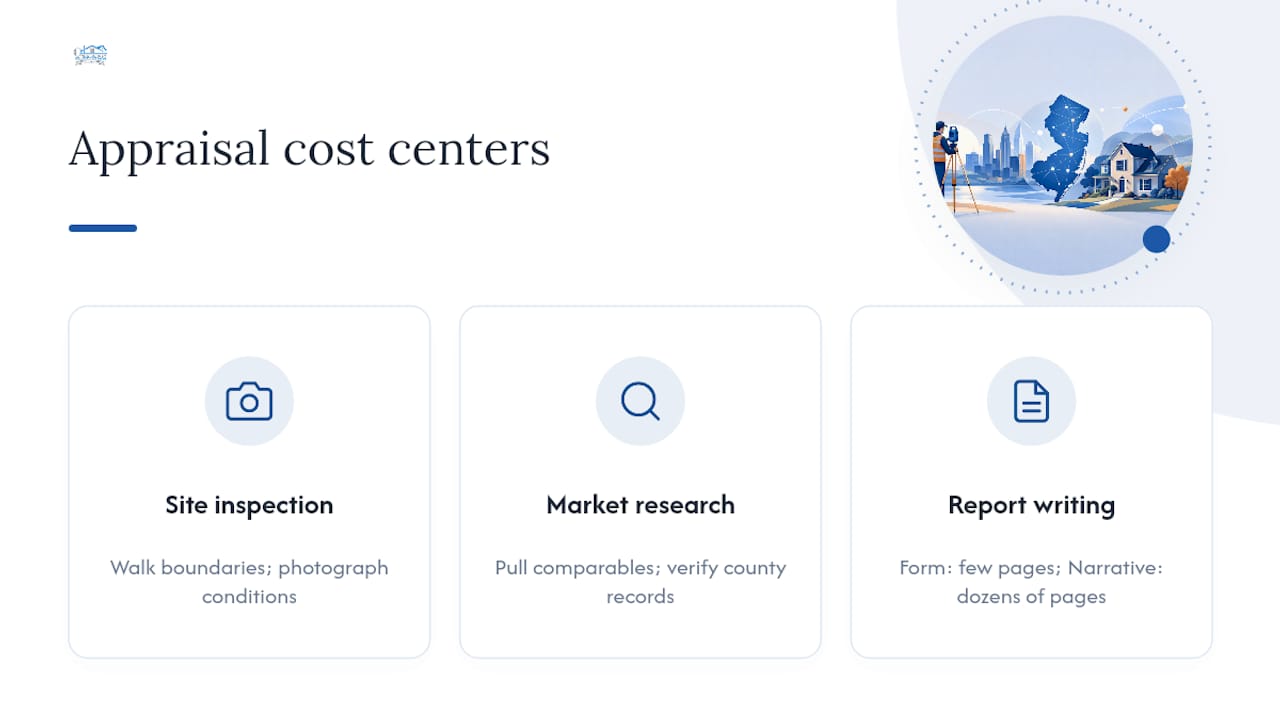
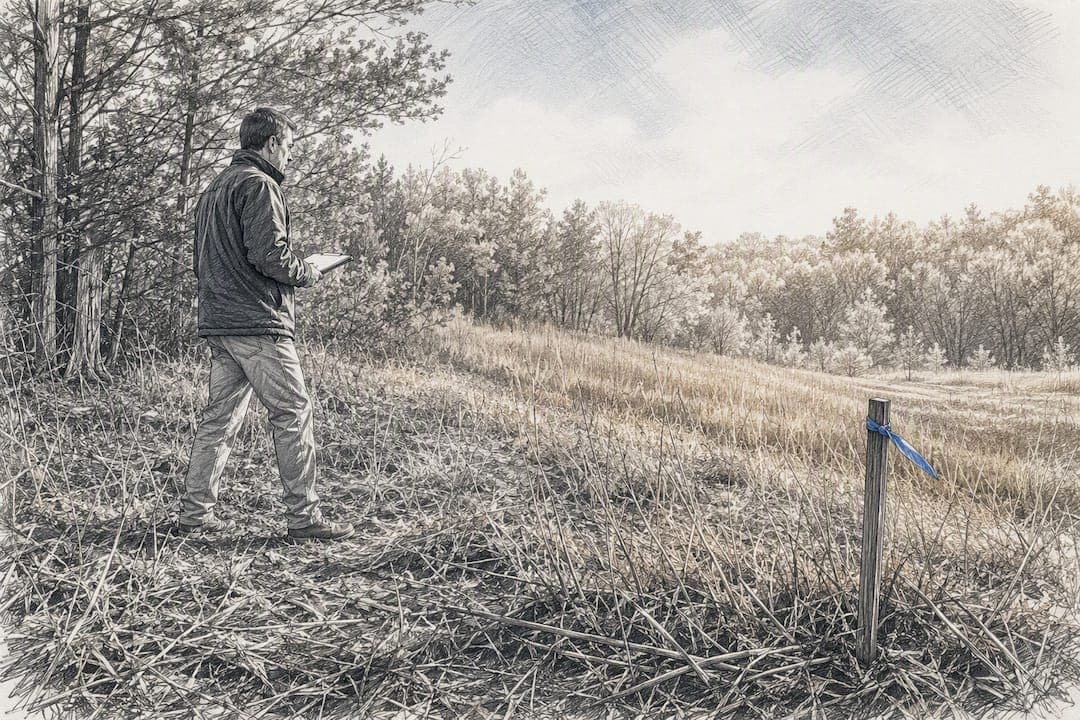
Site inspection covers the physical visit: walking the boundaries, photographing conditions, noting access, topography, and any visible environmental concerns. For larger or harder-to-reach parcels, this alone can take several hours.
Market research is usually the biggest time sink. The appraiser pulls comparable sales, verifies details with county records, and adjusts each comparable for differences in size, location, and zoning. When comparables are scarce, as they often are for rural land, this phase stretches significantly.
Report writing is where a form report and a narrative report diverge most sharply in cost. A standard form report might run a handful of pages. A court-ready narrative report for a divorce or tax appeal case can run dozens of pages, with every conclusion explained and every approach documented for a judge or tax board member who has no real estate background.
Knowing this breakdown helps you understand a quote instead of just comparing bottom-line numbers.
How Land Appraisal Costs Vary By NJ County
Pricing isn't uniform across New Jersey's 21 counties, and the differences come down to market density and travel logistics rather than arbitrary markup.
Northern and central counties like Bergen, Essex, Union, and Middlesex tend to have dense sales data and short travel distances between assignments, which can keep routine appraisal costs on the lower end of the range. Rural and shore counties, including Sussex, Warren, Hunterdon, Salem, and parts of Cape May and Atlantic County, often require wider comparable searches and longer drive times, which can push fees toward the higher end, particularly for larger acreage.
Tax appeal volume also varies by county and by reassessment cycle, which affects how familiar local appraisers are with a given municipality's assessment practices. An appraiser who regularly works tax appeals in a specific county often moves faster because they already understand how that municipality's assessor approaches valuation.
Common Pitfalls That Drive Up Cost Or Undermine Accuracy
A few recurring mistakes cost NJ landowners real money and, sometimes, the case itself.
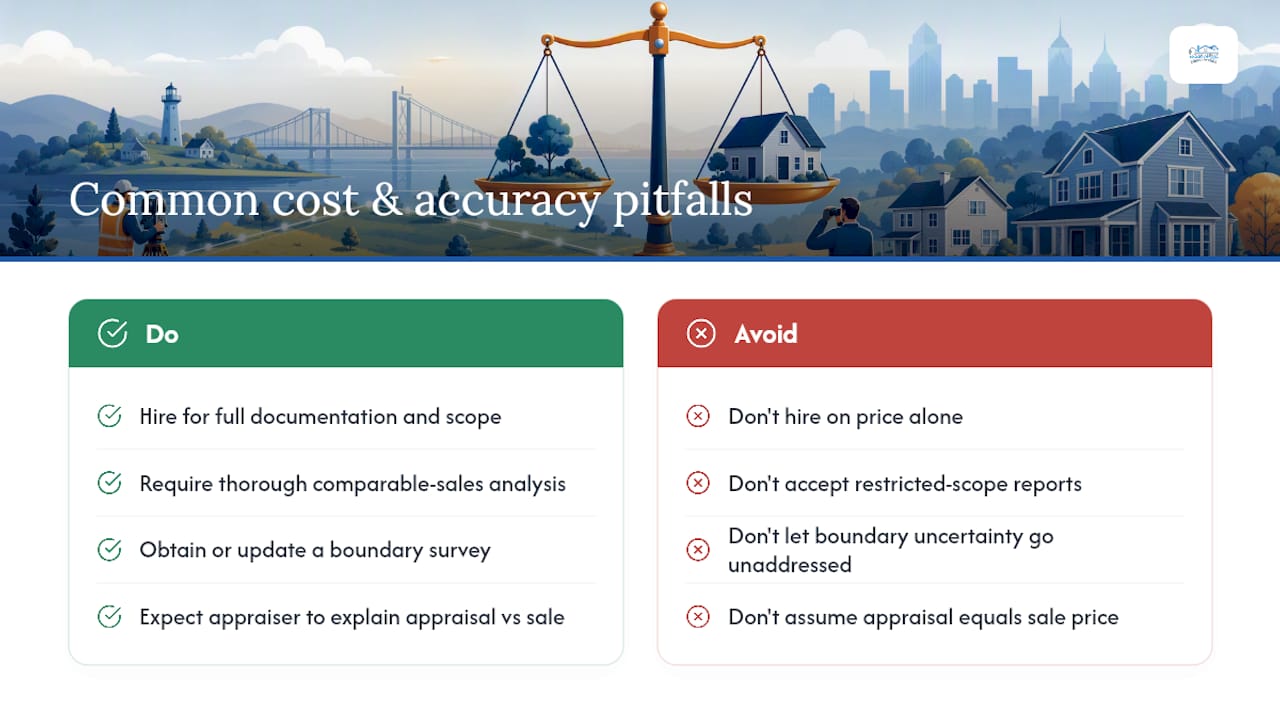
The most common: hiring based on price alone. A rock-bottom quote often means a restricted-scope report that won't hold up if your tax appeal or divorce case gets contested. Boards and judges look for full documentation, not a bargain.
Sparse comparable sales in rural counties is a genuine technical challenge, not a corner an appraiser can cut. When an appraiser rushes past this step instead of applying extraction methods properly, the resulting value estimate can be shaky enough to lose credibility under cross-examination.
Unclear or disputed boundary lines are another frequent snag. If a survey is outdated or missing, the appraiser may need to flag boundary uncertainty in the report, which can invite challenges from the other side in a legal dispute.
Finally, treating appraised value and market sale price as interchangeable trips up a lot of property owners. An appraisal reflects an objective value estimate at a specific point in time, while an actual sale price depends on buyer motivation, financing conditions, and how the property was marketed. Land doesn't always sell at its appraised value, and a good appraiser will explain that gap rather than let a client assume the two numbers should match.
NJREAG's Perspective: What Goes Into A Land Appraisal Quote
We're state-certified and USPAP-compliant on every land assignment we take across New Jersey, and we build court-ready narrative reports when a case demands one. Not every parcel needs that level of documentation. Standard form reports work fine for straightforward lending or planning purposes; we reserve full narrative work for divorce, estate, and tax appeal cases where a judge or board member needs the reasoning spelled out.
Quoting fast depends on three details: the parcel address, its approximate acreage, and the purpose of the appraisal. Send us those three things and we can usually give you a real number, not a range, within a day.
— Alek
Get A Land Appraisal Quote From NJREAG
NJREAG is the direct route to a state-certified, USPAP-compliant land appraisal in New Jersey, not a national desktop-valuation service guessing at your parcel from satellite images. We've worked all 21 NJ counties for over 26 years, which means we already understand how local tax boards and family courts expect a report to be documented.

Ready for a quote? Visit our Land Appraisals in New Jersey page or call us directly at (908) 517-3913. Have the parcel address, approximate acreage, and the assignment purpose ready. That's the fastest way to get an accurate number instead of a rough estimate. If your situation involves a divorce settlement, estate matter, or tax appeal, mention it up front. Those assignments typically require a full narrative report, and knowing that early keeps your timeline realistic from the start.
FAQ
How Much Do Land Appraisers Charge?
Land appraisers typically charge $300 to $1,500 or more depending on parcel size, location, and how the report will be used. Court-ready reports for legal matters run higher, often starting around $600 to $900 because of the narrative documentation required.
How Much Is An Appraisal Fee In NJ?
NJ appraisal fees vary by assignment type and parcel complexity, generally ranging from $300 for a simple suburban lot to $1,500 or more for rural or complex acreage. Legal-grade assignments like divorce, estate, or tax appeal appraisals typically start around $600 to $900.
How Do I Get Land Appraised For Free?
You can't get a legitimately certified land appraisal for free. USPAP requires a licensed, state-certified appraiser to inspect the property and document market research, which is paid professional work, not a courtesy service.
Does Land Usually Sell For Appraised Value?
Not always. An appraisal reflects an objective value estimate at a specific point in time, while the actual sale price depends on buyer motivation, financing, and market conditions at the moment of sale. The two numbers can be close, but they aren't guaranteed to match.
What's The Difference Between A Form Report And A Narrative Report?
A form report is a shorter, standardized document typically used for lending purposes. A narrative report is longer and more detailed, documenting every valuation method and conclusion, which is why it's required for divorce, estate, and tax appeal cases headed to court.