

Settling an estate in New Jersey comes with many responsibilities, and one critical task is obtaining a date of death appraisal to establish property value for tax reporting and legal compliance. Executors and family members often face tight deadlines, complex regulations, and the risk of costly penalties if valuations aren't handled correctly. This guide walks you through the entire appraisal process, from understanding its importance to submitting the final report, ensuring you meet New Jersey's inheritance tax requirements and protect the estate from audit challenges.
Table of Contents
- Key Takeaways
- Understanding the date of death appraisal and its importance
- Preparing for the date of death appraisal: what executors and families need to do
- Step-by-step execution of the date of death appraisal process
- Verifying, submitting, and using the appraisal for estate settlement and tax purposes
- Expert date of death appraisal services in New Jersey
- Frequently asked questions
Key Takeaways
| Point | Details |
|---|---|
| Date of death value | It establishes the property's fair market value as of the date of death for tax reporting and probate. |
| Qualified appraisers | Choose state licensed appraisers who are USPAP compliant and experienced in retrospective estate valuations. |
| Tax filing deadline | NJ inheritance tax returns are due within 8 months of death, and missing the deadline can incur interest penalties. |
| Appraisal turnaround | Appraisals typically take 1 to 2 weeks to complete. |
| Retrospective valuations | Retrospective date of death appraisals can be done years later but are more complex. |
Understanding the date of death appraisal and its importance
A date of death appraisal is a retrospective valuation that establishes the fair market value of real property as of the exact date the decedent passed away. Unlike standard appraisals that value property in current condition, date of death appraisals use historical market data to determine what the property was worth on that specific past date. This valuation serves as the foundation for New Jersey Transfer Inheritance Tax reporting and federal estate tax filings when applicable.
New Jersey requires executors to file inheritance tax returns within 8 months of death, making timely appraisals essential. While state law doesn't formally mandate a professional appraisal, relying solely on tax assessments or informal estimates leaves estates vulnerable during audits. Tax assessor values often lag market conditions by years and rarely reflect true fair market value. A certified property appraisal for probate provides defensible documentation that satisfies both state and federal tax authorities.
The primary users of date of death appraisals include:
- Executors and administrators managing estate settlement
- Family members handling informal estate distributions
- Estate attorneys preparing tax returns and probate filings
- Accountants and CPAs calculating tax liabilities
- Heirs seeking equitable property division
Understanding NJ inheritance tax filing requirements helps executors recognize when appraisals become critical. Estates valued above certain thresholds or involving non-exempt beneficiaries face inheritance tax obligations that depend entirely on accurate property valuations. Missing the 8-month deadline triggers automatic interest penalties of 10% annually, compounding the cost of delays.
Professional date of death appraisals protect estates from costly tax disputes and provide the documentation needed to defend valuations during IRS or state audits, saving executors from personal liability and preserving estate assets for beneficiaries.
For comprehensive guidance on estate appraisals, review our estate date of death appraisals overview to understand how these valuations fit into the broader probate process.
Preparing for the date of death appraisal: what executors and families need to do
Successful date of death appraisals begin with careful preparation and selecting the right appraiser. New Jersey executors should prioritize state-licensed appraisers who demonstrate USPAP compliance and specific experience with retrospective estate valuations. These credentials ensure the appraisal report will withstand scrutiny from tax authorities and probate courts.
Follow these preparation steps to streamline the appraisal process:
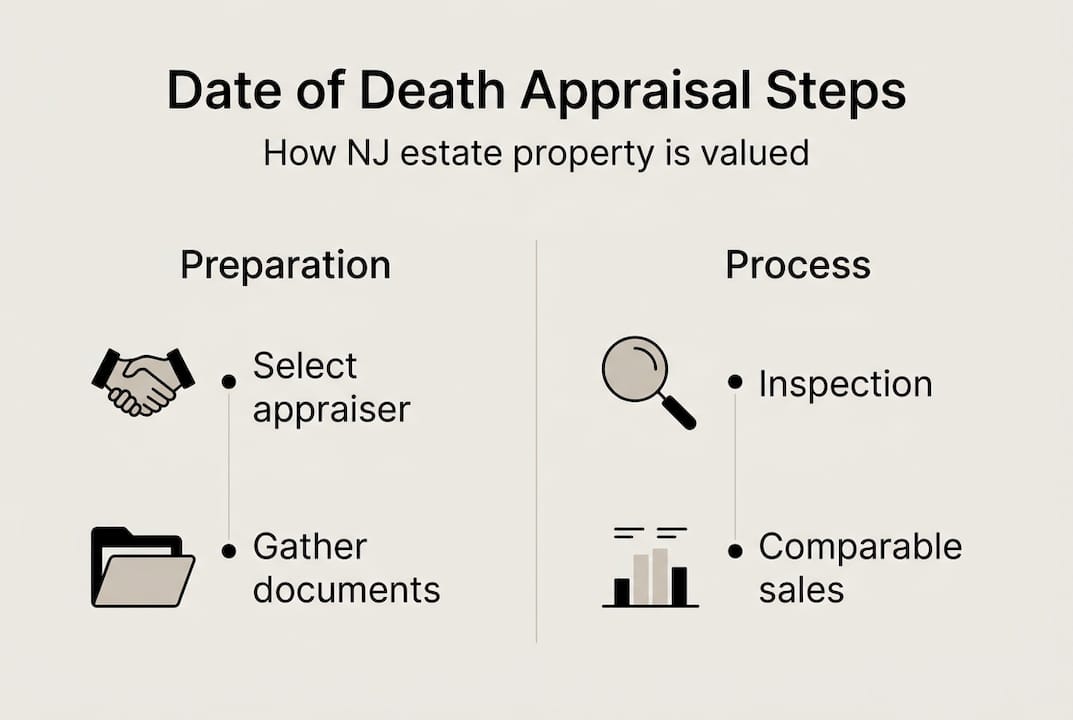
- Verify appraiser credentials: Confirm the appraiser holds an active New Jersey state license and maintains USPAP certification. Request references from estate attorneys or CPAs who have used their services.
- Gather essential documents: Collect the death certificate, property deeds, recent tax assessments, prior appraisals if available, and any records of significant repairs or improvements made before death.
- Document property condition: Take photographs showing the property's condition as close to the date of death as possible. These images help appraisers reconstruct historical condition when inspecting months later.
- Schedule the inspection: Arrange property access for the appraiser's site visit. Most inspections take 30-60 minutes and require interior and exterior access.
- Communicate special circumstances: Inform the appraiser of any unique features, easements, restrictions, or pending issues that might affect value.
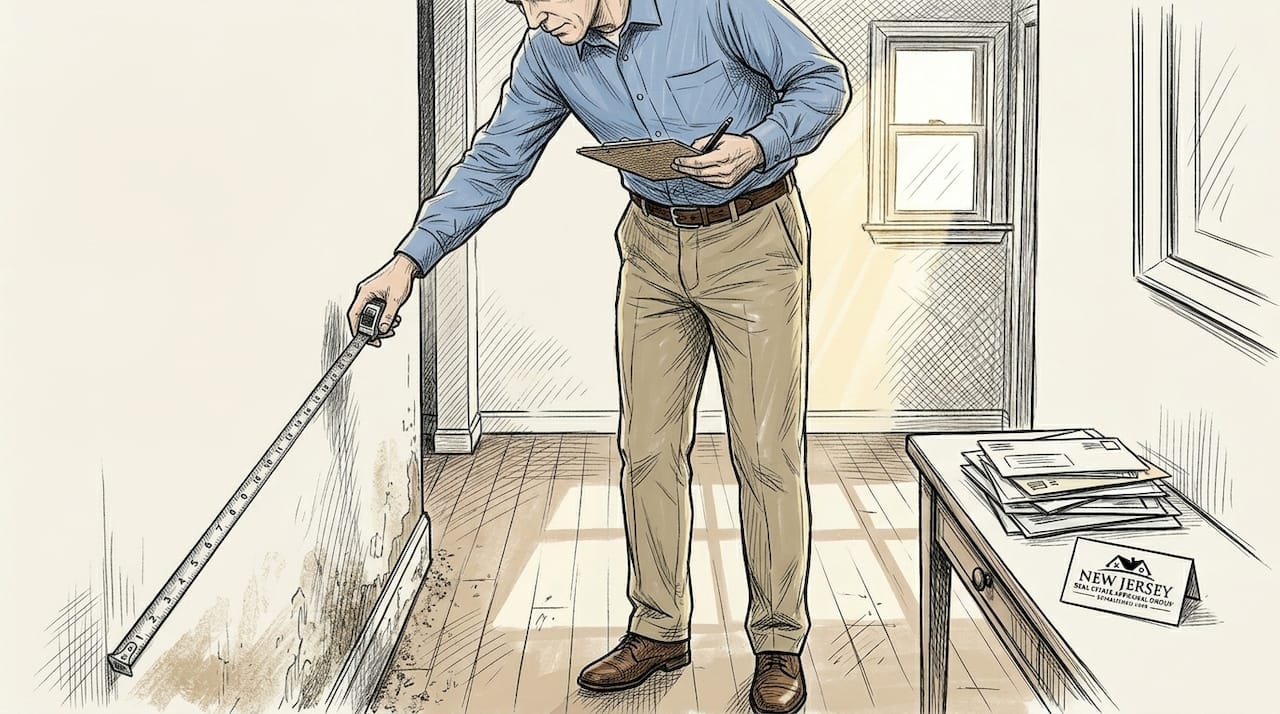
The inspection process typically involves state-certified appraisers measuring the property, photographing key features, and noting condition details. They review comparable sales from the period surrounding the death date, adjusting for differences in size, location, condition, and amenities. According to NJREAP's retrospective process, most appraisals are completed within 5-14 days after the property visit, though complex properties or data-scarce situations may extend timelines.
Pro Tip: Choose appraisers with demonstrated estate experience rather than general residential appraisers. Estate-focused professionals understand the unique challenges of retrospective valuations, know how to locate historical comparable sales data, and produce reports formatted for tax authority review. Their expertise often prevents costly revisions or challenges during the inheritance tax filing process.
Early engagement with qualified appraisers prevents last-minute scrambles as the 8-month filing deadline approaches. Executors who initiate appraisals within 60-90 days of death allow time for any necessary corrections, additional research, or supplemental documentation before final tax return submission. This buffer proves invaluable when estates include multiple properties or when market data from the death date proves difficult to obtain.
For specialized situations requiring historical valuations, explore retrospective appraisals to understand how appraisers reconstruct past market conditions using archived data and historical trends.
Step-by-step execution of the date of death appraisal process
Once preparation is complete, the actual appraisal process follows a structured methodology designed to establish defensible fair market value as of the death date. Understanding these steps helps executors appreciate the thoroughness required for tax-compliant valuations.
Professional appraisers execute the valuation through these core steps:
- Initial property inspection and data collection: The appraiser visits the property to measure dimensions, photograph features, assess condition, and document any unique characteristics. While inspecting current condition, they note changes that occurred since the death date.
- Historical sales comparison analysis: Using MLS archives and public records, the appraiser identifies comparable properties that sold near the death date. They adjust these sales for differences in size, condition, location, and amenities to estimate the subject property's value on that specific date.
- Income or cost approach application: For income-producing properties or unique situations, appraisers may apply income capitalization or replacement cost methods. These approaches provide additional value indicators that strengthen the final opinion.
- Reconciliation and final value determination: The appraiser weighs all approaches, considering data quality and relevance, to arrive at a final fair market value opinion supported by market evidence.
According to One Appraisal Group's methodology, certified appraisers rely primarily on adjusted historical comparables, inspecting current property condition but valuing as of the death date using historical MLS data and market trends. This retrospective approach requires significant expertise in market analysis and data interpretation.
| Appraisal Method | Best Used For | Strengths | Limitations |
|---|---|---|---|
| Sales Comparison | Residential properties with adequate comparable sales | Most direct market evidence; widely accepted by tax authorities | Requires sufficient historical sales data |
| Income Approach | Rental properties and income-producing real estate | Reflects investor perspective; useful for multi-family | Depends on accurate income/expense records |
| Cost Approach | Unique properties or new construction | Provides replacement value baseline | Less reliable for older properties with depreciation |
The sales comparison approach dominates residential date of death appraisals because it directly reflects market behavior during the relevant time period. Appraisers search for properties similar in size, age, condition, and location that sold within three to six months of the death date. Each comparable receives adjustments for differences, with the appraiser documenting the reasoning behind each modification.
Pro Tip: Tax assessments and comparative market analyses from real estate agents cannot substitute for certified appraisals in estate tax contexts. Assessments often lag market values by years and use mass appraisal techniques unsuitable for individual property valuations. CMAs lack the USPAP compliance and professional certification required for audit defense. Executors who rely on these shortcuts risk tax authority challenges and potential penalties.
For properties in markets with limited sales activity or unique characteristics, appraisers may need to expand their search radius or time frame, carefully adjusting for market trends between the comparable sale dates and the death date. This added complexity underscores why retrospective appraisal methods require specialized expertise beyond standard residential appraisal skills.
Verifying, submitting, and using the appraisal for estate settlement and tax purposes
Once you receive the completed appraisal report, careful review and strategic use ensure it serves its intended purposes throughout estate settlement. The appraisal becomes a cornerstone document supporting multiple legal and financial processes.
Executors use date of death appraisals for these critical functions:
- Inheritance tax return preparation: The appraisal value populates Schedule B of Form IT-R or IT-NR, establishing the taxable estate value for New Jersey inheritance tax calculations
- Federal estate tax filing: When estates exceed federal exemption thresholds, the appraisal supports Form 706 valuations
- Property transfer waivers: New Jersey requires Form L-9 waivers before property titles can transfer, which reference estate valuations
- Equitable asset distribution: Appraisals enable fair division among multiple heirs by establishing objective property values
- Probate court filings: Surrogate courts require accurate estate inventories that depend on professional valuations
According to NJ inheritance tax guidance, returns are due within 8 months with 10% annual interest penalties for late filing. While formal appraisals aren't legally mandated, detailed reports support IRS and state tax defenses during audits and probate proceedings. The typical probate timeline spans 9-12 months, making timely appraisals essential for maintaining schedule.
Common mistakes that compromise estate settlements include:
- Filing inheritance tax returns without professional appraisals, relying instead on tax assessments or online estimates
- Missing the 8-month deadline due to delayed appraisal ordering
- Failing to document property condition changes between death date and inspection
- Using appraisers without estate-specific experience or USPAP compliance
- Neglecting to retain appraisal reports and supporting documentation for potential audits
The difference between a professional date of death appraisal and informal valuation methods can mean thousands in avoided penalties and audit costs. Tax authorities scrutinize estate valuations carefully, and executors who cannot substantiate their reported values face interest charges, penalties, and potential personal liability for estate tax deficiencies.
When audits occur, the appraisal report serves as your primary defense. IRS and New Jersey Division of Taxation auditors expect to see USPAP-compliant reports with detailed comparable sales analysis, clear methodology explanations, and appraiser credentials. Reports lacking these elements often trigger valuation disputes that delay estate closure and increase professional fees.
For comprehensive context on estate appraisals, review our estate appraisal guide and probate property appraisal guide to understand how these valuations integrate with broader estate administration responsibilities. Additional details about filing requirements appear in NJ inheritance tax filing requirements.
Expert date of death appraisal services in New Jersey
Navigating estate settlement deadlines and tax compliance requirements demands reliable professional support. New Jersey Real Estate Appraisal Group delivers state-certified, USPAP-compliant date of death appraisals specifically designed for executors and families managing estate properties. Our appraisers bring over 26 years of experience valuing residential, commercial, and land properties across all New Jersey counties, understanding the unique challenges of retrospective valuations.
We typically complete appraisals within 5-7 business days after property inspection, ensuring you meet the critical 8-month inheritance tax filing deadline with time to spare. Our reports satisfy both New Jersey Division of Taxation and IRS requirements, providing the documentation needed for audit defense and probate court filings. Estate attorneys and CPAs throughout New Jersey trust our valuations for accuracy, thoroughness, and regulatory compliance.

Whether you need a single-family home appraisal or complex multi-property estate valuations, our retrospective appraisal services provide the expertise required for defensible date of death valuations. Explore our full range of appraisal services or contact us directly for properties in Atlantic County and throughout the state. We're here to simplify the appraisal process and protect your estate from tax complications.
Frequently asked questions
What is a date of death appraisal, and why is it important in New Jersey?
A date of death appraisal establishes the fair market value of property as of the decedent's death date, used primarily for New Jersey inheritance tax returns and federal estate tax filings. This retrospective valuation provides defensible documentation that protects estates during tax audits and ensures accurate reporting to state and federal authorities. Without professional appraisals, executors risk penalties from undervalued or unsupported property valuations.
How soon should an executor arrange for a date of death appraisal in New Jersey?
Executors should initiate appraisals within 60-90 days after death to ensure comfortable margin before the 8-month inheritance tax filing deadline. Early engagement allows time for data gathering, potential revisions, and coordination with estate attorneys and accountants. Waiting until the deadline approaches increases stress and raises the risk of filing extensions or penalties from rushed valuations.
Can a date of death appraisal be performed years after the decedent's passing?
Yes, retrospective appraisals years later remain possible but face increased difficulty due to limited historical data availability. Appraisers must reconstruct market conditions from archived records, which may be incomplete or require extensive research. Timely appraisals produce more accurate results and stronger audit defenses than delayed retrospective valuations.
Is a formal date of death appraisal legally required in New Jersey?
New Jersey law does not explicitly mandate professional appraisals for inheritance tax returns, but tax authorities expect credible fair market value documentation. Tax assessor values and informal estimates rarely satisfy audit scrutiny, leaving executors vulnerable to valuation challenges and penalties. Professional USPAP-compliant appraisals provide the credibility and defensibility needed for confident tax filing and probate proceedings.
What documents do I need to provide to the appraiser?
Essential documents include the death certificate, property deeds, recent tax assessments, prior appraisals if available, and records of significant repairs or improvements. Photographs showing property condition near the death date help appraisers reconstruct historical condition. Clear documentation enables accurate valuations and reduces the need for follow-up research or revisions.