
TL;DR:
- Property tax appeals challenge assessed property values to reduce tax bills. Proper evidence and deadline adherence are vital, with factual errors offering the best chance of success. Homeowners can often handle appeals themselves, but professional appraisals improve credibility for complex cases.
A property tax appeal is a formal challenge to your local assessor's estimated value of your property. Knowing how to appeal property taxes correctly can reduce your annual tax bill by hundreds or even thousands of dollars. The process is more accessible than most homeowners realize. You don't need an attorney, and you don't need to prove financial hardship. You need verifiable evidence that your assessed value is wrong. This guide walks you through every step, from reading your assessment notice to attending a hearing, with New Jersey specific details where they apply.
How to read your property tax assessment notice
Your assessment notice is the starting point for any tax appeal. It shows your property's assessed value, which your local government uses to calculate your tax bill. That assessed value should reflect market value, but assessors work from mass appraisal models and make mistakes.
The most important item on the notice is the deadline. Filing windows typically run 15–60 days after the notice is mailed, with many jurisdictions setting cutoffs in april, may, or june. Missing that window forfeits your right to appeal for the entire tax year. Mark the date the moment the notice arrives.
After the deadline, locate your property record card. Most county assessor offices post these online or provide them on request. The card lists the physical details your assessor used: square footage, bedroom count, lot size, year built, and condition rating. Data errors on property record cards are common and easier to correct than market value disputes.
Check every field against reality. Walk your property with a tape measure if needed. Common errors include:
- Square footage recorded higher than actual
- Finished basement counted as living area when it isn't
- Bedroom or bathroom count listed incorrectly
- Lot size pulled from outdated surveys
- Condition rated as "good" when the property has deferred maintenance
Pro Tip: Request your property record card before you do anything else. One factual error in the assessor's data can be enough to win a reduction without ever needing comparable sales.
How to build a strong property tax appeal case
Evidence quality determines your outcome. Appeals citing factual errors succeed 80–90% of the time, while condition-based appeals with documented proof succeed 60–80% of the time. Appeals based only on a general feeling that the value is too high succeed less than 30% of the time. Build your case around facts, not frustration.
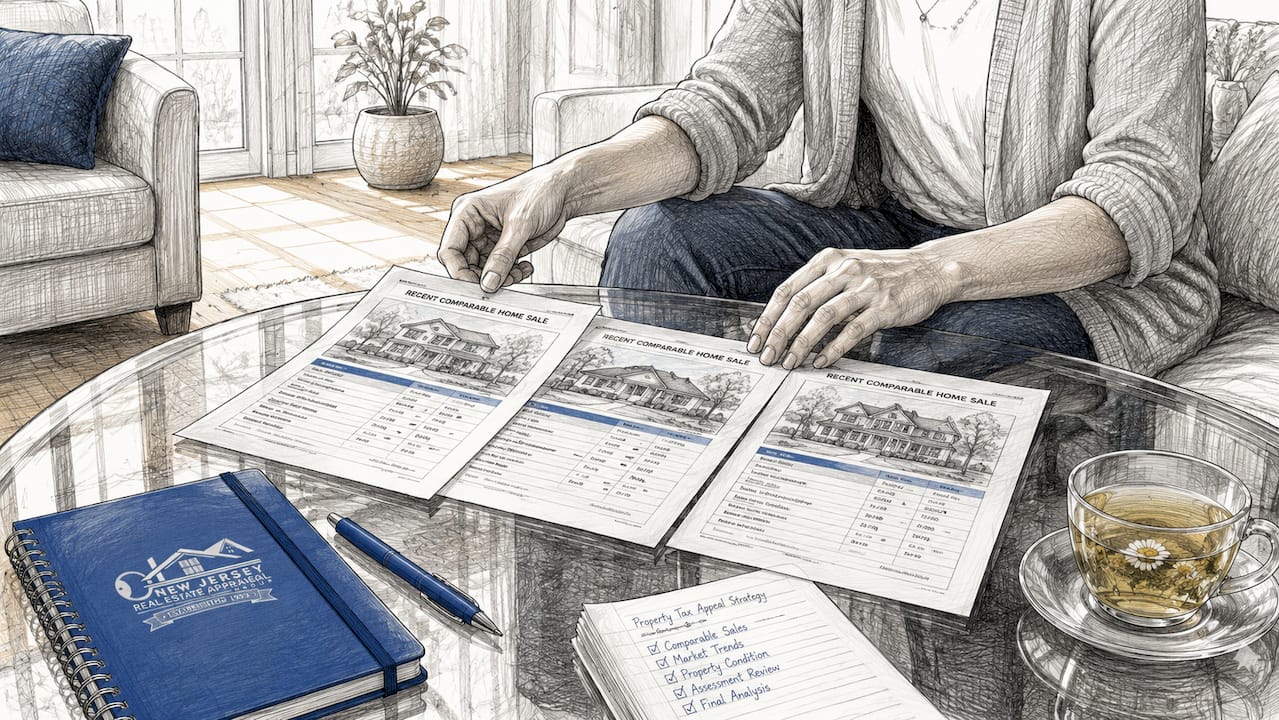
There are two main categories of evidence: factual errors and market value comparables. Use both when possible.
Building your comparables portfolio
A strong appeal package includes 3–5 comparable sales from the past 6–12 months. Those sales should involve homes similar to yours in size, age, condition, and location. If those comparables sold for less than your assessed value, you have a credible case. If your assessed value runs 10% or more above the comparable sales, your case is strong. You can find comparable sales through Zillow, Realtor.com, or your county's public deed records. For a more defensible analysis, a comparable sales analysis from a certified appraiser carries significantly more weight at a hearing.
Documenting property condition
Condition issues reduce market value, and assessors often miss them. Document every defect with:
- Dated photographs of each problem area
- A licensed home inspector's written report
- Contractor repair estimates on company letterhead
- Any prior inspection reports showing ongoing issues
Understanding how property condition affects valuations is critical here. A roof that needs replacement, a cracked foundation, or outdated electrical systems all reduce what a buyer would pay. Your assessor may not have seen any of it.
Pro Tip: Repair estimates from licensed contractors are particularly persuasive because they attach a dollar figure to the problem. A photo alone shows damage. A contractor quote shows what that damage costs.
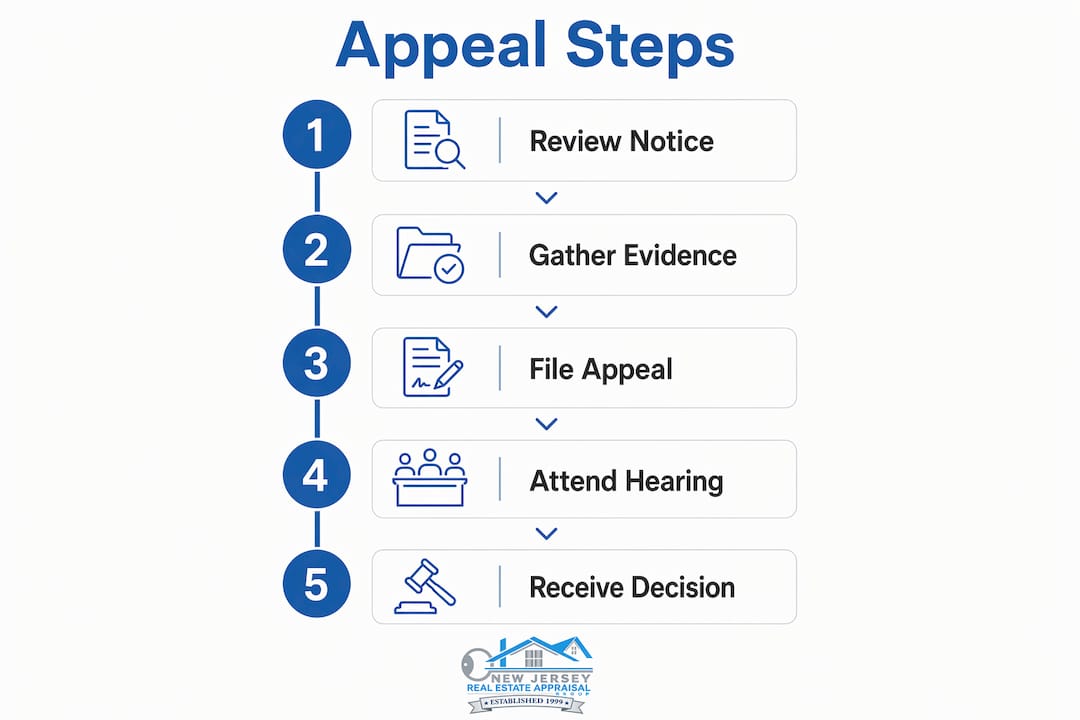
Steps to file your property tax appeal
Filing correctly matters as much as your evidence. A procedural mistake can get your appeal dismissed before anyone reviews your case.
The filing process generally follows this sequence:
- Confirm your jurisdiction's exact deadline and filing location
- Download or request the official appeal form from your county board of taxation
- Prepare a cover letter that states your current assessed value, your requested reduced value, and a brief summary of your evidence
- Attach all supporting documents: comparable sales, photos, inspection reports, and repair estimates
- Submit by the deadline, and keep a copy of everything you file
Most jurisdictions now allow online submissions, including evidence uploads and status tracking. In New Jersey, residential appeals go to the county board of taxation. The deadline for most NJ counties is april 1st, though some municipalities have different cutoffs. Check with your specific county.
An effective appeal letter states your case succinctly, lists each piece of evidence with a clear reference, and names the specific reduced value you are requesting based on your comparables and condition documentation.
| Common filing mistake | Why it matters |
|---|---|
| Missing the deadline | Forfeits your appeal right for the full tax year |
| Filing incomplete forms | Can result in dismissal before review |
| Submitting evidence without explanation | Reviewers may not connect the dots for you |
| Requesting a value with no support | Weakens credibility and reduces settlement odds |
| Arguing tax affordability | Boards only consider valuation accuracy, not your ability to pay |
Pro Tip: Call your county board of taxation before you file to confirm the current deadline and accepted submission formats. Rules change, and a phone call takes two minutes.
What happens after you file: hearings and decisions
After you file, you'll receive a hearing date. Most cases go through an informal hearing first. Informal hearings resolve the majority of appeals before they ever reach a formal panel. That means your initial evidence packet is the most critical factor in your outcome.
At an informal hearing, you meet with an assessor or county representative to review your evidence. Keep the conversation factual. Successful appeals focus on valuation methodology errors, not on what you can afford to pay. Boards have no authority to reduce your taxes based on financial hardship. They can only correct an inaccurate assessment.
Possible outcomes after a hearing include:
- A reduction to your assessed value
- No change, with the original assessment upheld
- A settlement offer before the formal hearing date
- A referral to a formal panel hearing if the informal process fails
If your appeal is denied, you can escalate to the New Jersey Tax Court for residential properties. That process is more formal and typically benefits from legal or appraisal representation.
One outcome that surprises many homeowners: winning an appeal doesn't always produce the tax savings you expect. State assessment caps like Florida's Save Our Homes can limit savings if your assessed value was already below market value. New Jersey has its own assessment ratio rules. Always verify how your local assessment ties to market value before you file.
The appeal process is designed to correct errors in valuation, not to provide tax relief based on personal circumstances. Stick to the facts, and let the evidence make your argument.
Key takeaways
A successful property tax appeal depends on evidence quality, deadline compliance, and a clear, fact-based presentation to the reviewing board.
| Point | Details |
|---|---|
| Deadlines are absolute | Filing windows run 15–60 days after the notice; missing them forfeits your appeal for the year. |
| Factual errors win most often | Errors in square footage or bedroom count succeed 80–90% of the time when documented. |
| Comparables are your core evidence | Use 3–5 recent sales similar in size, age, and location to prove overvaluation. |
| Informal hearings resolve most cases | Your initial evidence packet determines the outcome before a formal hearing is needed. |
| Appeals address valuation only | Boards cannot reduce assessments based on affordability; only verifiable errors qualify. |
What I've learned from years of NJ tax appeal appraisals
Most homeowners who overpay on property taxes do so not because the system is rigged against them, but because many over-assessed properties never get appealed at all. People assume the process is complicated or that they need an attorney. Neither is true for the majority of cases.
What I've seen work consistently is preparation. Homeowners who pull their property record card, find three or four solid comparables, and document any condition issues walk into hearings with real leverage. Those who show up with a printout of their tax bill and a complaint about affordability walk out with nothing changed.
In New Jersey, the april 1st deadline catches people off guard every year. The notice arrives in february or march, and life gets in the way. By the time someone thinks to act, the window has closed. Set a calendar reminder the day your notice arrives.
For straightforward factual errors, you can handle the appeal yourself. For cases involving significant valuation disputes or properties with complex characteristics, a USPAP-compliant appraisal from a state-certified appraiser gives your case the credibility that a DIY comparables printout cannot match. The appraisal fee is almost always smaller than the tax savings you recover over multiple years.
— Alek
How Newjerseyrealestateappraisal supports your tax appeal

Newjerseyrealestateappraisal provides state-certified, USPAP-compliant appraisal reports specifically prepared for property tax appeals across all 21 New Jersey counties. Our reports are built to hold up at county board hearings and NJ Tax Court proceedings. We document market value with defensible comparable sales analysis and condition assessments that give your appeal the professional foundation it needs.
If you're preparing to contest your assessment and want a credible, court-ready valuation, our NJ tax appeal appraisal services are the right starting point. We also serve homeowners in Atlantic County and Union County with county-specific expertise. Call us at (908) 517-3913 or request a quote online.
FAQ
What is the deadline to file a property tax appeal in New Jersey?
The standard deadline for most New Jersey counties is april 1st of the tax year. Some municipalities set different cutoffs, so confirm your specific deadline with your county board of taxation immediately after receiving your assessment notice.
What evidence do I need to contest a property tax assessment?
The strongest evidence includes 3–5 comparable home sales from the past 6–12 months, a property record card showing factual errors, dated photographs of condition issues, and licensed contractor repair estimates. Evidence-based appeals citing factual errors succeed 80–90% of the time.
Can I file a property tax appeal without a lawyer?
Yes. The appeal process is designed to be accessible to homeowners without legal representation. For straightforward factual errors or clear comparable sales evidence, most homeowners can file and present their own case successfully.
What happens if my property tax appeal is denied?
If the county board denies your appeal, you can escalate to the New Jersey Tax Court for residential properties. That process is more formal and typically benefits from professional appraisal or legal support.
Will winning a property tax appeal always lower my tax bill?
Not necessarily. Assessment caps and local tax rate changes can affect the final bill even after a successful appeal. Always verify how your jurisdiction's assessment ratio and any applicable caps interact with your property's value before filing.