

Estate appraisals in New Jersey typically run in a range for a state-certified, USPAP-compliant report, while a standard residential appraisal averages a moderate fee. Court-ready appraisals and retrospective date-of-death valuations typically cost more because they demand more research and a defensible written opinion. The type of report you need, not the size of the house alone, drives most of that price gap.
TL;DR:
- Estate appraisals in New Jersey generally exceed $600, especially for court-ready or retrospective valuations that require detailed legal documentation.
- Retrospective appraisals, which determine value as of the decedent’s date of death, often cost between $595 and $850 due to extensive historical research.
- The complexity of the property, condition, unique features, and effective date significantly influence the overall cost of estate appraisals.
- The personal representative usually selects the appraiser, with approval from the surrogate court, and the estate typically bears the cost, reimbursed from assets.
- Clarify scope and purpose upfront with an appraiser to prevent unexpected charges exceeding initial quotes, especially for legal or court-related estate work.
Table of Contents
- How Much Does an Estate Appraisal Cost in NJ?
- What Type of Appraisal Does Your Estate Need?
- What Drives the Price of an Estate Appraisal?
- Who Pays for the Appraisal, and Who Appoints the Appraiser?
- Why Retrospective Appraisals Cost More in NJ
- How to Choose an Appraiser for Estate Work in NJ
- A Publisher's Perspective on Paying for a Real Appraisal
- Get a State-Certified Estate Appraisal from NJREAG
- Primary Sources and Useful References
- Sources
- FAQ
How Much Does an Estate Appraisal Cost in NJ?
A standard single-family appraisal in New Jersey averages close to $600, putting the state among the higher-average appraisal-fee states nationally. Estate-related work costs more because it demands a documented, court-defensible opinion of value, not just a lending number.
Certified estate and date-of-death appraisals generally fall within a fee range, depending on property complexity and how far back the effective date sits. Divorce and court-ready appraisals follow a similar pricing pattern, as both require testimony-ready documentation.
Several add-ons push a quote higher than the base range:
- Rush turnaround for probate filing deadlines or court dates
- Addenda for unusual property features, additions, or zoning issues
- Extra site visits when access is limited or a property has multiple structures
- Historical research fees on retrospective assignments
The most-quoted figure for New Jersey home appraisals is around $600, based on state-level fee data. Estate assignments routinely exceed that baseline because they carry legal weight a standard purchase appraisal doesn't need to carry.
What Type of Appraisal Does Your Estate Need?
Not every estate matter calls for the same report. Matching the report type to its legal purpose helps keep costs predictable and avoid paying for unnecessary scope.
- Date-of-death (retrospective) appraisal — Values the property as of the decedent's death, often months or years in the past. Required for federal estate tax filings and step-up-in-basis calculations.
- Estate settlement / probate appraisal — Supports inventory filings with the county surrogate and helps heirs agree on a fair distribution value.
- Divorce / equitable distribution appraisal — Court-ready and built to withstand cross-examination when spouses dispute a marital home's value.
- Full interior vs. exterior-only — A full inspection costs more but holds up better in litigation; exterior-only reports work for lower-stakes, non-contested matters.
The intended use, whether it's an IRS filing, a surrogate court inventory, or a contested buyout, determines how much scope (and cost) the assignment actually requires.
What Drives the Price of an Estate Appraisal?
Every added layer of complexity means more research hours, and more research hours means a higher fee. Here's what typically moves the number:
- Property size and type — a multi-family or unique property takes longer to analyze than a standard colonial.
- Condition and special features — additions, pools, accessory structures, or deferred maintenance all require documentation.
- Limited comparable sales — rural counties and unusual properties often force an appraiser to expand the search radius, adding time.
- Historical research for the effective date — retrospective work means pulling old listings, tax records, and permit history.
- Report format and legal deliverables — a report built for court or IRS review takes longer to write than a basic file.
- Travel and turnaround — rush requests and long drives across county lines both add cost.
Pro Tip: Get a written scope-of-work before you agree to a fee. Ask exactly what's included, whether it's a full interior inspection, an addendum for legal use, or a specific effective date, so a $600 quote doesn't turn into a $900 invoice once the appraiser is on-site.
Who Pays for the Appraisal, and Who Appoints the Appraiser?
New Jersey law gives the personal representative the authority to select an appraiser, but that choice isn't unlimited. Under N.J.S. 3B:16-3, when an inventory and appraisal is filed with the estate, the appraiser must be chosen by the personal representative subject to approval by the Superior Court or the county surrogate.
In practice, that means:
- The estate typically pays the appraisal fee, reimbursed from estate assets before distribution.
- Executors should confirm their county surrogate's specific procedural rules, since requirements vary by county.
- Some surrogates require a sworn appraiser or specific language in the appointment.
- Fees get documented in the estate accounting and filed with the inventory for probate.
Check with your surrogate's office before ordering a report. Rules on sworn appraisers differ county by county, and getting it wrong means paying for a second report.
Why Retrospective Appraisals Cost More in NJ
A retrospective appraisal values a property as of a date months or years in the past, usually the decedent's date of death. That means the appraiser can't just look at today's market. They have to reconstruct it.
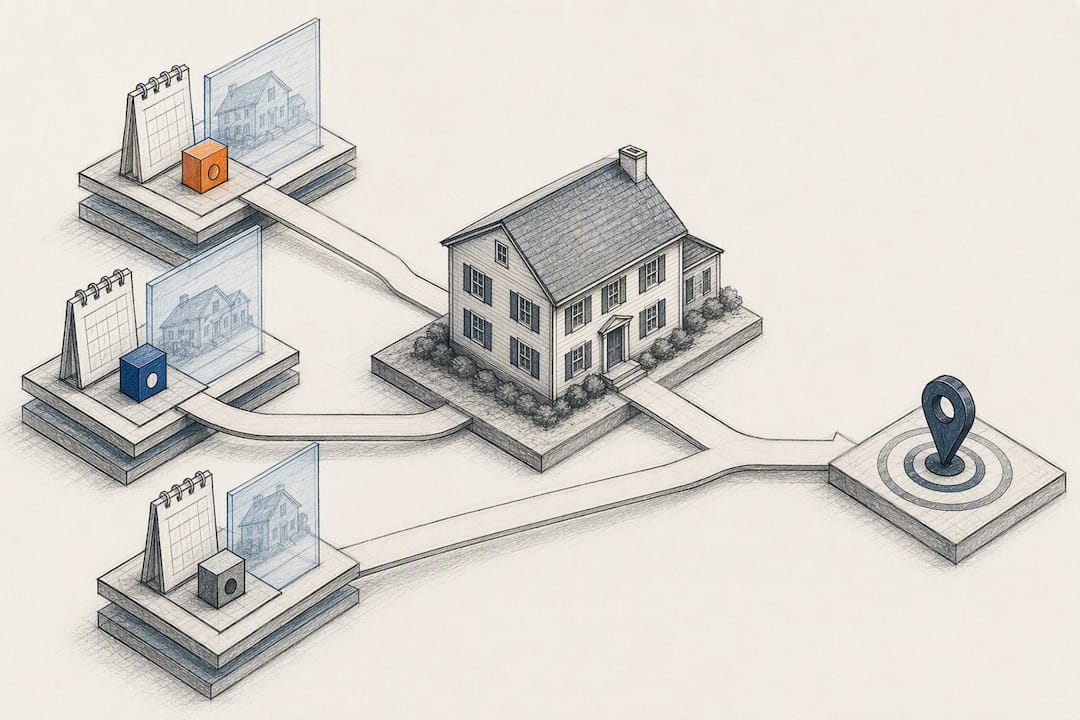
That reconstruction involves pulling archived listings, historical tax assessments, and old permit records, then rebuilding the property's condition as it existed on that specific date. It's genuinely more work than a current-market assignment.
New Jersey practice guidance puts retrospective appraisal fees in the $595 to $850 range, with pricing climbing toward the top of that band when:
- The look-back period exceeds two or three years
- Significant renovations occurred between the effective date and today
- Comparable sales from that period are sparse or hard to verify
Under-scoping this work is a real risk. A retrospective report that skips proper historical documentation can get rejected by the IRS or challenged in a contested settlement, forcing a costly redo. Our retrospective appraisal guidance covers what a properly documented file needs to include.
How to Choose an Appraiser for Estate Work in NJ
Not every appraiser handles estate work well. You need someone comfortable writing for attorneys, surrogates, and sometimes a judge.
Look for these credentials before you hire:
- Active New Jersey state-certified appraiser license
- Demonstrated USPAP compliance in every report
- Prior experience with court-ready or probate-specific assignments
- Willingness to show a sample report (with client details redacted)
When you're comparing quotes, ask these questions directly:
- What's included in the base fee, and what triggers an extra charge?
- Will this report hold up if challenged in Surrogate's Court?
- How do you handle a retrospective effective date?
- What's your typical turnaround, and can you meet a filing deadline?
- Have you testified or been deposed regarding a report you wrote?
Two red flags worth walking away from: an appraiser who won't quote a fee range without seeing the property, and one who can't explain how they'd document a historical effective date. You can check licensing status and complaint history through resources like the Better Business Bureau's appraiser listings before signing anything.
Pro Tip: Request a scope-of-work addendum and a written timeline in the same email as your fee quote. If an appraiser hesitates to put either in writing, that's worth noting before you commit.
A Publisher's Perspective on Paying for a Real Appraisal
The most expensive appraisal mistake we see isn't overpaying. It's underscoping. A cheap, informal valuation that gets rejected by a surrogate or challenged in litigation costs far more in delays and redone work than a properly documented, state-certified report would have cost upfront. USPAP compliance isn't paperwork for its own sake; it's what makes a report defensible when someone disputes it.
— Alek
Get a State-Certified Estate Appraisal from NJREAG
Newjerseyrealestateappraisal is the alternative to guessing at a property's value with an informal walkthrough or an outdated online estimate. We deliver state-certified, USPAP-compliant estate and date-of-death appraisal reports built to hold up in Surrogate's Court, during an IRS review, or in a contested settlement, across all 21 New Jersey counties.

Before you call, have the decedent's date of death, the property address, and any known renovation history ready. That information lets us scope your quote accurately on the first call instead of revising it later. Our Certified Estate and Date of Death Appraisals page outlines what's included, or you can reach us directly at (908) 517-3913 to discuss your county, timeline, and filing deadline. If the estate also involves dividing assets among heirs, a resource like Pioneer Credit's guide on inheritance and special needs trusts is worth a look before distribution.
Primary Sources and Useful References
- N.J.S. 3B:16-3 — governs appraiser appointment and surrogate approval in NJ estates.
- NJREAG retrospective appraisal guide — NJ-specific fee bands and process detail.
- Appraisal Fees by State — state-level cost comparison data.
- NJREAG probate appraisal guide — executor duties and surrogate filing steps.
Sources
- 2024 New Jersey Revised Statutes Title 3B - Administration of Estates--Decedents and Others Section 3B:16-3 - Appointment of appraisers
- Appraisal Fees by State 2026
FAQ
How much do estate appraisers charge in NJ?
Estate and date-of-death appraisals in New Jersey typically run $595 to $850, depending on the property's complexity and how far back the effective date reaches. Standard home appraisals average closer to $600 statewide. Newjerseyrealestateappraisal's estate and date-of-death service falls within that same range.
What shouldn't you tell an appraiser?
Don't guess at values or pressure an appraiser toward a number you want to see. A state-certified appraiser has to reach an independent, USPAP-compliant conclusion, and steering them undermines the report's credibility if it's ever challenged in court.
How long is an estate appraisal valid?
Most lenders and courts treat an appraisal as reliable for about six months, though estate appraisals tied to a specific date of death don't expire the same way since they're anchored to that fixed effective date. If months pass before a filing, ask your appraiser whether an update is warranted.
Who usually pays for an estate appraisal in NJ?
The estate typically pays, with the fee reimbursed from estate assets and documented in the accounting filed with the surrogate. The personal representative selects the appraiser, subject to approval under N.J.S. 3B:16-3.
Does a retrospective appraisal cost more than a standard one?
Yes. Retrospective, or date-of-death, appraisals require reconstructing historical market conditions using archived listings and old records, which takes more time than a current-market report. That extra research is why retrospective fees land in the $595 to $850 range rather than the lower standard-appraisal average.