
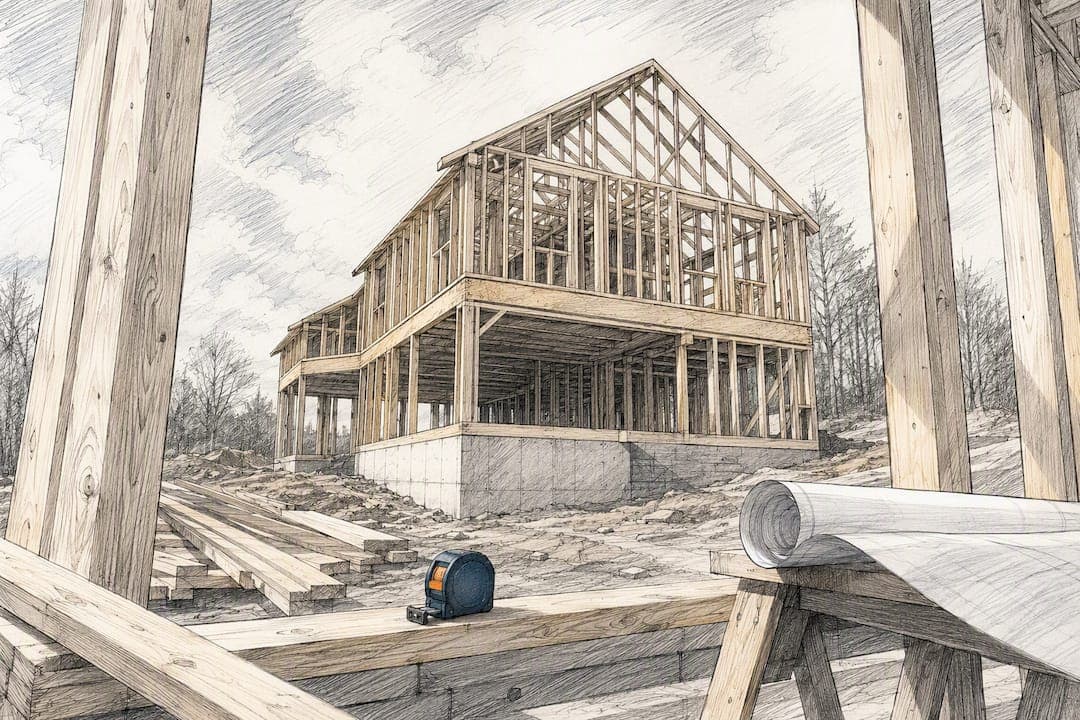
A new construction appraisal values a home as-built or as-proposed, and it relies more heavily on the cost approach, builder plans, and USPAP disclosures than a resale appraisal typically does. If your home isn't finished yet, the appraiser must state whether the value is "as-completed" (a hypothetical condition) or "prospective" (an extraordinary assumption). Confirm which one applies with your lender or appraiser before the inspection is scheduled.
TL;DR:
- The cost approach dominates new construction appraisals because depreciation is minimal, and it incorporates soft costs and builder profit for accuracy.
- Using incomplete or vague documentation, especially soft cost breakdowns and verified sales, is the primary cause of appraisal delays.
- Appraisers must distinguish between hypothetical and extraordinary assumptions, with clear disclosures required under USPAP standards.
- Multiple inspections are often necessary to update valuations as construction milestones are reached, especially for final approvals.
- Providing organized, detailed plans, cost sheets, and verified sales early significantly reduces the risk of appraisal-related closing delays.
Table of Contents
- What Makes a New Construction Appraisal Different From a Resale Appraisal
- How Appraisers Value a Home That Isn't Built Yet
- What Documents an Appraiser Needs From You
- When Inspections Happen and Why Timing Matters
- When the Appraisal Doesn't Match the Purchase Price
- How NJREAG Approaches New Construction Appraisals
- Why Most Appraisal Delays Are Preventable, Not Inherent
- Get a State-Certified New Construction Appraisal From NJREAG
- Sources
What Makes a New Construction Appraisal Different From a Resale Appraisal
On a resale home, the appraiser walks through, notes the condition, and compares it to recently sold homes nearby. New construction flips that process. There's often no finished product to inspect, so the appraiser works from architectural drawings, finish schedules, and a builder's cost breakdown instead of an observed walkthrough.
That shift changes the legal language in the report. When a home isn't finished, appraisers use a hypothetical condition to value it "as completed," assuming the construction is done exactly per plans and specs. When the report projects a future value based on ongoing construction, appraisers use an extraordinary assumption instead, flagging that the number is a forward-looking estimate, not a completed observation. USPAP requires both to be clearly disclosed, because either one could change the assignment's result.
- Resale comps reflect what buyers actually paid for finished, lived-in homes.
- New construction comps often come from the builder's own sales in the same subdivision, which need independent verification.
- Plans and specs become the primary evidence in place of observed condition.
How Appraisers Value a Home That Isn't Built Yet
Three approaches exist in appraisal theory, but they don't carry equal weight on new construction. The cost approach usually leads.
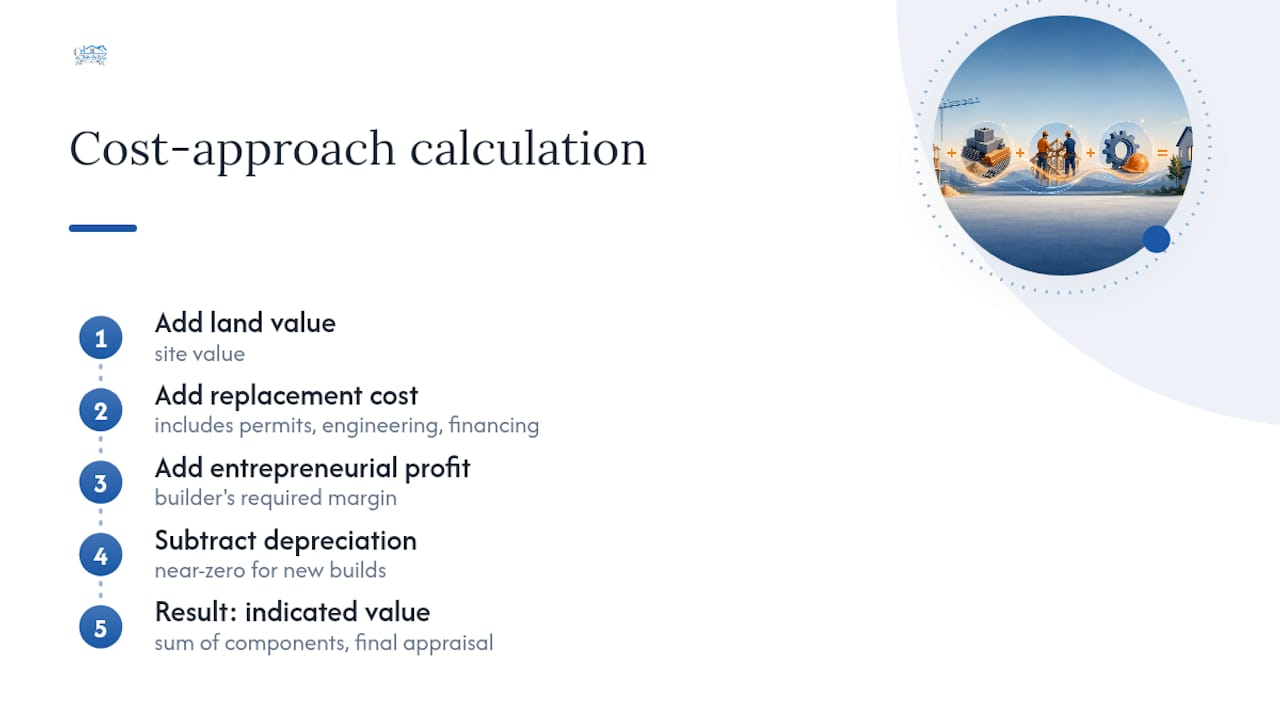
Cost approach. The appraiser adds land value to replacement cost, then subtracts depreciation. On new builds, depreciation is close to zero, so this approach tends to produce a reliable number. It has to include soft costs (permits, engineering, financing) and entrepreneurial profit, the margin a builder needs to justify taking on the project in the first place. Leave out entrepreneurial profit and the value comes in artificially low.
Sales comparison. Still useful, but often thinner on data. New subdivisions may have few or no closed sales yet, forcing appraisers to pull from nearby developments or verify the builder's own sales.
Income approach. Rarely relevant for a single-family new build. It matters more for new-construction rental properties or special-purpose buildings where rent projections drive value.
Because material costs shift faster than resale prices do, the cost approach often reacts to market swings faster than sales comparison can catch up. That's one reason builders benefit from looping in an appraiser early.
Reconciliation is where the report earns its credibility. The appraiser doesn't just pick a favorite approach. They show all applicable indications and explain, in writing, why one carries more weight for that specific property.
What Documents an Appraiser Needs From You
Missing paperwork is the number one reason new construction appraisals stall. Have these ready before the appraiser's first call:
- Full architectural plans and elevations
- Finish schedule (flooring, cabinetry, fixtures, appliances)
- Site or plot plan showing lot dimensions and setbacks
- Itemized cost breakdown, including soft costs and builder profit
- Signed builder contract with change orders noted
- Permits and any zoning approvals on file
Appraisers also verify builder-provided comparable sales instead of taking them at face value. That means pulling HUD-1 or settlement statements to confirm actual sale prices and any concessions the builder offered a prior buyer. A builder-quoted sale price that hides significant closing cost credits will skew every comp built on it.
Every hypothetical condition and extraordinary assumption used in the report needs to be documented in the appraiser's workfile, not just mentioned in passing. That's a USPAP retention requirement, not a courtesy.
Pro Tip: Bundle every document, plans, specs, cost sheet, and builder contract, into one PDF before the appraiser's first site visit. Appraisers waiting on paperwork is the single biggest cause of delayed loan closings on new builds.
When Inspections Happen and Why Timing Matters
New construction appraisals often require more than one site visit. A preliminary appraisal might be based entirely on plans, before a foundation is poured. Draw inspections follow at construction milestones if the loan releases funds in stages. A final inspection confirms the home matches what was appraised.
FHA and GSE loans have their own timing rules around this. FHA typically requires a final inspection and specific builder certifications before the loan can close. GSE loans usually require the inspection date and effective value date to match, and often call for both an as-is and a prospective value in the same report.
- Schedule the final inspection as soon as the builder gives a firm completion date.
- Send plans and cost documents to the appraiser before the first visit, not after.
- Confirm with your lender whether the loan program needs a prospective value, an as-completed value, or both.
Waiting until the week of closing to schedule that final inspection is how closings slip by two or three weeks.
When the Appraisal Doesn't Match the Purchase Price
New construction doesn't always appraise at the contract price, especially in a fast-moving market where builder pricing outpaces recent closed sales.
If that happens, you've got real options. Buyers and builders can renegotiate price, or the buyer can bring more cash to cover the gap. Builders can supply better documentation, especially on upgrades that weren't reflected in the comps the appraiser used. A re-inspection after full completion sometimes resolves a low prospective value once finish-level details are actually visible. Lenders can also restructure the loan terms if the appraisal comes in short.
Documentation problems cause a lot of these gaps. If upgrades or concessions aren't clearly itemized, the appraiser has no way to credit them. Unverified comps are the other repeat offender. When a subdivision has no closed sales yet, that verification gap is on the appraiser to disclose and on the buyer's team to help fill.
- Renegotiate price or bring additional funds to close the gap.
- Provide itemized upgrade documentation to justify a higher value.
- Request a re-inspection once construction reaches full completion.
Pro Tip: If your builder offers a concession, get it itemized in writing before the appraisal, not after. An appraiser can't credit an upgrade they can't document.
How NJREAG Approaches New Construction Appraisals
We're state-certified and have handled valuation work in across all 21 New Jersey counties for over 26 years. Here's the checklist we run on every new construction file:
- Collect full plans, specs, and finish schedules before scheduling
- Reconcile builder cost breakdowns against local construction cost data
- Verify comparable sales through settlement statements, not builder quotes alone
- Confirm whether the assignment calls for as-completed or prospective value, and disclose it explicitly
- Retain a complete workfile documenting every assumption used
We ask upfront whether you need a prospective value or an as-is value, because that decision shapes the entire engagement and belongs in writing from day one. Our reports follow USPAP-compliant documentation standards, and we coordinate directly with lenders on inspection timing so a missing form doesn't hold up your closing.
- Workfiles are retained per USPAP record-keeping requirements.
- Lender communication happens proactively, not after a delay surfaces.
Why Most Appraisal Delays Are Preventable, Not Inherent
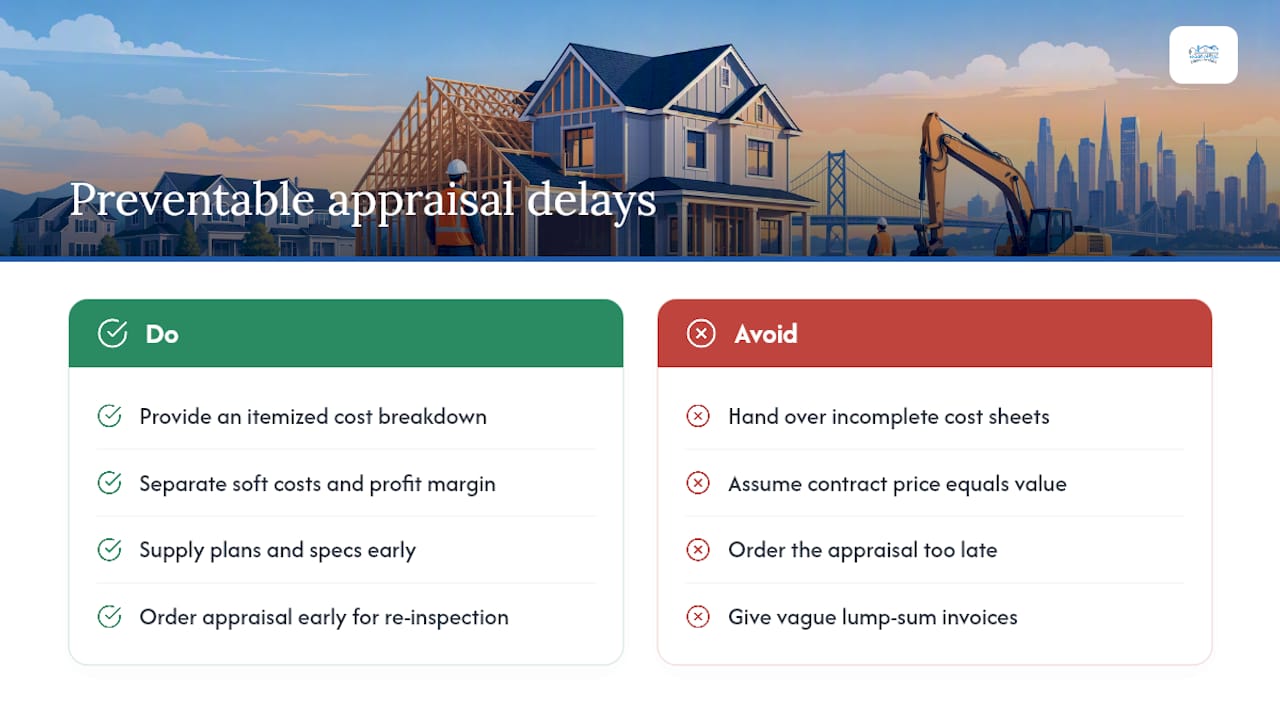
Most of the friction in new construction appraisals doesn't come from the appraisal process itself. It comes from treating documentation as an afterthought. Builders hand over incomplete cost sheets. Buyers assume the contract price is the value. Lenders order the appraisal too late to build in time for a re-inspection.
The conventional advice, "just wait until the home is done," misses the point entirely. Appraisers can and do value proposed construction all the time, using plans and specs sufficient to identify the extent and character of the improvements. The real bottleneck is whether that paperwork exists and is organized before the appraiser needs it.
If there's one thing worth prioritizing above everything else in this article, it's the cost breakdown. A vague builder invoice that lumps "upgrades" into one number gives the appraiser nothing to reconcile against. An itemized breakdown with soft costs and profit margin separated out gives them a defensible number to work from. That single document either speeds up your closing or stalls it.
— Alek
Get a State-Certified New Construction Appraisal From NJREAG
If you're navigating a builder contract, a construction loan draw schedule, or a lender asking for a prospective value report, you need an appraiser who already knows how to document hypothetical conditions and extraordinary assumptions correctly the first time. Newjerseyrealestateappraisal has handled new construction files in across all 21 New Jersey counties for over 26 years, and every report we deliver is USPAP-compliant and built to hold up under lender or legal scrutiny.

To start, send us your plans, finish schedule, and builder cost breakdown, and we'll confirm turnaround before we schedule the site visit. If your project is in South Jersey, our Atlantic County appraisal services page has local scheduling details, and if you're building in the north, check our Union County appraisal services. Builders comparing cost data can also review construction cost validation resources on the Buildberry blog.
Call us at (908) 517-3913 or request your appraisal online to get a firm timeline before your next draw or closing date.
Sources
- Appraising proposed residential construction for lenders — SCCAI (conference paper)
- Cost approach appraisal — Legal Clarity