
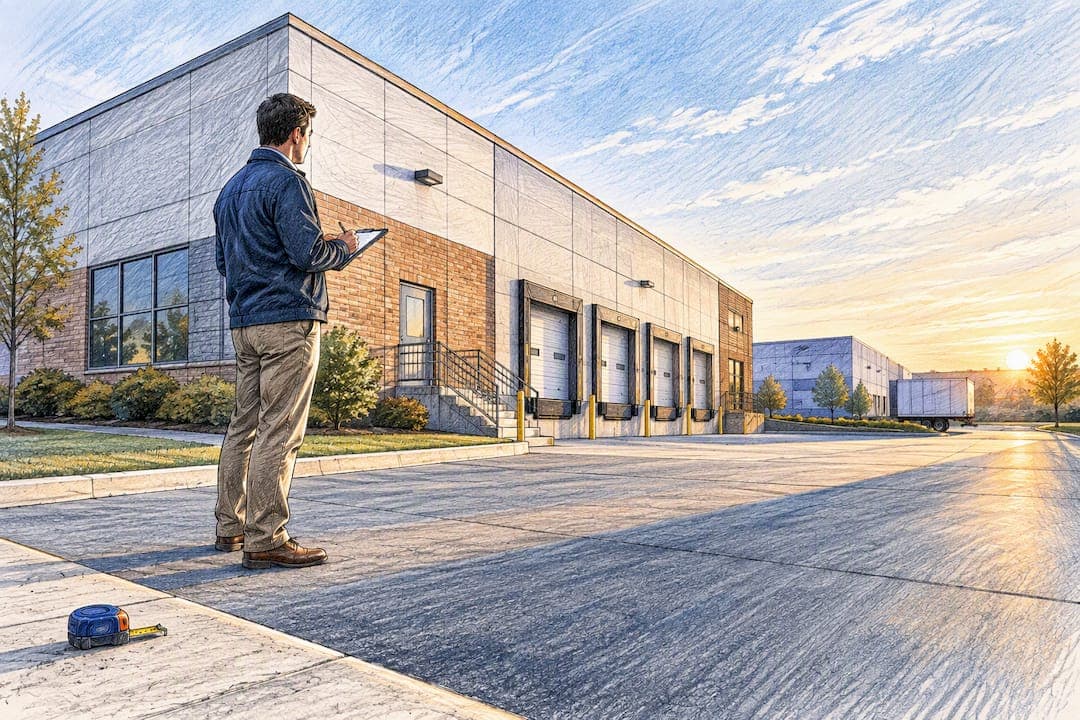
Most commercial property transactions in New Jersey require a state-certified Certified General appraiser working under USPAP standards, with federal thresholds under Title XI and the Interagency Guidelines determining whether a lender needs a full appraisal or can accept a lighter evaluation. You should expect the appraiser to apply sales comparison, income, or cost analysis depending on your property type. Timelines and fees shift with county market data and case complexity, so ask upfront what report format your lender or attorney actually needs.
TL;DR:
- Most commercial appraisals use sales comparison, income, or cost approaches, with the primary method depending on property type and data availability.
- Federal thresholds mean full USPAP-certified appraisals are required for larger or complex deals, especially with SBA loans over $250,000 or 504 loans over $500,000.
- Verifying a licensed Certified General appraiser's experience and recent USPAP update is crucial to ensure credible valuations.
- A full appraisal report includes scope, highest and best use, approach analyses, reconciliation, and certifications, with prepared documentation accelerating the process.
- Validity periods for appraisal reports vary: 6-12 months for lenders, 12 months for SBA, and less than six months for CMBS and insurance lenders.
Table of Contents
- Valuation approaches used in commercial appraisals and when each applies
- Who must perform the appraisal and when a full report is required
- New Jersey licensing requirements you should verify before hiring
- What a full commercial appraisal report includes and what you'll need to provide
- Timeline and cost expectations for a commercial appraisal in New Jersey
- How lenders, courts, and tax boards use appraisal reports and how long they stay valid
- NJREAG: our qualifications and how we start a commercial assignment
- NJ regulations beyond licensing that can affect a commercial appraisal
- Common pitfalls in NJ commercial appraisals and how to avoid them
- Why credentialed, local appraisers matter more than investors assume
- How to order a commercial appraisal from NJREAG
- Sources
- FAQ
Valuation approaches used in commercial appraisals and when each applies
Three approaches drive almost every commercial appraisal: sales comparison, income, and cost. Each one answers a different question, and a competent appraiser will tell you which one carries the most weight for your property type.
Sales comparison looks at recent closed transactions of similar properties and adjusts for differences in size, condition, and location. It works best when there's enough transaction data, which can be a problem in some of New Jersey's smaller or more specialized markets. The income approach converts a property's net operating income into value, either through direct capitalization or a discounted cash flow model, and it's typically the primary driver for office buildings, retail centers, industrial space, and multifamily assets. The cost approach estimates what it would take to rebuild the property today, minus depreciation, and it tends to carry the most weight for special-purpose properties like churches, schools, or newer construction where there's little income history to analyze.
When the three approaches produce different numbers, the appraiser reconciles them into a single value conclusion, giving more weight to whichever method has the strongest data behind it. In dense NJ submarkets where comparable sales are thin, appraisers often lean harder on income and DCF modeling supported by broker rent surveys and your own lease data.
As an investor, a few things on the report are worth checking yourself:
- Cap rate support: does the appraiser cite comparable sales or surveys to justify the rate, or just assert it?
- Market rent conclusions: are they backed by actual signed leases in the market, not just asking rents?
- Expense normalization: were one-time capital costs stripped out of the operating expense line?
Pro Tip: Ask your appraiser for the comparable sales grid before the final report is delivered. A thin or dated comp set is easier to challenge before you're relying on the number in a loan closing or a tax appeal.
Who must perform the appraisal and when a full report is required
For most federally related commercial transactions, a state-certified appraiser has to prepare the report, and it has to comply with USPAP. That requirement traces back to Title XI of FIRREA, which set the framework that pushed states to adopt certification standards for appraisers working on federally regulated loans, per the Appraiser Qualifications Board criteria.
Not every transaction needs a full appraisal, though. The Interagency guidance on evaluations from federal banking regulators allows lenders to use a lower-level evaluation instead of a full USPAP appraisal for certain lower-risk transactions, with thresholds that vary by transaction type and lender policy. Larger or more complex commercial deals almost always land above those thresholds, which means a full Appraisal Report from a certified appraiser is the expectation, not the exception.
SBA financing adds its own layer. Under current SBA rules, 7(a) loans over $250,000 and 504 loans over $500,000 require a full Appraisal Report, and restricted-use report formats generally aren't acceptable for those loans.
Before you hire anyone, ask your lender:
- Do you require a Certified General appraiser for this transaction?
- What report format do you accept: full narrative, restricted, or evaluation?
- Is there an SBA or secondary-market threshold that applies to this loan?
New Jersey licensing requirements you should verify before hiring
The Certified General credential is the one that matters for commercial work. It's the only New Jersey appraisal credential that authorizes an appraiser to value any property type, including commercial, industrial, and complex income-producing assets, unlike the Licensed or Certified Residential tiers.
Getting there isn't quick. According to the NJ State Real Estate Appraisers Board application packet, a Certified General appraiser needs a substantial amount of qualifying education and supervised appraisal experience, along with a bachelor's degree requirement. That's a meaningfully higher bar than the residential tiers.

Application fees also differ by credential level. The board packet lists a $75 fee for the Licensed tier, $100 for Certified Residential, and $125 for Certified General, along with a checklist covering AQB-tracked coursework, transcripts, and experience logs.
When you're vetting a commercial appraiser, a few checks take five minutes and save you a lot of grief later:
- Verify the license directly through the NJ Division of Consumer Affairs rather than taking a business card at face value.
- Confirm commercial experience specifically. A Certified General credential is required, but it doesn't guarantee deep experience with your property type.
- Ask when they last completed their USPAP update course. It's required every two years, and a lapsed update is a red flag.
What a full commercial appraisal report includes and what you'll need to provide
A full narrative appraisal report follows a predictable structure, and knowing it helps you understand what you're paying for and where delays tend to come from.
- Scope of work: what the appraiser did and didn't investigate, and why.
- Highest and best use analysis: what the property is worth doing with, which isn't always its current use.
- Approach analyses: sales comparison, income, and cost sections, each with supporting data.
- Reconciliation: how the appraiser weighed the approaches into a final value conclusion.
- Certifications and limiting conditions: the assumptions the appraiser relied on and the boundaries of their liability.
To get through that process without delays, appraisers typically ask for leases and rent rolls, historical income and expense statements, NNN reimbursement schedules, prior appraisals if any exist, surveys and site plans, and any environmental reports already on file. The more of that you have ready on day one, the faster the report moves.
Report format matters as much as content. A full Appraisal Report is the most detailed and defensible format. A Restricted Appraisal Report is shorter and intended for a single client's internal use, not third-party reliance. An evaluation or desktop review is the lightest tier and only acceptable under the Interagency thresholds mentioned earlier. Ordering the wrong format for an SBA or institutional loan can force a redo, which costs you both time and money on top of the original fee. For more on how these formats are structured, see this guide to USPAP-compliant reporting.
Timeline and cost expectations for a commercial appraisal in New Jersey
Standard income-producing properties, think a leased retail strip or a small office building, typically take 6 to 8 weeks from order to delivery, based on industry-reported timelines for NJ commercial appraisal assignments. Special-purpose properties, active construction, or assignments that require a business valuation on top of the real estate tend to run longer.
Cost varies with property complexity, report format, and how much data the appraiser has to assemble from scratch. County matters too: appraisals in data-rich markets with active recent sales tend to move faster than in counties with thin comparable sales.
A few practical moves keep your timeline from slipping:
- Provide complete lease and financial documentation upfront instead of piecemeal.
- Clarify intended use and intended users on day one, since a report built for a lender may need rework if it's later used in a tax appeal.
- Flag any pending zoning changes or environmental issues before the appraiser starts, not after.
Getting the scope wrong at the start is the single most common cause of appraisal delays, according to industry reporting on the NJ commercial appraisal process.
How lenders, courts, and tax boards use appraisal reports and how long they stay valid
A commercial appraisal doesn't serve one purpose. Lenders use it to size a loan against collateral value. Tax boards use it to test whether an assessment is fair. Courts use it in litigation and estate matters where a defensible number matters more than a fast one.
Validity windows vary by who's relying on the report:
- Bank and institutional lenders typically want a report dated within 6 to 12 months of closing.
- SBA loans generally follow a 12-month validity window.
- CMBS and insurance-company lenders often require something more recent, sometimes under six months.
Once that window closes, you're usually looking at an update rather than a brand-new report, which costs less than starting from scratch. Retrospective appraisals, valuing a property as of a past date, come up in estate and date-of-death work where the effective date has to match a specific legal event rather than today.
Courts and county tax boards give more weight to reports that follow USPAP and come from a Certified General appraiser, since that combination is what makes a valuation defensible under cross-examination rather than just a number on a page.
NJREAG: our qualifications and how we start a commercial assignment
We're a state-certified appraisal firm with over 26 years of combined experience across all 21 New Jersey counties. Every commercial report we produce is USPAP-compliant, built to hold up in lending decisions, tax appeals, and litigation where a shaky number isn't an option.
To start an assignment quickly, we typically ask for:
- Current rent roll and leases, or a signed listing agreement if the property is vacant.
- Two to three years of income and expense statements.
- Any prior appraisal, survey, or site plan already on file.
Our team has handled commercial, divorce, estate, and tax appeal appraisals across the state, which means we understand how a report needs to read differently depending on whether it's headed to a bank underwriter or a Superior Court judge.
NJ regulations beyond licensing that can affect a commercial appraisal
Licensing isn't the only regulatory layer that touches a commercial appraisal in New Jersey. Zoning and environmental conditions can change what a property is actually worth, independent of its current income.
A parcel zoned for one use but appraised under an assumption of rezoning has to disclose that as a hypothetical condition, and the appraiser needs a credible basis for assuming the change is likely. Municipal variances, pending redevelopment plans, and overlay zones all factor into the highest and best use analysis described earlier.
Environmental conditions matter just as much. Properties with a history of industrial use, underground storage tanks, or proximity to a known contamination site may need a Phase I or Phase II environmental assessment before or alongside the appraisal. New Jersey's Industrial Site Recovery Act can trigger cleanup obligations tied to certain property transfers, and an appraiser working on an affected property will typically flag that as an extraordinary assumption rather than ignore it.
Flood zone designation is another one investors overlook. A property sitting in a FEMA-designated flood zone can carry insurance and financing implications that show up directly in an income approach through higher operating expenses or lender risk pricing.
None of this replaces legal or environmental counsel. It does mean a good appraiser will ask about zoning status and environmental history before finalizing a value conclusion, not after.

Common pitfalls in NJ commercial appraisals and how to avoid them
The most common problem we see is incomplete documentation slowing everything down. Missing lease abstracts or unclear operating expense history force the appraiser to make assumptions instead of working from real numbers, which weakens the report's credibility later.
A second recurring issue is mismatched intended use. A report ordered for a refinance doesn't automatically work for a tax appeal or a divorce settlement, because the intended user and effective date requirements differ. Ordering the wrong scope from the start often means paying for a second report.
Thin comparable sales data in certain NJ counties can also push appraisers toward heavier reliance on the income approach, which raises the importance of accurate, complete financial statements from the property owner.
Finally, hiring based on price alone rather than commercial experience is a mistake we see play out in disputes. A Certified General license is the legal minimum, not proof of deep experience with your specific property type. Ask about comparable assignments before you sign an engagement letter, not after the report comes back short.
Why credentialed, local appraisers matter more than investors assume
County-level differences in rents, vacancy, and comparable sales in New Jersey are real, and a generic statewide number misses them. An appraiser who knows the difference between a Bergen County retail corridor and a Cumberland County one produces a more defensible report.
Automated valuation tools have their place for a quick gut check, but they can't weigh zoning nuance, lease structure, or environmental history the way a certified appraiser can. For anything tied to a loan, a court filing, or a tax appeal, that gap matters.
— Alek
How to order a commercial appraisal from NJREAG
We handle Commercial Real Estate Appraisals in New Jersey with the same state-certified, USPAP-compliant standard we apply to every report we deliver, whether it's headed to a lender, a tax board, or opposing counsel.

Before you call, gather your rent roll, recent income and expense statements, and any prior appraisal or survey on the property. That alone can shave weeks off a typical turnaround. We also handle land appraisals, pre-listing appraisals, and portfolio assignments if your situation extends beyond a single commercial asset.
If you're ready to move forward, request a quote for county-specific guidance or call us directly at (908) 517-3913. We'll walk you through what your lender or attorney will need before you commit to a scope.
Sources
- Interagency advisory on use of evaluations in real estate‑related financial transactions (OCC bulletin)
- Commercial Real Estate Appraisals: The 2026 Investor's Complete Guide | Stacking Capital
This article is general information, not a substitute for advice from a qualified financial advisor. Consult a qualified financial professional about your own circumstances before acting on anything here.
FAQ
Who can legally appraise a commercial property in New Jersey?
A state-certified Certified General appraiser is required for most federally related commercial transactions in New Jersey. This is the only credential tier authorized to value all property types, including complex commercial and industrial assets.
What are the requirements to get a Certified General appraisal license in NJ?
New Jersey requires 300 hours of qualifying education and 3,000 hours of supervised experience, along with a bachelor's degree, according to the NJ appraisers board packet. Application fees and documentation, including transcripts and experience logs, are also listed in that packet.
How long is a commercial appraisal valid for lending purposes?
Most bank and institutional lenders accept a report dated within 6 to 12 months of closing, while SBA loans generally follow a 12-month window. CMBS and insurance lenders often require a more recent report, sometimes under six months.
How do appraisers determine the value of a commercial property?
Appraisers typically apply three approaches: sales comparison, income (direct capitalization or discounted cash flow), and cost, then reconcile them into one value conclusion. The income approach usually carries the most weight for leased office, retail, industrial, and multifamily properties.
Does NJREAG provide court-ready commercial appraisal reports?
Yes, NJREAG delivers state-certified, USPAP-compliant commercial appraisal reports across all 21 New Jersey counties, built to hold up in lending, tax appeal, and litigation settings. You can request a quote through our commercial appraisal services page or by calling (908) 517-3913.