

Selecting the right type of real estate appraisal can feel overwhelming, especially when the stakes involve major financial decisions, legal disputes, or property transactions in New Jersey. Each appraisal method serves distinct purposes, from residential sales to commercial income valuations and court-ready tax appeals. Understanding which approach fits your specific needs, whether you're a homeowner refinancing, an attorney preparing for litigation, or a real estate professional advising clients, is essential for accurate property valuation. This guide breaks down the major appraisal types used across New Jersey and provides a clear framework to help you choose the most appropriate method for your situation.
Table of Contents
- Key Takeaways
- How to evaluate and select the right appraisal type
- Sales comparison approach: the go-to for residential and legal cases
- Cost and income approaches: alternatives for construction and income properties
- Comparing appraisal types: when to choose which in New Jersey
- Explore expert real estate appraisal services in New Jersey
- Frequently asked questions about real estate appraisals in New Jersey
Key Takeaways
| Point | Details |
|---|---|
| Three appraisal methods | Real estate valuations in New Jersey rely on three main approaches: sales comparison, cost, and income. |
| Sales comparison dominance | For most residential properties and legal disputes in New Jersey, the sales comparison method provides the market foundation. |
| Cost for unique properties | The cost approach works best for newly built or specialized properties where comparable sales are scarce. |
| Income for commercial assets | The income approach focuses on revenue streams to value income producing properties such as offices, apartments, and retail centers. |
How to evaluate and select the right appraisal type
Choosing the correct appraisal method starts with identifying your specific purpose. Are you buying or selling a home, refinancing a mortgage, settling an estate, contesting property taxes, or valuing commercial real estate? Each scenario demands different emphasis. Transaction appraisals for residential properties typically rely on sales comparison, while financing appraisals must meet lender requirements. Legal valuations for tax appeal appraisals in New Jersey require court-ready documentation with transparent adjustments.
Property type significantly influences method selection. Single-family homes, condos, and townhouses align naturally with sales comparison because abundant comparable sales exist in most New Jersey markets. Newly constructed buildings or unique properties like churches, schools, or industrial facilities often necessitate the cost approach due to limited comparable transactions. Income-producing assets such as apartment complexes, office buildings, or retail centers demand income-based analysis to capture their investment value.
Data availability in your local New Jersey market matters enormously. Property valuation methods note that appraisers reconcile multiple approaches, weighting by data reliability and applicability, since relying on a single approach risks inaccuracy per USPAP standards. Dense suburban areas with frequent sales provide robust comparable data, while rural or specialized properties may require alternative methods. Your appraiser should explain which data sources support their chosen approach and why alternatives received less weight.
Key factors to evaluate when selecting an appraisal type:
- Purpose of the appraisal: transaction, refinancing, legal dispute, insurance, or estate planning
- Property characteristics: residential, commercial, income-producing, or special-use
- Availability of comparable sales data in your New Jersey county
- Legal requirements if the appraisal will be used in court proceedings
- Timeline and budget constraints for completing the valuation
Pro Tip: If your property has unique features or serves a specialized function, discuss with your appraiser whether a hybrid approach combining multiple methods will provide more defensible results, especially for legal or financing purposes.
Sales comparison approach: the go-to for residential and legal cases
The sales comparison approach forms the foundation of most residential appraisals across New Jersey. This method analyzes recent sales of similar properties in the same market area, then adjusts for differences in size, condition, location, features, and other characteristics. What are the three main appraisal methods? explains that sales comparison compares recent sales of similar properties, adjusting for differences, making it primary for residential properties like single-family homes and condos.
The process begins with identifying truly comparable properties that sold recently, ideally within the past six months and within a mile of the subject property. Appraisers examine public records, MLS data, and county assessment information to find matches. They then calculate adjustments for differences such as square footage, bedroom count, lot size, garage spaces, updates, and overall condition. Each adjustment must be supported by market evidence, not arbitrary estimates.
For NJ appraisal methods breakdown, sales comparison offers unmatched transparency because it directly reflects what buyers actually paid for similar homes. This market basis makes it highly credible in legal contexts. New Jersey court opinion on appraisal methods confirms that for legal disputes like eminent domain or tax appeals in NJ, sales comparison is primary, with courts scrutinizing adjustments, paired sales analysis, and data verification for credibility.
Key strengths of the sales comparison approach:
- Reflects actual market behavior and buyer preferences
- Provides transparent, verifiable adjustments based on real transactions
- Works exceptionally well for typical residential properties
- Courts and lenders widely accept it as credible evidence
- Abundant data available in most New Jersey markets
"The sales comparison approach remains the most reliable method for residential valuations because it captures what informed buyers willingly pay in an open market, adjusted for property-specific differences."
This method does have limitations. It struggles with unique properties lacking true comparables, newly constructed homes in developing areas without sales history, or markets with very few recent transactions. In these situations, appraisers may need to expand their search radius, use older sales with time adjustments, or incorporate alternative approaches.
Cost and income approaches: alternatives for construction and income properties
The cost approach estimates property value by calculating what it would cost to replace the building today, subtracting depreciation, then adding land value. Property valuation methods notes that cost approach estimates replacement cost new minus depreciation plus land value, proving best for new construction, special-purpose properties, and insurance valuations. This method excels when comparable sales don't exist or when the property serves a specialized function.
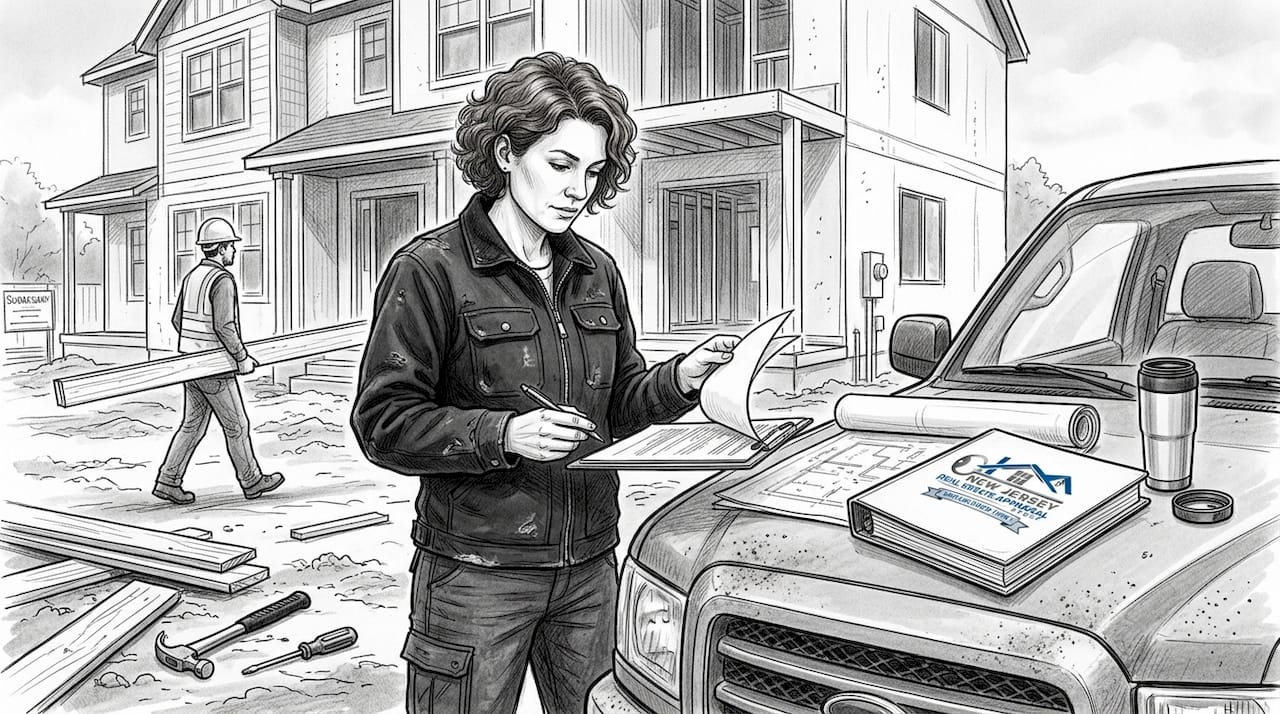
Appraisers using the cost approach first estimate the current cost to construct an identical or functionally equivalent building using current materials, labor rates, and building codes. They then subtract depreciation from three sources: physical deterioration from age and wear, functional obsolescence from outdated design or features, and external obsolescence from neighborhood or market conditions. Finally, they add the land value estimated through comparable land sales. This produces a value based on replacement economics rather than market transactions.
The income approach takes a completely different angle, focusing on the property's ability to generate revenue. Common methodologies used in financial appraisals explains that income approach capitalizes net operating income through direct capitalization or discounts future cash flows using DCF analysis, serving income-producing properties like multifamily buildings and commercial real estate.
For commercial appraisals in New Jersey, the income approach dominates because investors buy these properties primarily for cash flow potential. The direct capitalization method divides annual net operating income by a market-derived capitalization rate to estimate value. The discounted cash flow method projects future income streams and expenses over a holding period, then discounts them to present value using an appropriate discount rate.
| Approach | Calculation Method | Best Property Types | Primary Use Cases |
|---|---|---|---|
| Cost | Replacement cost minus depreciation plus land | New construction, churches, schools | Insurance, special-purpose |
| Income | NOI divided by cap rate or DCF analysis | Apartments, offices, retail centers | Investment properties |
When to use each alternative approach:
- Cost approach: New buildings under two years old, properties with no income or comparable sales, insurance valuations requiring replacement cost, special-use buildings like fire stations or libraries
- Income approach: Multifamily properties with five or more units, office buildings, shopping centers, industrial warehouses, any property purchased primarily for investment returns
Pro Tip: Even when using cost or income approaches as primary methods, experienced appraisers include sales comparison as a secondary check to test reasonableness, providing a more defensible final value conclusion.
Comparing appraisal types: when to choose which in New Jersey
Understanding the practical differences between appraisal methods helps you request the right type and recognize when an appraiser's chosen approach fits your needs. Sales comparison remains the gold standard for typical residential properties throughout New Jersey's 21 counties because it directly captures market sentiment and buyer behavior. When you're buying a three-bedroom colonial in Bergen County or selling a condo in Monmouth County, sales comparison provides the most reliable value indicator.
The cost approach becomes essential for properties where the building itself represents the primary value component and comparable sales prove inadequate. A newly constructed custom home in Hunterdon County, a recently built industrial facility in Middlesex County, or a specialized medical building in Essex County all benefit from cost-based analysis. Insurance companies regularly require cost approach appraisals to establish replacement coverage amounts, ensuring policyholders can rebuild after a total loss.
For land appraisals in New Jersey, the sales comparison approach typically applies to the land component even when the cost approach values improvements. Vacant land transactions provide the comparable data needed to establish site value before adding building costs.
| Appraisal Method | Strengths | Limitations | NJ Legal Acceptance |
|---|---|---|---|
| Sales Comparison | Market-based, transparent, abundant data | Requires comparable sales, struggles with unique properties | Highest, courts scrutinize adjustments |
| Cost Approach | Works for new/unique buildings, insurance-ready | Depreciation estimates subjective, ignores market sentiment | Moderate, used as secondary support |
| Income Approach | Captures investment value, forward-looking | Requires income/expense data, cap rate selection critical | High for commercial, not for residential |
Income-producing properties demand the income approach because their value derives from cash flow potential, not just physical characteristics. A 20-unit apartment building in Camden County sells based on its rental income and operating expenses, not merely its square footage or age. Buyers analyze cap rates, cash-on-cash returns, and internal rates of return. Your appraisal must speak this investment language to provide meaningful value conclusions.
Appraisal accuracy and legal context in NJ reveals that no specific empirical benchmarks exist for NJ appraisal accuracy, with tax cases showing conflicting expert opinions resolved by courts based on adjustment credibility. This underscores the importance of selecting an appraisal method with defensible data and transparent calculations, especially when litigation looms. Courts don't automatically accept any appraisal; they evaluate the appraiser's methodology, data sources, and adjustment logic.
Practical selection guidelines for New Jersey property owners:
- Single-family homes, condos, townhouses: Sales comparison approach
- New construction under three years old: Cost approach primary, sales comparison secondary
- Apartment buildings, commercial properties: Income approach primary, sales comparison secondary
- Unique properties (churches, schools, historic buildings): Cost approach, possibly combined methods
- Tax appeals and legal disputes: Sales comparison preferred, with extensive documentation of adjustments
- Estate settlements and divorces: Method matching property type, often requiring retrospective effective dates
The choice often isn't binary. Sophisticated appraisals for complex properties employ all three approaches, then reconcile them into a final value conclusion. A mixed-use building with ground-floor retail and upper-floor apartments might warrant income approach for the commercial space, sales comparison for the residential units, and cost approach to test reasonableness. Your appraiser should explain their weighting logic and why certain methods received more emphasis.
Explore expert real estate appraisal services in New Jersey
Navigating appraisal types becomes simpler when you work with certified professionals who understand New Jersey's diverse property markets and legal requirements. Whether you need a residential valuation in Atlantic County real estate appraisal services or commercial analysis in Union County real estate appraisal services, experienced appraisers tailor their approach to your specific situation.

Professional appraisal services cover every property type and purpose across New Jersey's 21 counties. From routine refinance appraisals to complex litigation support, certified appraisers deliver USPAP-compliant reports that stand up to lender scrutiny and court examination. They understand local market nuances, maintain current comparable sales databases, and apply appropriate methodology for each assignment. Resources like guides on avoiding common pitfalls in home appraisals help property owners prepare effectively and understand what to expect throughout the appraisal process.
Frequently asked questions about real estate appraisals in New Jersey
What is the most common appraisal type for residential properties in New Jersey?
The sales comparison approach dominates residential appraisals because it analyzes recent sales of similar homes in the same market area, adjusted for differences. This method provides market-based values that lenders, buyers, and courts readily accept.
Do commercial properties require different appraisal methods than homes?
Yes, commercial and income-producing properties typically use the income approach as the primary method because investors purchase them for cash flow potential. The sales comparison approach serves as a secondary check, while the cost approach may apply to newer buildings.
How do New Jersey courts evaluate appraisal credibility in tax appeal cases?
Courts scrutinize the appraiser's methodology, data sources, and adjustment calculations rather than automatically accepting conclusions. Sales comparison approach with well-documented adjustments and verified comparable sales receives the highest credibility. Appraisers must demonstrate market support for every adjustment and explain why certain comparables were selected.
Can an appraiser use multiple methods in a single appraisal report?
Absolutely. USPAP encourages appraisers to consider all applicable approaches and reconcile them into a final value conclusion. Complex properties often benefit from multiple methods, with the appraiser explaining the weight given to each based on data reliability and property characteristics.
How do I choose an appraiser who understands which method fits my needs?
Select a state-certified appraiser with experience in your property type and appraisal purpose. Ask about their familiarity with NJ tax appeal appraisals if you're contesting assessments, or commercial valuation if you own income property. Review sample reports and verify their certification status with the New Jersey Real Estate Appraiser Board.