

Many lenders assume New Jersey's appraisal process is straightforward, but strict compliance standards often catch even experienced professionals off guard. Between USPAP mandates, FHA independence rules, and state licensing requirements, a single oversight can delay closings or trigger regulatory issues. This guide walks you through the exact compliance framework, cost expectations, and practical steps to navigate appraisals smoothly in 2026. You'll learn how to verify appraiser credentials, manage appraisal gaps, and align with NJHMFA standards to protect your loan portfolio and streamline underwriting.
Table of Contents
- Understanding appraisal compliance requirements in New Jersey
- Cost, timing, and validity: what lenders should expect in New Jersey
- Navigating appraisal gaps, income limits, and debt ratios in NJ lending
- Best practices for lenders to streamline the New Jersey appraisal process
- Streamline your New Jersey real estate appraisals with NJREAG
- Frequently asked questions
Key takeaways
| Point | Details |
|---|---|
| Compliance framework | NJ appraisals require adherence to USPAP, FHA independence standards, and state licensing by the NJ Real Estate Appraiser Board. |
| Cost and validity | Typical residential appraisals cost $450 to $800 and FHA reports remain valid for 180 days from inspection. |
| Income and DTI limits | NJHMFA sets county income caps like $150,000 in Atlantic County and enforces 45 to 50 percent maximum debt to income ratios. |
| Appraisal gap risk | When appraised value falls below purchase price, borrowers must cover the difference as down payment assistance does not apply. |
| Best practices | Verify appraiser credentials early, maintain compliance documentation, and train loan officers on regulatory standards to avoid delays. |
Understanding appraisal compliance requirements in New Jersey
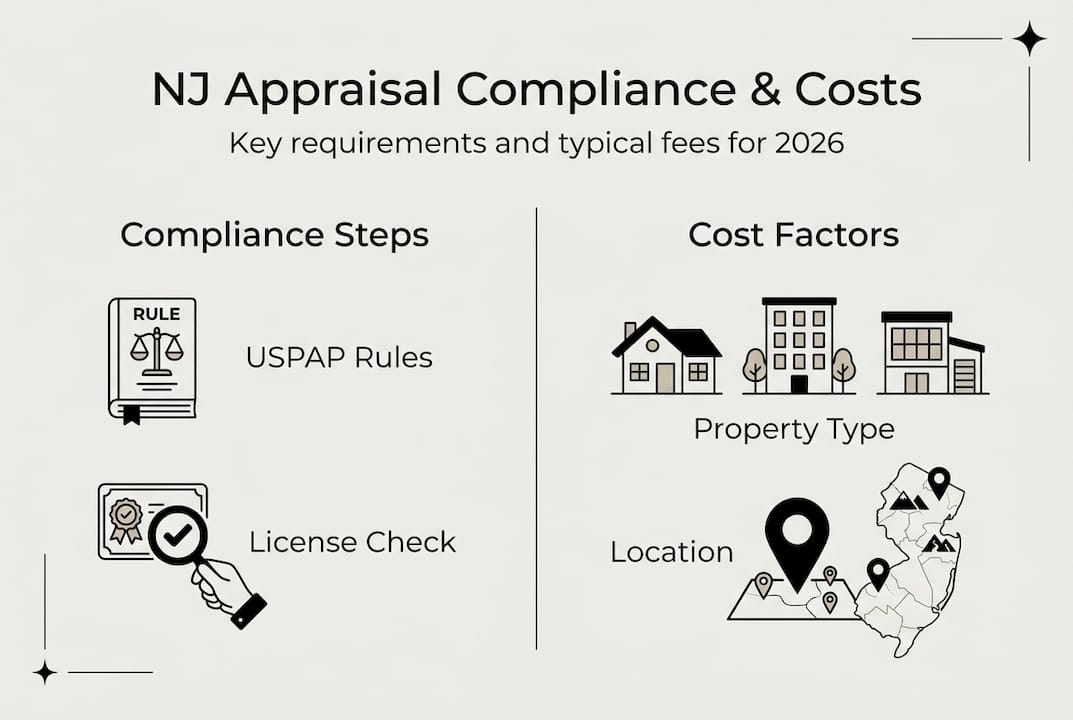
New Jersey lenders operate under a multi layered regulatory framework that governs every appraisal transaction. At the foundation sits USPAP, the Uniform Standards of Professional Appraisal Practice, which establishes ethical and performance benchmarks for all valuation work. Appraisals for lenders must comply with USPAP, FHA Appraiser Independence Requirements, and state licensing by the NJ Real Estate Appraiser Board. These standards ensure objectivity, accuracy, and legal defensibility in every report you receive.
FHA loans introduce an additional compliance layer through Appraiser Independence Requirements designed to eliminate conflicts of interest. Lenders cannot influence appraiser selection or pressure professionals to hit specific values. This separation protects both borrowers and financial institutions from inflated valuations that could jeopardize loan performance. When ordering home appraisals in New Jersey, you must document that appraisers were selected through compliant channels and had no prior relationship with the transaction parties.
The New Jersey Real Estate Appraiser Board oversees licensing for all professionals conducting valuations in the state. Only licensed or certified appraisers may complete reports for federally related transactions, and their credentials must be current at the time of inspection. Before accepting any appraisal, verify the appraiser's license status through the board's public database. Expired or suspended licenses invalidate reports regardless of content quality.
Key compliance checkpoints lenders should verify include:
- Appraiser holds active NJ state certification or license appropriate for property type and loan amount
- Report completion date falls within appraiser's valid licensing period
- USPAP compliance statement appears in the certification section
- FHA independence documentation exists for government backed loans
- Property inspection occurred within acceptable timeframes per investor guidelines
NJHMFA lender requirements emphasize independent appraisal policies aligned with Fannie Mae and Freddie Mac standards. These agencies mandate that appraisals reflect market conditions without undue influence from any transaction participant. Lenders must maintain audit trails showing appraiser selection processes, communication logs, and quality control reviews. Preparing for a home appraisal involves coordinating with borrowers while respecting independence boundaries that protect valuation integrity.
Pro Tip: Double check appraiser licenses and report dates before submitting files to underwriting. A simple credential verification at the front end prevents costly delays when conditions come back requesting new appraisals due to licensing lapses.
Cost, timing, and validity: what lenders should expect in New Jersey
Appraisal costs in New Jersey vary based on property type, location, and complexity, but residential properties typically fall within a predictable range. Standard appraisals cost $450 to $800 for single family homes and condominiums in most markets. Complex properties like multi family buildings, rural acreage, or unique construction may command higher fees due to additional research and analysis requirements. When budgeting for loan origination expenses, factor these costs into your fee structure and communicate them clearly to borrowers during initial disclosures.

FHA appraisal reports carry specific validity periods that directly impact your loan processing timeline. FHA appraisals remain valid for 180 days from the inspection date, giving you a six month window to close the transaction. If circumstances delay closing beyond this period, you may need to order an appraisal update or entirely new report depending on market changes and investor requirements. This validity clock starts ticking the moment the appraiser inspects the property, not when you receive the completed report.
Turnaround times from order placement to report delivery average seven to ten business days in normal market conditions. Peak seasons like spring and summer can extend this window to two weeks or more as appraisers manage heavy workloads. Rush orders may be available for additional fees, but quality should never be sacrificed for speed. Build realistic timelines into your loan processing schedules and communicate expected delivery dates to borrowers upfront.
Timing directly affects loan approval deadlines and purchase contract contingencies. Most purchase agreements include appraisal contingencies with specific timeframes, often 10 to 14 days from contract acceptance. Missing these deadlines can put earnest money deposits at risk or allow sellers to cancel contracts. Coordinate appraisal orders immediately after contract execution and monitor progress to ensure timely delivery.
| Appraisal Type | Cost Range | Validity Period | Typical Turnaround |
|---|---|---|---|
| Standard residential | $450 to $650 | 180 days FHA, 120 days conventional | 7 to 10 days |
| Complex residential | $650 to $800 | 180 days FHA, 120 days conventional | 10 to 14 days |
| Multi family | $800 to $1,200 | 180 days FHA, 90 days conventional | 14 to 21 days |
| Commercial | $1,500+ | Varies by investor | 21+ days |
Conventional loan appraisals typically carry shorter validity periods than FHA reports, often 120 days for standard transactions and as little as 90 days for investment properties. Fannie Mae and Freddie Mac guidelines allow some flexibility for appraisal updates when market conditions remain stable, but lenders must document that no material changes occurred since the original inspection. Understanding these nuances helps you manage pipeline risk and set accurate expectations with borrowers.
Pro Tip: Order appraisals immediately after receiving fully executed purchase contracts, especially during spring and summer when appraiser schedules fill quickly. Early ordering provides buffer time for potential delays and ensures you meet contract contingency deadlines without stress.
Navigating appraisal gaps, income limits, and debt ratios in NJ lending
Appraisal gaps create immediate challenges for lenders and borrowers when property values come in below purchase prices. This shortfall means the loan amount based on appraised value falls short of the funds needed to complete the purchase at the agreed price. Borrowers must either renegotiate the purchase price, contribute additional cash to cover the gap, or walk away from the transaction. As a lender, you cannot finance amounts exceeding the appraised value, making these situations particularly sensitive for first time buyers with limited cash reserves.
NJHMFA sets income limits that vary by county and household size, directly affecting loan eligibility and program access. Atlantic County caps income at $150,000 for many programs, while other counties have different thresholds based on area median income calculations. These limits determine which borrowers qualify for down payment assistance, reduced mortgage insurance, and favorable interest rates through state programs. When appraisals reveal values that push loan amounts beyond program limits, borrowers may lose access to these benefits.
Debt to income ratios represent another critical threshold in New Jersey lending. Maximum DTI ratios range from 45 to 50 percent depending on the loan program, credit profile, and compensating factors. Higher appraisal values can actually work against borrowers if the resulting loan amount pushes their DTI above acceptable limits. Conversely, lower appraisals might bring borderline applications into compliance by reducing the loan amount and monthly payment obligations.
| County | Income Limit | Max DTI | Appraisal Gap Coverage |
|---|---|---|---|
| Atlantic | $150,000 | 45 to 50% | Not covered by DPA |
| Bergen | $175,000 | 45 to 50% | Not covered by DPA |
| Camden | $145,000 | 45 to 50% | Not covered by DPA |
| Union | $160,000 | 45 to 50% | Not covered by DPA |
Appraisal gaps differ fundamentally from down payment assistance coverage. DPA programs do not cover appraisal gaps, meaning borrowers cannot use grant funds or forgivable loans to bridge the difference between contract price and appraised value. This limitation catches many first time buyers off guard, as they assume assistance programs provide flexibility for unexpected valuation issues. Your role includes educating borrowers about this restriction during initial consultations to prevent surprises later in the process.
NJHMFA lender requirements specify appraisal independence policies aligned with Fannie Mae and Freddie Mac standards, emphasizing that valuations must reflect true market conditions without influence. When appraisal gaps occur, you cannot pressure appraisers to reconsider values or provide additional comparables designed to inflate results. Instead, focus on helping borrowers understand their options: renegotiating purchase price, contributing additional funds, or pursuing alternative properties within their budget constraints.
Understanding NJ appraisal methods explained helps you anticipate potential gaps before they occur. Sales comparison approaches dominate residential valuations, and recent comparable sales in declining markets often produce lower values than purchase prices negotiated months earlier. Review preliminary market data with borrowers during preapproval to set realistic expectations about potential appraisal outcomes.
Best practices for lenders to streamline the New Jersey appraisal process
Implementing a systematic approach to appraisal management protects your institution from compliance violations while accelerating loan processing. Follow this checklist for every transaction:
- Verify appraiser credentials through the NJ Real Estate Appraiser Board database before placing orders.
- Document appraiser selection process to demonstrate independence and absence of conflicts of interest.
- Confirm property address, legal description, and borrower contact information to prevent inspection delays.
- Provide appraisers with complete property information including prior sales data and current listings.
- Monitor delivery timelines and follow up proactively when reports approach deadline thresholds.
- Review completed reports for USPAP compliance statements and proper licensing disclosures.
- Maintain digital and physical copies of all appraisal documents for regulatory audit trails.
Appraiser credential verification goes beyond checking license status. Confirm that the professional's certification level matches the property type and loan amount requirements. Certified general appraisers can handle all property types, while certified residential appraisers are limited to one to four unit residential properties. Licensed appraisers face additional restrictions on property values and transaction types. Mismatched credentials invalidate reports regardless of content quality.
Communication best practices balance efficiency with independence requirements. Provide appraisers with factual property information like square footage, room counts, and recent improvements, but never suggest target values or express concerns about potential outcomes. Document all appraiser communications in your loan file, including emails, phone logs, and information requests. This transparency demonstrates compliance during quality control reviews and regulatory examinations.
Key documents for compliance audits include:
- Appraiser engagement letters showing selection process and independence
- Completed appraisal reports with USPAP certification statements
- Appraiser license verification printouts from state database
- Communication logs documenting information exchanges
- Quality control review checklists confirming report adequacy
- Borrower disclosures explaining appraisal purpose and limitations
Pro Tip: Train loan officers on appraisal standards through quarterly workshops covering USPAP basics, FHA independence rules, and common report deficiencies. Educated originators catch problems early, reducing revision requests and processing delays that frustrate borrowers and slow pipeline velocity.
Common pitfalls include accepting outdated appraisals beyond validity periods, overlooking appraiser license expirations, and failing to verify USPAP compliance statements. Avoiding common pitfalls in home appraisals requires attention to detail at every stage. Create standardized review checklists that underwriters complete before submitting files to closing departments. These quality gates catch errors before they become costly problems requiring new appraisals or extended closing timelines.
Underqualified appraisers represent another risk area. Some professionals hold valid licenses but lack experience with specific property types or market areas. Short sale appraisal guidelines differ significantly from standard purchase transactions, requiring specialized knowledge of distressed property valuation. When dealing with unique situations, seek appraisers with demonstrated expertise rather than simply accepting the first available professional.
NJHMFA appraisal policies provide detailed guidance on report requirements, independence standards, and quality control expectations. Review these policies annually and update internal procedures to reflect any regulatory changes. Compliance is not static, and staying current protects your institution from violations that could jeopardize your approved lender status.
Streamline your New Jersey real estate appraisals with NJREAG
After mastering compliance requirements and processing best practices, you need a reliable appraisal partner who understands New Jersey's unique regulatory landscape. New Jersey Real Estate Appraisal Group brings over 26 years of experience delivering USPAP compliant, court ready valuation reports that meet the strictest lender standards. Our state certified appraisers serve Atlantic County and Union County with statewide coverage for complex assignments.
We maintain full compliance with USPAP, FHA independence requirements, and NJ Real Estate Appraiser Board licensing standards on every assignment. Our streamlined processes deliver faster turnaround times without sacrificing accuracy, helping you meet tight closing deadlines while protecting your loan portfolio. Whether you need residential valuations, commercial appraisals, or specialized reports for distressed properties, our team provides the expertise and reliability your lending operation demands.
Our comprehensive appraisal services include:
- FHA and conventional residential appraisals
- Multi family and investment property valuations
- Commercial real estate appraisals
- Estate settlement and divorce appraisals
- Pre foreclosure and short sale valuations
Frequently asked questions
What is the validity period of an FHA appraisal in New Jersey?
FHA appraisals remain valid for 180 days from the property inspection date, giving lenders a six month window to close transactions. Extensions may be possible through appraisal updates if market conditions remain stable and no material property changes occurred. Always verify specific investor requirements, as some overlays impose shorter validity periods.
How do appraisal gaps impact loan approvals in New Jersey?
Appraisal gaps occur when appraised value falls below the purchase price, creating a funding shortfall that borrowers must resolve. Lenders cannot finance amounts exceeding appraised value, forcing borrowers to renegotiate prices, contribute additional cash, or abandon purchases. These gaps particularly challenge first time buyers with limited reserves and cannot be covered by down payment assistance programs.
What qualifications must appraisers have for NJ lender appraisals?
Appraisers must hold active licenses or certifications from the New Jersey Real Estate Appraiser Board appropriate for the property type and transaction value. They must follow USPAP standards and comply with FHA appraiser independence requirements for government backed loans. Verify credentials through the state board database before accepting any appraisal report.
Are there income limits that affect appraisal requirements for NJ loans?
NJHMFA sets county specific income limits, such as $150,000 in Atlantic County, that determine program eligibility and loan terms. Borrowers exceeding these thresholds may face different appraisal requirements, lose access to down payment assistance, or encounter stricter underwriting standards. These limits interact with debt to income ratios to shape overall loan qualification.