

The appraisal effective date is the single calendar day an appraiser's opinion of value applies to, also called the date of value. Its age is what determines whether a report still counts for lending, a divorce settlement, or a tax appeal. Under lender rules and USPAP, the effective date is fixed once the report is delivered and cannot be quietly changed. You either update it, reinspect it, or order a new appraisal.
TL;DR:
- An appraisal's effective date determines the market snapshot used, and it cannot be silently changed after the report is delivered under USPAP rules.
- Lenders typically accept appraisals up to four months old without updates, but reports older than twelve months usually require a new appraisal.
- Retrospective valuations for estates or divorces demand detailed documentation to support historical conditions and comparable sales from the specific date.
- If an appraisal becomes outdated, lenders prefer a market review or exterior reinspection for reports within four to twelve months, with full new reports necessary beyond that.
- Confirm your exact effective date early, document the scope accordingly, and avoid asking appraisers to change the date after delivery to prevent delays or invalidation.
Table of Contents
- What the Effective Date Means (and How It Differs From Inspection and Report Dates)
- Why the Effective Date Matters: Standards, Lender Rules, and Legal Stakes
- When an Appraisal Is Too Old: Updates, Reinspections, and New Reports
- Fixing Effective-Date Problems: What USPAP Allows and a Documentation Checklist
- How NJREAG Handles Effective-Date Challenges
- Three Mistakes I See Constantly
- Get a Court-Ready Appraisal With the Right Effective Date From the Start
- Sources
What the Effective Date Means (and How It Differs From Inspection and Report Dates)
Three dates show up on every appraisal, and confusing them causes most of the disputes we see. The effective date is the day the value opinion applies to. The inspection date is the day the appraiser physically walked the property. The report date is the day the appraiser finished writing and signed the document.
For a standard purchase appraisal, all three dates often land close together, sometimes on the same day. That's not a rule, though. It's a coincidence of timing that happens because most lenders want a current-value snapshot for underwriting.
USPAP defines the effective date as the date to which the appraiser's analyses, opinions, and conclusions apply. It's not a suggestion. It's an assignment element that has to appear in the report, and it locks in the market data cutoff the appraiser is allowed to rely on.
Here's how the three effective date types play out in practice:
- Current effective date: The value applies to a recent inspection date. Used for purchases, refinances, and pre-listing valuations.
- Retrospective effective date: The value applies to a past date, often a date of death, a divorce filing date, or a construction loss date. The appraiser wasn't necessarily there that day and has to reconstruct conditions.
- Prospective effective date: The value applies to a future date, common in construction financing where the appraiser values a home "as if completed" on a projected completion date.
That cutoff matters more than most homeowners realize. If your effective date is June 15, the appraiser can't use a comparable sale that closed on June 20. It happened after the value date. This is why two appraisals on the same house, ordered a month apart, can come back with different numbers. It's not sloppy work. It's two different snapshots of a moving market.
Why the Effective Date Matters: Standards, Lender Rules, and Legal Stakes
Every appraisal report has to state its effective date under USPAP, and appraisers can't quietly change it after the fact. Altering the date isn't a correction. It changes the assignment itself, which usually means starting over.
Lenders layer their own timing rules on top of USPAP. Fannie Mae generally requires an appraisal to be obtained within a limited and defined timeframe prior to the mortgage note date, with updates required if the appraisal ages beyond certain periods. Freddie Mac sets its own age limits and update requirements for reports used in origination and servicing, and the two agencies don't always treat "old" the same way.
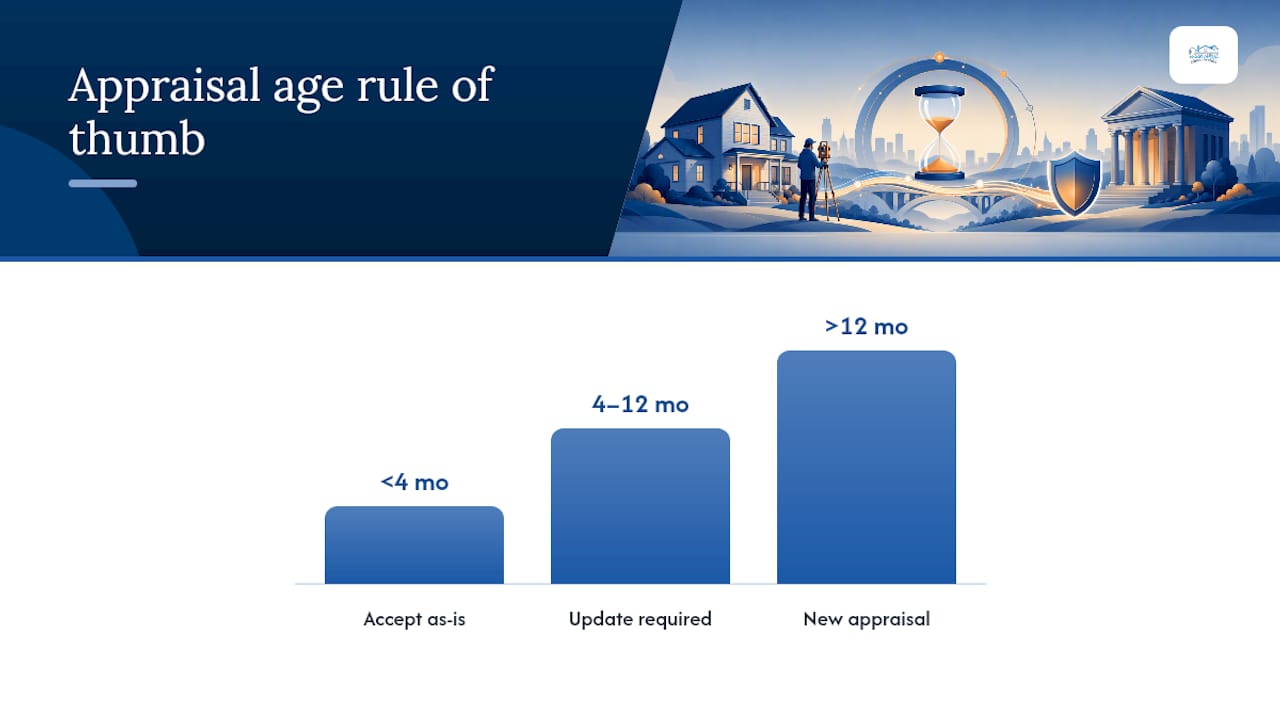
Effective Date Rule of Thumb: Under four months old, most conventional loans accept the original report as is. Between four and twelve months, expect an update with an exterior reinspection and a market trend check. Past twelve months, you're typically looking at a new appraisal, not an update.
Desktop appraisals and appraisal waiver products play by tighter rules. Because there's no interior inspection backing them up, their acceptance windows tend to run shorter than a traditional full appraisal, and lenders will confirm program specifics before closing.
The stakes go well beyond mortgage underwriting:
- Estate and date-of-death valuations: The IRS and probate courts need the value pinned to the exact date of death, not "sometime around then."
- Divorce and equitable distribution: New Jersey courts typically expect the effective date to match the complaint filing date or another date the parties agree controls the marital estate.
- Tax appeals: County tax boards assess value as of a specific assessment date each year, and a mismatched effective date can get a report thrown out before anyone even argues about the number.
- Lender underwriting: An outdated effective date can stall or kill a closing if nobody catches it early.
When an Appraisal Is Too Old: Updates, Reinspections, and New Reports
An old appraisal doesn't automatically mean starting from zero. It means picking the right remedy for how old the report actually is.
Here's the general order of operations lenders and appraisers follow:
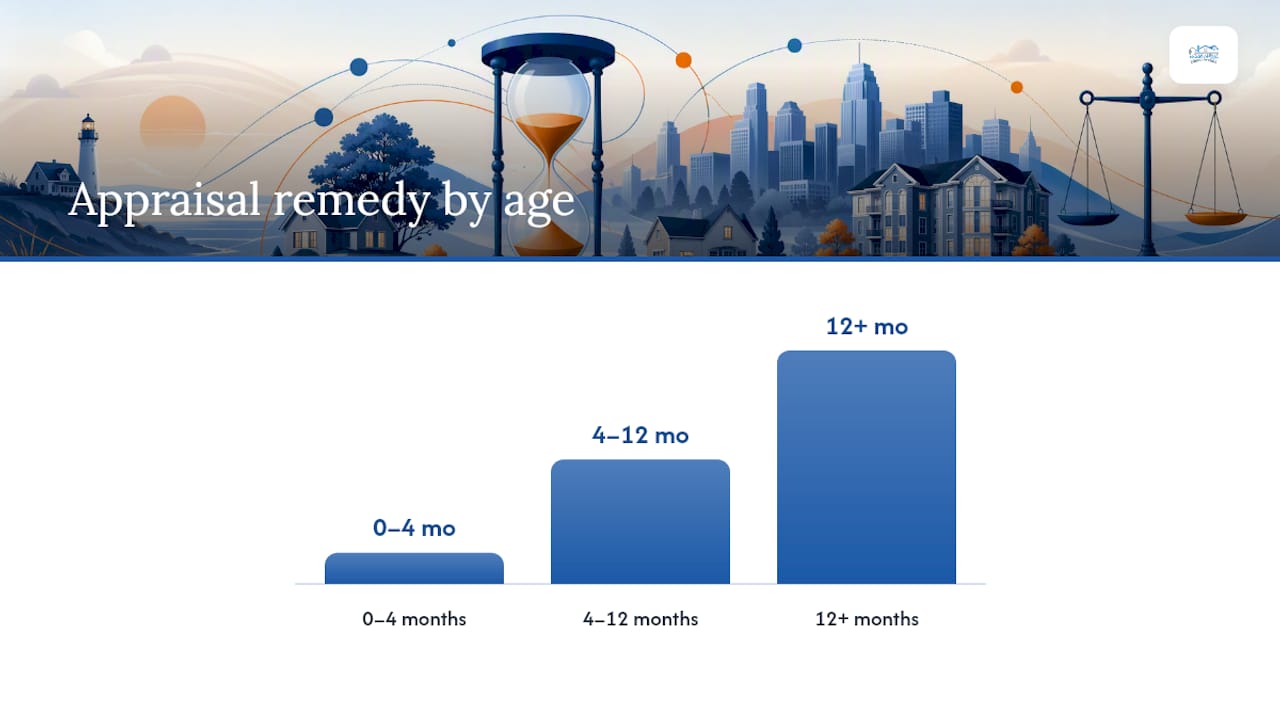
- Desktop update with market review. For reports still inside shorter windows, an appraiser can review recent sales and confirm the market hasn't shifted, without a fresh property visit.
- Exterior-only reinspection. The appraiser drives by, confirms the property looks the same from the curb, and updates the market data. This is the common fix in that four-to-twelve-month gray zone under Fannie Mae's rules.
- Interior reinspection. If a lot of time has passed or the property may have changed inside, the appraiser goes back in for a full walkthrough before updating the opinion.
- New full appraisal. Past the twelve-month mark, or if the market moved sharply, most lenders will require a brand-new report with a brand-new effective date.
Picture a purchase contract signed in January with an appraisal effective date of January 10. If the loan doesn't close until July, that report is six months old at closing, past the four-month mark that triggers an update under Fannie Mae guidelines. The lender will typically order an exterior reinspection and a market check rather than a full redo, but it still adds days to the timeline.
Borrowers and sellers usually don't order the update themselves. The lender does, because the lender is the one who needs the report to meet program guidelines. That said, homeowners and attorneys can and should ask early whether an appraisal is approaching its expiration window, especially on deals that have dragged past their original closing date.
Pro Tip: Ask your lender at the 90-day mark, not the 110-day mark, whether your appraisal will need an update. Waiting until closing week to find out turns a same-day fix into a week-long delay.
Fixing Effective-Date Problems: What USPAP Allows and a Documentation Checklist
You can't just ask an appraiser to change the effective date on a finished report. Under USPAP, the effective date is a core assignment element, not a typo to be corrected. Changing it changes what the appraiser was hired to do, which usually means a new assignment rather than a revision.
Retrospective assignments, common in estate and divorce work, need more documentation than a standard current-date appraisal because the appraiser is reconstructing a moment in the past rather than observing it directly. Our own guide to retrospective valuations walks through how that reconstruction works in practice.
A defensible retrospective appraisal doesn't guess at the past. It builds the case for it: what the property looked like on that date, what comparable homes sold for around that date, and why the appraiser is confident the analysis holds up under scrutiny.
Before ordering or accepting a retrospective or noninspection-date report, run through this checklist:
- Confirm the exact effective date needed (date of death, filing date, loss date) with the attorney or executor.
- Gather historical photos, tax records, or permits showing the property's condition on or near that date.
- Ask the appraiser to identify comparable sales that closed on or before the effective date, not after.
- Require a scope of work section explaining how the appraiser reconciled the inspection date with the retrospective value date.
- Verify the report explicitly states the effective date, per USPAP, on its face page.
How NJREAG Handles Effective-Date Challenges
We're a state-certified, USPAP-compliant team with appraisal firm with 26+ years of combined experience in across all 21 New Jersey counties. Effective-date problems land on our desk constantly, usually from attorneys, executors, and lenders working against a deadline.
For retrospective work, whether it's a date-of-death valuation for an estate or a filing-date valuation for a divorce, we reconstruct the property's condition and the market as of that specific date using historical comparables, tax assessment records, and photographic evidence where it exists. We document that reconstruction in the scope of work section so the report holds up if it's challenged in court or in front of a tax board.
For lender age issues, our process is straightforward:
- We confirm which remedy the lender actually needs (update, reinspection, or new report) before we schedule anything.
- We communicate directly with the lender's contact to confirm the required effective date and turnaround.
- We supply the documentation checklist above upfront so nothing stalls the closing.
Pro Tip: If you're an attorney or executor, tell us the target effective date on the first call. It's the single detail that determines how we scope the assignment and what records we'll need to request.
Turnaround depends on the assignment. A straightforward update moves faster than a retrospective estate valuation that requires historical research, so we'll give you a realistic window once we know the scope.
Three Mistakes I See Constantly
The biggest mistake: people confuse the inspection date with the effective date, then panic when the numbers don't line up with expectations. Second: they assume every lender treats a desktop appraisal the same as a full one on timing. They don't. Third: someone asks an appraiser to "just change the date" after delivery. That's not how USPAP works.
Three rules keep us out of trouble: confirm the effective date before the inspection, document the scope of work in writing, and never treat an old report as automatically dead without checking the actual program rule first.
Call your appraiser when the questions are about timing or documentation. Call your attorney or lender when the questions are about legal deadlines or loan terms.
— Alek
Get a Court-Ready Appraisal With the Right Effective Date From the Start
Getting the effective date wrong costs you time you don't have during a divorce, an estate settlement, or a tax appeal deadline. Newjerseyrealestateappraisal sets the scope and the effective date correctly before the inspection ever happens, so you're not scrambling to fix a report after delivery.

We handle date-of-death and estate valuations that need to hold up in probate court, divorce appraisals tied to a specific filing date, lender updates when a report is aging toward its expiration window, and tax appeal appraisals where the assessment date drives everything. When you hire us, we start by pinning down the exact effective date your situation requires, then build the scope of work and documentation around it.
If you're in Union County or anywhere else across all 21 New Jersey counties, request a scope discussion or call us at (908) 517-3913 to talk through your deadline before you order anything.